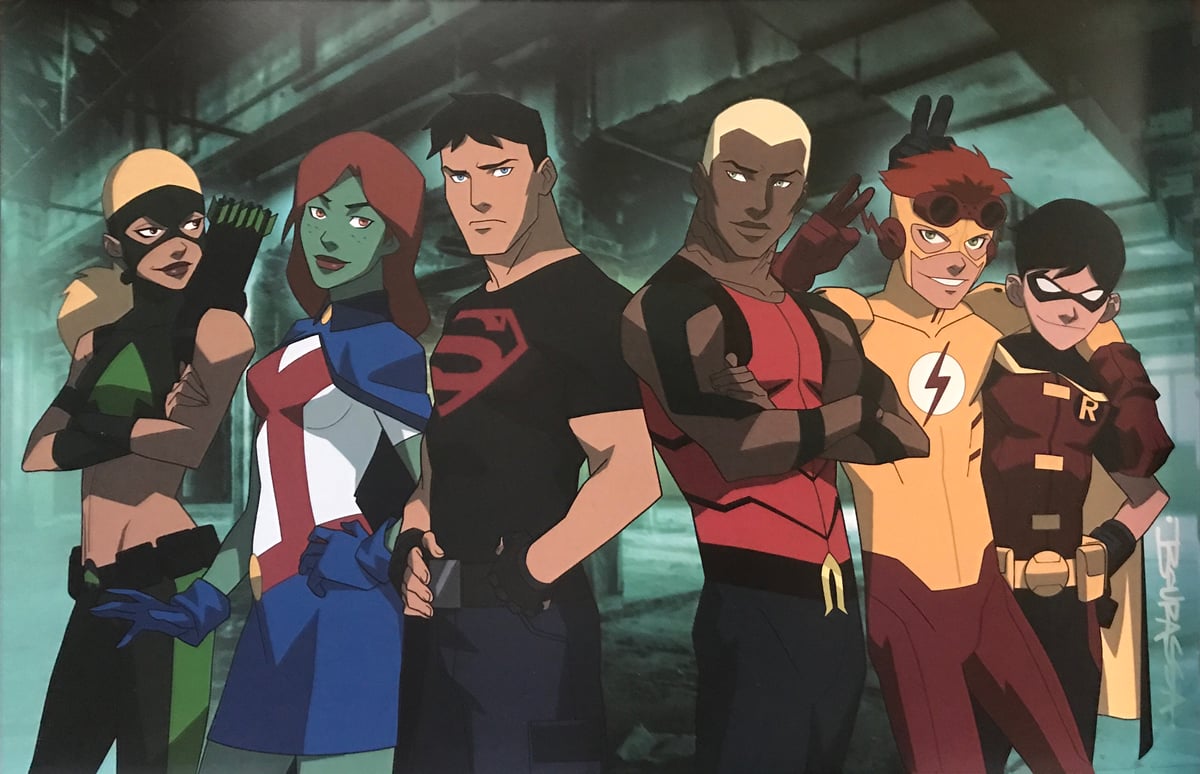
Everyone knows the Justice League. They are the gods on Olympus, the untouchable icons who save the world from alien invasions every Tuesday. But what happens when the "sidekicks" get tired of being told to wait in the car? That's where young justice the team comes in, and honestly, it changed the way we look at DC animation forever. It wasn't just a "kids' version" of the League. Far from it.
The show premiered on Cartoon Network back in 2010, and it felt different right from the jump. You had Robin, Aqualad, and Kid Flash basically staging a teen rebellion. They broke into Project Cadmus, found a clone of Superman, and decided they weren't going to be secondary players anymore. This wasn't the Super Friends. It was a high-stakes spy thriller wrapped in spandex.
People often confuse this show with the Teen Titans or even the original comic book run by Peter David. While it takes names and vibes from those sources, Greg Weisman and Brandon Vietti built something entirely unique. They created a world where time actually passes. Characters age. They deal with trauma. They die. It’s heavy stuff for a Saturday morning, but that’s exactly why we’re still talking about it over a decade later.
What Most People Get Wrong About Young Justice the Team
There is a huge misconception that young justice the team is just a junior Justice League. It’s not. In the show's lore, the Team is actually a black-ops unit. While the League handles the big, public threats that require a massive show of force, the Team handles the stuff the League can't be seen doing. We’re talking about deniable ops, reconnaissance, and infiltration.
Batman is basically their handler. He gives them the missions the UN wouldn't approve for the "big guns." This dynamic creates a lot of friction. Think about it. You’re fifteen years old, you have superpowers, and you’re being sent into war zones in Bialya or Santa Prisca. It’s a lot of pressure.
Also, the roster isn't static. Unlike many cartoons where the lineup stays the same for five seasons to sell toys, this show evolves. By the time we hit Season 2 (Invasion), there’s a five-year time skip. Suddenly, Robin is Nightwing. He’s leading the group. There are a dozen new faces like Blue Beetle and Beast Boy. It was jarring for fans at first, but it made the world feel alive. It made the stakes feel real because you realized life moves on even if you aren't watching.
The Original Six: Where the Magic Started
The heart of the series will always be the original lineup. You have Dick Grayson as Robin—the tactical genius who doesn't actually want to be Batman. Then there's Kaldur’ahm (Aqualad), who is easily one of the best original characters DC has ever put on screen. He’s calm, stoic, and the natural leader.
Wally West (Kid Flash) provides the comic relief, but he's also the heart. His relationship with Artemis is arguably the best-written romance in the DC Animated Universe. Then you have Superboy (Conner Kent), who struggles with massive anger issues and the fact that Superman basically ignores him for the first year of his life. Rounding them out is Miss Martian (M’gann M’orzz), who seems sweet but hides a pretty dark secret about her heritage.
They weren't just a squad. They were friends who were forced to grow up way too fast. When they finally stood up to their mentors in the episode "Auld Acquaintance," it felt earned. They weren't just proving they could fight; they were proving they could think for themselves.
Why the Light is the Best Villain Group in DC History
You can't talk about young justice the team without talking about the Light. Usually, in superhero shows, the villain has a "plan of the week." They want to rob a bank or blow up a city. The Light is different. Led by Vandal Savage and Lex Luthor, this council of villains plays the long game.
They aren't trying to destroy the world. They want to "evolve" it. They think the Justice League is holding humanity back by protecting the weak. Their goals are geopolitical. They use the media, they influence elections, and they manipulate the legal system.
It's terrifyingly realistic.
Take the "Reach" invasion in Season 2. The villains didn't just invite aliens to conquer Earth. They let the aliens come in as "diplomats." They made the Justice League look like the aggressors in the eyes of the public. This kind of nuanced storytelling is why the show has such a massive adult following. It respects the audience's intelligence. It understands that the most dangerous enemies aren't the ones with the biggest laser beams—they're the ones with the best lawyers and PR firms.
The Trauma of Being a Sidekick
The show dives deep into the psychology of these kids. Most media treats being a sidekick as a fun adventure. In this series, it’s a burden. There’s a famous episode in Season 1 called "Failsafe." It’s a psychic training exercise that goes horribly wrong. The kids think the Justice League has been killed and they are the last line of defense.
They watch their friends die one by one. Even though it was "all a dream," the trauma remained. The next episode, "Disordered," shows them in therapy sessions with Black Canary. It was a groundbreaking moment for animation. Seeing a superhero deal with PTSD and survivor's guilt made these characters feel human in a way the "untouchable" Justice League never could.
- Robin admits he doesn't want to be "The Batman" anymore because Batman is too cold.
- Artemis fears her villainous family will define her.
- Superboy deals with the fact that he's a living weapon.
The Production Drama: Cancellations and Resurrections
The history of the show behind the scenes is almost as dramatic as the plot itself. Cartoon Network canceled the show after two seasons in 2013. The rumor for years was that it didn't sell enough toys. Specifically, the rumor was that because the show had a large female viewership and girls "don't buy action figures," the show wasn't profitable.
Fans didn't take that lying down.
For years, the "Renew Young Justice" hashtag trended. People binged it on Netflix until the numbers were too big to ignore. This led to Young Justice: Outsiders on the DC Universe streaming service and eventually Young Justice: Phantoms on HBO Max.
The later seasons got much darker. Since they weren't on a kids' network anymore, they could show blood and more complex political themes. However, some fans felt the show lost its focus by introducing too many characters. When you have a roster of thirty people, it’s hard to give everyone a character arc. But even at its most cluttered, the writing remained top-tier.
Real-World Impacts of the Show’s Lore
Interestingly, young justice the team influenced the comics themselves. Kaldur’ahm became so popular that DC introduced a version of him (Jackson Hyde) into the main comic book continuity. The show's take on Sportsmaster—turning a C-list joke villain into a terrifying elite assassin—is now the definitive version of that character.
The series also pioneered diverse representation before it was a common talking point in mainstream media. We saw characters from all over the globe, different ethnicities, and LGBTQ+ relationships explored with genuine care. It never felt like a "diversity checklist." It felt like a reflection of a global superhero community.
Breaking Down the Seasons: A Quick Refresher
If you're looking to rewatch or jump in for the first time, the tone shifts significantly between chapters.
- Season 1: The "Covert Ops" era. It's the tightest season. Every episode builds toward the reveal of a mole within the team. The focus is on the core six characters and their bond.
- Season 2 (Invasion): The "Blue Beetle" era. It scales up. Aliens are everywhere, the League is off-planet facing trial for crimes they committed under mind control, and the Team has to grow up fast.
- Season 3 (Outsiders): The "Meta-Human Trafficking" era. This season is very political. It focuses on how superpowers would be used in the real world for human trafficking and war. It introduces Halo and Forager.
- Season 4 (Phantoms): The "Legacy" era. The season is broken into arcs focusing on the original members. It’s a bit more experimental with its storytelling and deals heavily with the cosmic side of the DCU, like the Green Lantern Corps and the New Gods.
What You Should Do If You Love Young Justice
If you're a fan of young justice the team, don't just wait for a Season 5 announcement that may never come. The landscape of streaming is volatile. The best way to keep this vibe alive is to engage with the creators' other works and the tie-in materials.
- Read the Tie-In Comics: There are several miniseries written by Greg Weisman that fill in the gaps between seasons. Specifically, Young Justice: Targets bridges some major character gaps.
- Watch Gargoyles: If you like the dense, serialized storytelling of Young Justice, watch Greg Weisman’s 90s classic Gargoyles. You’ll see the DNA of the Team in the Manhattan Clan.
- Support the Creators: Follow Brandon Vietti and Greg Weisman on social media. They are incredibly transparent about the production process and often "ask-me-anything" style interactions where they explain deep lore that didn't make it to the screen.
- Rewatch on Official Platforms: Algorithms drive everything. If people keep watching on Max, the possibility of a revival stays on the table.
The legacy of young justice the team is that it proved "young" doesn't mean "simple." It showed that teen heroes are often more interesting than their mentors because they are still figuring out who they are. They make mistakes. They get heartbroken. They fail. But they always get back up, usually without the League's permission.
That’s what makes them heroes. They aren't doing it because it's their job; they're doing it because they found a family in the wreckage of their own lives. Whether we get more episodes or not, the "Team" remains the gold standard for how to handle a massive superhero universe with heart, brain, and a whole lot of "whelmed."



