Virgil Hawkins didn’t just stumble into the Team; he was literally kidnapped into it. If you grew up in the early 2000s, you probably remember the Kids’ WB! era where Static Shock was the undisputed king of Saturday morning. So, when Young Justice Static Shock finally made his debut during the Invasion arc, the hype was through the roof. People expected him to take over. They expected him to be the new lead. Honestly, he kind of just became a very reliable background player, which is both a testament to the show’s massive scale and a huge bummer for Virgil fans.
The transition from the Milestone Media universe to the Greg Weisman and Brandon Vietti-led Young Justice universe changed everything about how Virgil functioned. He wasn't the solo hero of Dakota City anymore. He was a survivor of Reach experimentation. That shift in origin matters. It changed his temperament. It changed his stakes.
The Reach Experimentation and the Birth of a Hero
Most versions of Static involve the "Big Bang," a gang war involving experimental tear gas that gives a whole neighborhood superpowers. Not here. In Young Justice, Virgil is one of the "Reach Meta-teens." He was abducted by the Light and handed over to the Reach to have his meta-gene forcibly triggered.
It was brutal.
He spent weeks in a stasis pod being poked and prodded alongside characters like Ty Longshadow and Tye Li. When he finally broke out, he didn't have his signature gear or a cool saucer to fly on. He had raw, uncontrolled electricity and a lot of trauma. Watching him develop those powers under the tutelage of Black Lightning was one of the few times Young Justice slowed down enough to give us real character growth for the newcomers. Black Lightning, voiced by Khary Payton, served as the perfect foil. Here was a seasoned hero seeing a kid who looked like him, powered like him, but struggling with the weight of being a "science project."
Why Young Justice Static Shock Feels Different From the Solo Series
If you're looking for the witty, fast-talking Virgil from the solo animated series, you'll find bits of him, but he's more subdued. In the solo show, Virgil was the center of the universe. In this show, he’s one of thirty-plus heroes fighting for screen time.
The power scaling is also more grounded. In his original show, Static was doing god-tier feats by the end of the series. In Young Justice, he’s a tactical asset. He uses his electromagnetic powers to short out Reach technology and provide crowd control. He's smart, too. We see his high IQ shine when he helps the Team navigate technical hurdles, but he rarely gets that "Main Character" moment where he saves the entire world single-handedly.
It’s a bit of a trade-off. We got a more "realistic" Virgil who has to learn how to be a teammate, but we lost some of that infectious Dakota City swagger.
The Gear and the Aesthetic
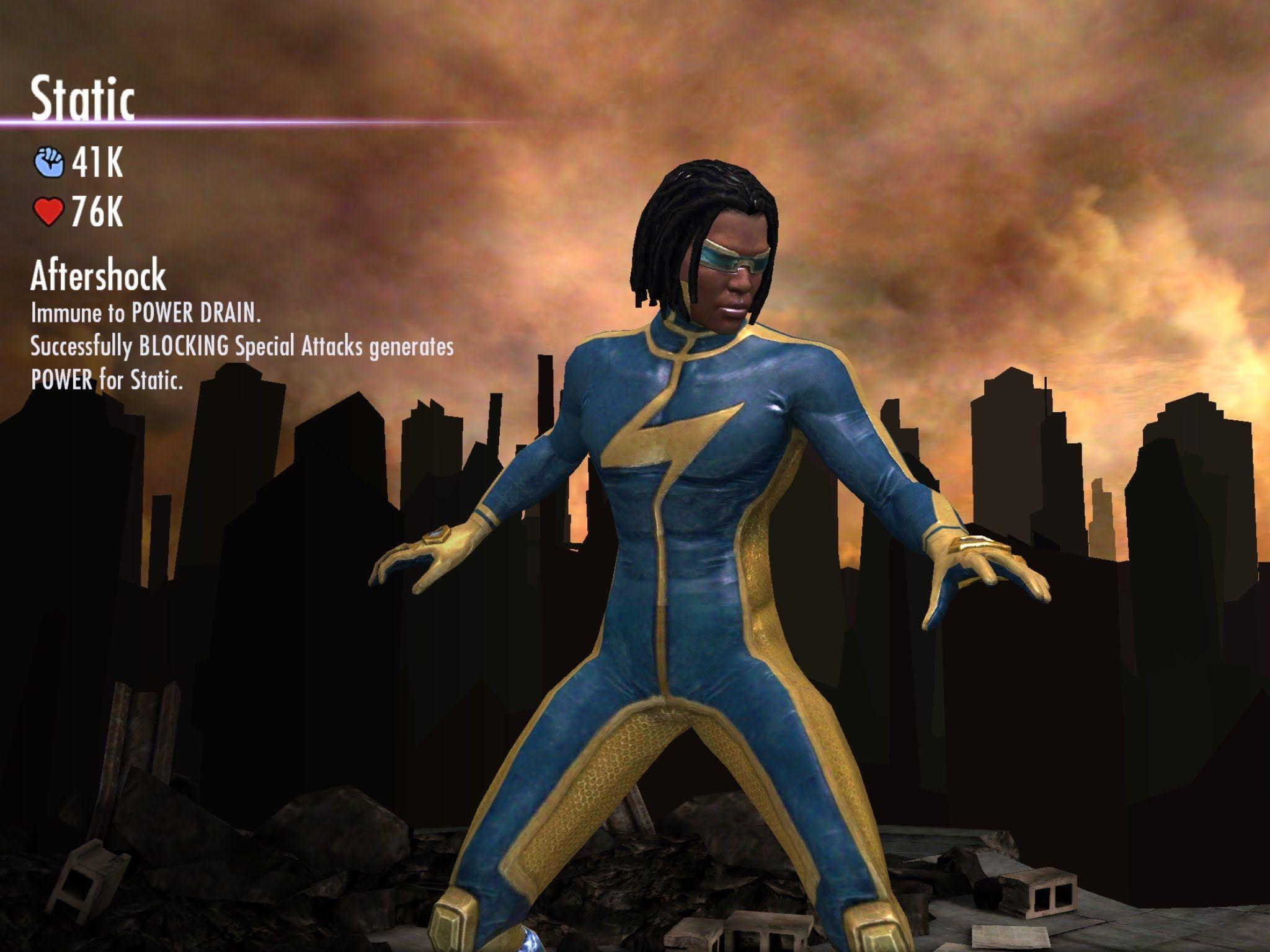
Let’s talk about the suit. The Young Justice design for Static is arguably one of his best. It leans into a tactical, athletic look rather than the oversized trench coat of the 90s.
- He keeps the blue and yellow color scheme, but it’s muted.
- The "saucer" he flies on is actually a piece of Reach tech he repurposed.
- His hair—the dreads—became a defining visual trait that many fans felt was a major step up in representation compared to earlier iterations.
The animation team at Warner Bros. really emphasized the "flow" of his electricity. It’s not just jagged bolts; it looks like fluid energy that he manipulates with his hands. It’s a subtle detail, but it makes his fight scenes some of the most visually interesting in the series.
The Frustration of the "Missing" Arcs
There is a glaring issue with how the show handled Virgil: the time jumps. Young Justice loves a time jump. Between Season 2 and Season 3, we missed the bulk of Virgil’s training. We see him join the Team at the end of Invasion, and by the time Outsiders starts, he’s already a veteran.
Fans felt cheated.
We wanted to see him struggle with his identity. We wanted to see him interact more with the OGs like Nightwing or Superboy. Instead, he often felt like the "extra" guy in the room while the show focused on the newer "Outsiders" group or the original core cast. Even Virgil himself jokes about it in the show, complaining that he doesn't have a girlfriend while everyone else is pairing up. It’s a meta-joke about his lack of a personal subplot.
The Legal Tangles Behind the Scenes
Why didn't we get more?
A lot of it comes down to the complex rights issues surrounding Milestone Media characters. For years, the legal status of Static, Icon, and Rocket was a bit of a nightmare between DC Comics and the estates of the Milestone founders. This often limited how much the showrunners could actually do with the characters. While they were allowed to use them, there were reportedly strict guidelines on how they could be portrayed and whether they could lead their own spin-offs.
By the time Season 4, Phantoms, rolled around, Virgil was mostly a background presence in the Justice League's orbiting subplots. It's a shame because Phil LaMarr (the original voice of Static) wasn't voicing him here—Bryton James took over—but the character still had so much potential to bridge the gap between the street-level heroics and the cosmic threats.
How to Appreciate the Young Justice Version
If you want to get the most out of Virgil’s appearance in this series, you have to look at the "Outsiders" season. While he isn't the lead, his role as a mentor to the younger kids is where he shines. He’s the one who has been through the Reach labs. He’s the one who knows what it’s like to have your body changed against your will.
- Watch the episode "Runaways" for his best action beats.
- Pay attention to his chemistry with Blue Beetle; they make an incredible duo.
- Notice how he uses his powers for more than just blasting—he’s a master of magnetism.
Virgil Hawkins remains a fan favorite because he’s relatable. He’s a geek who got power and decided to do something good with it. Even when the show forgets to give him a spotlight, his presence makes the world feel more complete.
Actionable Steps for Fans and Collectors
If you're looking to dive deeper into the world of Static beyond the show, start with the Static: Season One comic by Vita Ayala and Nikolas Draper-Ivey. It’s a modern reimagining that captures the energy of the Young Justice version but gives him the solo focus he deserves. You should also check out the "Milestone Returns" initiative on DC Universe Infinite to see the original 90s run that started it all. If you're a gamer, look for his character in Injustice 2 (mobile version) or the various LEGO DC titles where his moveset is often modeled after his Young Justice electromagnetic style. For those specifically wanting more of the show's lore, the Young Justice: Targets comic miniseries provides some much-needed context for the Team's roster during the later seasons.



