It took six years. Six long, agonizing years of fan petitions, Twitter storms, and Netflix binge-watching campaigns to finally get Young Justice Season Three off the ground. When Outsiders finally premiered on DC Universe back in 2019, the hype was honestly suffocating. Fans expected a seamless continuation of the Saturday morning cartoon they loved on Cartoon Network, but what they got was something way more complicated, darker, and—if we’re being real—a bit messy.
The shift was jarring.
Suddenly, we weren't on a major cable network anymore. The move to a niche streaming service meant the creators, Greg Weisman and Brandon Vietti, finally had the handcuffs taken off. No more "standards and practices" breathing down their necks about blood or heavy political themes. But that freedom came with a price. Some fans felt the show lost its focus by introducing dozens of new characters while the original Team—Dick Grayson, Artemis, Kaldur, and Conner—felt like they were being pushed to the sidelines.
Yet, looking back at it now, Outsiders was arguably the most ambitious season of superhero television ever produced. It didn't just want to tell a story about sidekicks growing up; it wanted to tackle human trafficking, social media manipulation, and the slow-burn rot of intergalactic geopolitics.
The Meta-Human Trafficking Problem
The core of Young Justice Season Three isn't just "good guys vs. bad guys." It’s about the commodification of children. The season kicks off with a brutal look at how the "meta-gene" has become the new nuclear arms race. In the fictional kingdom of Markovia, we see the literal abduction and forced transformation of teenagers.
It’s heavy stuff.
Prince Brion Markov, who eventually becomes Geo-Force, starts as this hot-headed royal looking for his sister, Tara. His journey is the backbone of the season. Honestly, his descent—or ascent, depending on how you view his final choice—is one of the most honest depictions of how trauma and power can corrupt even the best intentions. Most shows would have made Brion a perfect hero. Young Justice made him a king who was willing to execute his own uncle on live television.
The show uses the Reach’s leftover tech and Granny Goodness’s "VR goggles" to show how easily youth can be radicalized or exploited. It's not just sci-fi; it’s a direct reflection of real-world fears regarding the internet and the grooming of vulnerable kids.
Why the Time Jump Worked (and Why It Didn't)
We got another time jump. Two years have passed since the end of Invasion. Nightwing is "retired" but secretly running a black-ops squad. Aqualad is now Aquaman and leading the Justice League. Miss Martian is leading the Team.
This is where the show gets some flak.
People wanted more of the "Core Seven." Instead, we spent a lot of time with Forager, Halo, and Terra. Forager is adorable—don't get me wrong—but when you have limited screen time, every minute spent on a bug-alien from New Genesis is a minute we don't see Wally West’s legacy being handled or Will Harper’s domestic life as a single dad.
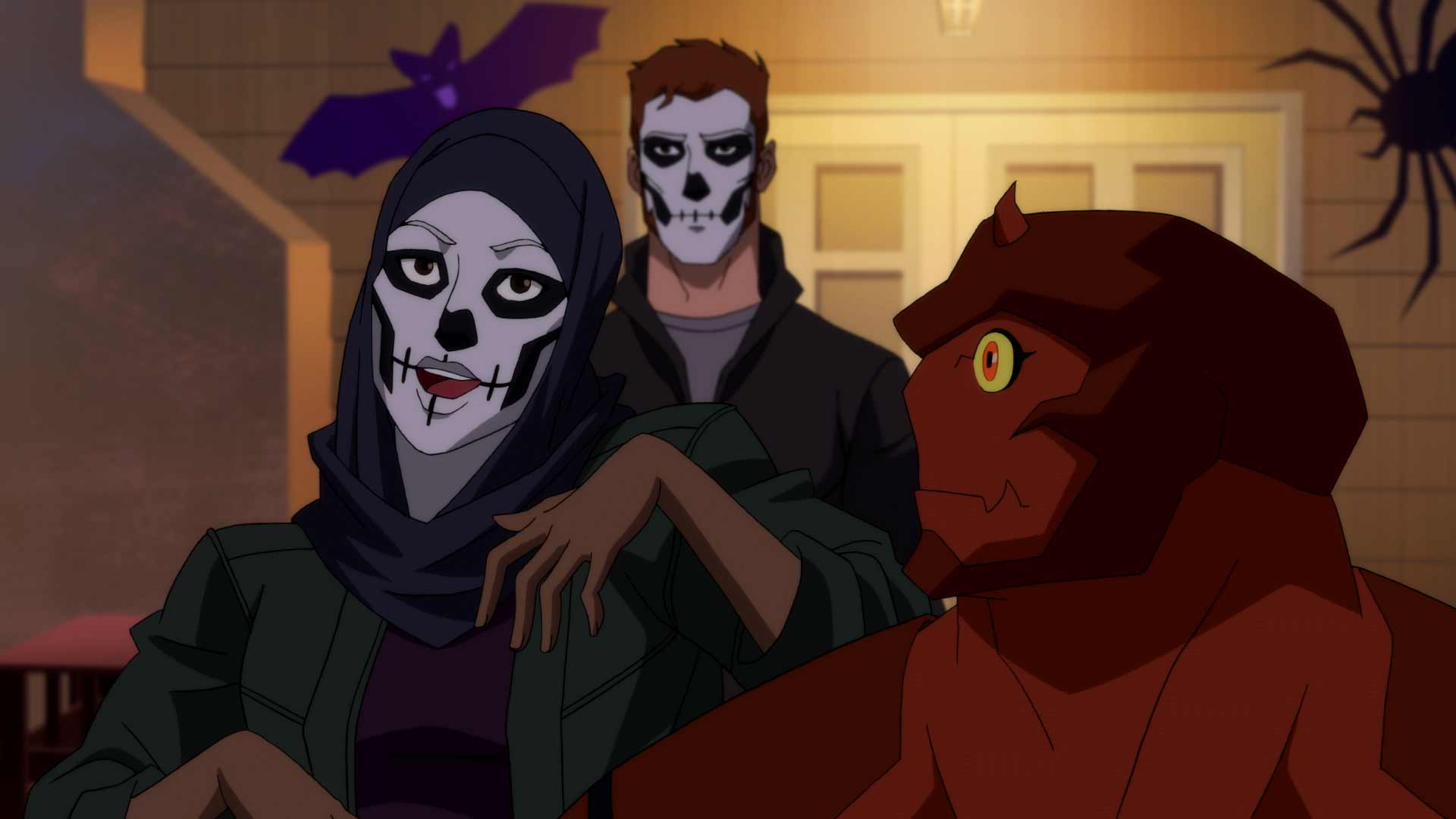
But here’s the thing: the show is called Young Justice, not The Original Sidekicks. The whole point is that the cycle continues. By introducing Halo (Violet Harper), the writers explored identity in a way that felt genuinely groundbreaking for 2019. Violet isn't just a girl; she's a Mother Box inhabiting a human corpse, grappling with Islam, gender identity, and the meaning of a soul. It’s dense. It’s weird. It’s exactly what makes this show stand out from the cookie-cutter "villain of the week" procedurals.
Darkseid, Vandal Savage, and the Long Game
If you're watching Young Justice Season Three for quick resolutions, you're in the wrong place. This show is the king of the "Long Game."
The alliance between Vandal Savage and Darkseid is the ultimate looming shadow. We find out through a series of flashbacks—specifically in the episode "Evolution"—that Vandal isn't just a generic immortal. He’s the father of humanity’s meta-potential. He’s been protecting Earth for millennia, but his version of "protection" involves a ruthless survival-of-the-fittest Darwinism.
He's basically the hero of his own story.
The way the show handles Granny Goodness is also terrifying. Voiced by Deborah Strang, this version of Granny isn't just a brawler. She’s a media mogul. She uses "Goode World" studios to find meta-kids. It’s a brilliant update to the Jack Kirby Fourth World lore. It makes Darkseid’s threat feel modern. He’s not just coming with Parademons; he’s coming for your data and your kids' attention.
The Animation Quality Shift
Let’s address the elephant in the room. The animation in Season 3 was... inconsistent.
There. I said it.
Moving from the high-budget days of Warner Bros. Animation on Cartoon Network to a startup streaming service meant the budget was stretched thin. You can see it in the "slideshow" sequences during some of the heavy exposition scenes. Some episodes look like feature films, while others feel like they were rushed through production.
Does it ruin the show? No.
But it’s a reminder that the transition to "adult" content often comes with logistical trade-offs. The character designs by Phil Bourassa remained top-tier, though. The "Outsiders" stealth suits and the New Genesis tech still looked incredible, even if the frame rate chugged during the big fight scenes in the finale.
Social Media as a Plot Device
One of the smartest things Outsiders did was integrate the "Outsiders" as a public-facing superhero team. Beast Boy (Garfield Logan) becomes the face of the movement. He realizes that the Justice League is too bogged down by United Nations regulations and Lex Luthor’s political maneuvering.
Luthor in this season is a masterpiece of writing.
He’s the Secretary-General of the UN. He uses "fake news" and bureaucratic red tape to keep the heroes paralyzed. He’s essentially untouchable. To fight back, Beast Boy creates a team that isn't secret. They use hashtags. They trend on social media. They win the "hearts and minds" of the public.
It’s a fascinating look at how power operates in the 21st century. It's not about who has the biggest laser; it’s about who controls the narrative. When the Outsiders rescue kids and it goes viral, it does more damage to Luthor’s plans than Superman ever could.
- The Anti-Light: We see the heroes finally learning from their enemies. Dick Grayson and Kaldur’ahm forming their own secret "Illuminati" to counter the Light was a controversial move. It caused massive friction within the Team once the secret got out.
- The Bowhunter Security Episode: Can we just talk about the "private security" episode with the Harper clones? It was the much-needed comedic break in a season that was often relentlessly bleak. Seeing three versions of Roy Harper trying to move luggage while fighting off assassins was peak Young Justice.
- Tara’s Betrayal: Unlike the Teen Titans cartoon or the original comics, Tara Markov’s arc here had more agency. She was being manipulated by Deathstroke, sure, but the show gave her a choice at the end. Her decision to stay with the Team felt earned because of the relationships she built with Violet and Forager.
Making Sense of the Finale
The ending of Young Justice Season Three left a lot of threads hanging, which is typical for Weisman. We got the revelation of the Legion of Super-Heroes being present in the past (the waitress with the Legion ring). We saw the fallout of Brion’s coup in Markovia.
Brion choosing to kill his uncle and take the throne by force was a gut punch. It fractured the Outsiders. It made the "victory" feel hollow. But that’s the reality of the world they’ve built. There are no clean wins. Every time the heroes stop a trafficking ring, Darkseid gets closer to the Anti-Life Equation.
The season ends with a sense of unease. The Light is still in control of the shadows. Vandal Savage is still playing 4D chess. And the Justice League is still trying to figure out how to be "good" in a world that is increasingly "grey."
Actionable Takeaways for the Super-Fan
If you're looking to revisit this season or you're a first-time viewer trying to wrap your head around the density of the plot, keep these things in mind:
- Watch the "shale" scenes closely. The show uses a lot of visual metaphors. Pay attention to how the characters use their tech; it usually foreshadows a later plot point involving Apokolips.
- Don't ignore the Greg Weisman "Ask Greg" archives. If a plot point feels confusing, there’s a 90% chance Weisman has explained the back-story or the "unseen" events on his website. The world-building is much larger than what fits in 26 episodes.
- Focus on the parents. This season spends a lot of time on Silas Stone (Cyborg’s dad) and Jefferson Pierce (Black Lightning). Their failures and successes as fathers mirror the younger characters' struggles with their own identities.
- Track the "Light" members. The roster shifts this season. Keep an eye on who is sitting at the table in the final episodes. The inclusion of Granny Goodness and the departure of others signals a major shift in Earth’s standing with the stars.
Young Justice Season Three isn't perfect. It's overstuffed, occasionally slow, and visually inconsistent. But it's also incredibly brave. It refused to play it safe. It grew up with its audience, trading simple morality plays for a complex look at a world that doesn't always want to be saved. Whether you loved the focus on the new kids or missed the original squad, you can't deny that Outsiders expanded the DC Universe in ways most live-action movies still haven't figured out how to do.
The meta-human narrative isn't over. It’s just getting started. If you haven't watched it recently, go back and look at the "Goode World" arc again. It hits a lot harder in 2026 than it did in 2019. The themes of digital manipulation and the exploitation of youth are more relevant now than ever.
To truly appreciate the depth here, you need to look past the capes. Look at the politics. Look at the families. Look at the way a group of teenagers tried to change a system that was rigged against them from the start. That's the real story of the Outsiders. It’s messy, it’s loud, and it’s deeply human.
Now, go re-watch "Evolution" and tell me Vandal Savage isn't the most interesting villain in animation. You can't. The history of the Bear Clan and the rise of the meta-gene is world-building at its absolute finest.



