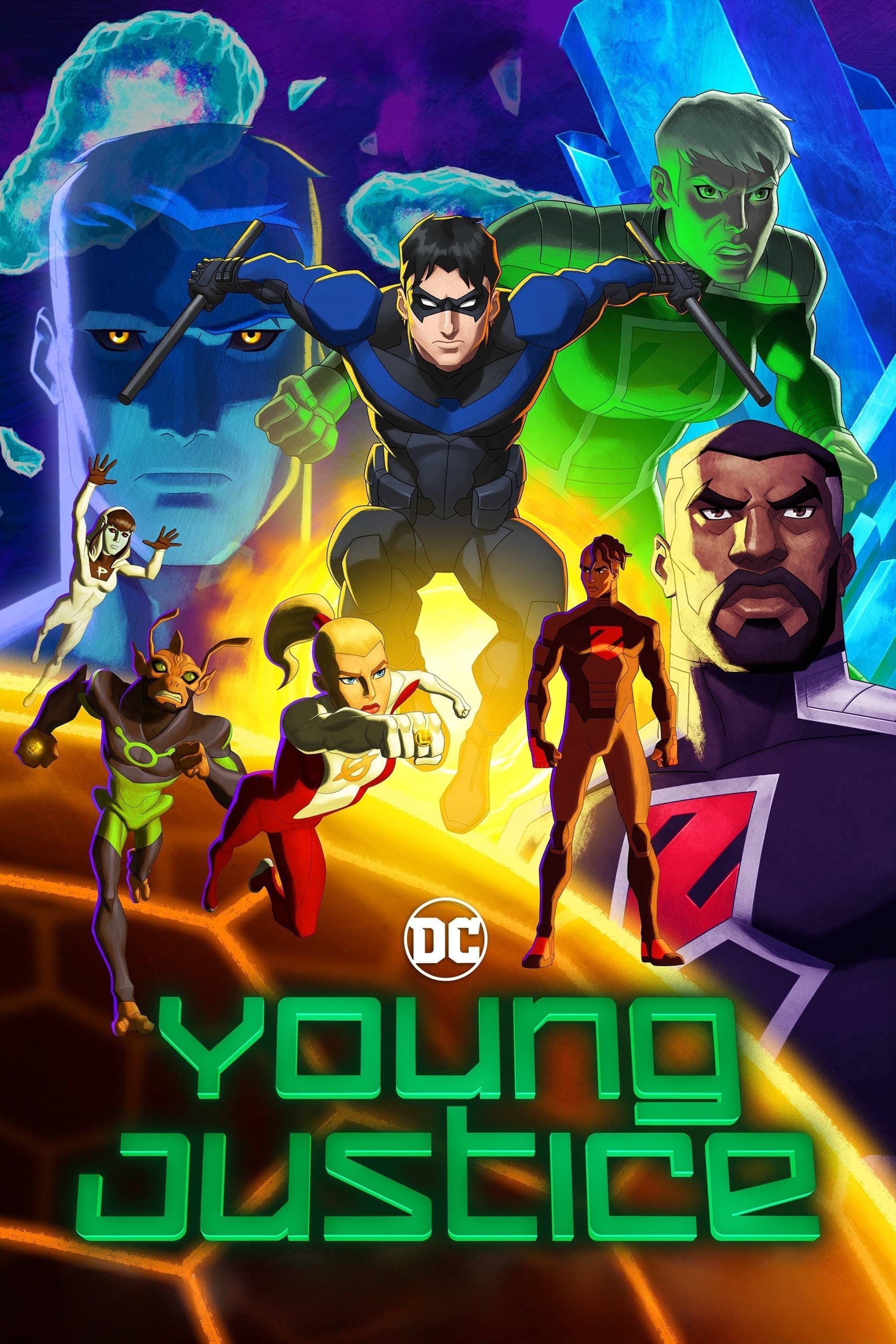
Five years. That was the gap. When Young Justice Season 2, subtitled Invasion, finally hit the airwaves on Cartoon Network in 2012, it didn't just move the story forward; it basically blew up the foundation of everything we knew about the show. I remember the immediate whiplash. One minute, Dick Grayson is a thirteen-year-old Robin cracking "whelmed" jokes, and the next, he’s Nightwing leading a massive roster of heroes while a grown-up Tim Drake takes the Robin mantle. It was a massive gamble by showrunners Greg Weisman and Brandon Vietti.
Honestly, most shows wouldn't have the guts to skip the "Golden Age" of their own cast. We missed the transitions. We missed seeing how Kid Flash and Artemis retired to college life. We missed the actual moment Tula died—an event that fundamentally broke Kaldur’ahm. But that’s the thing about this season: it demanded you keep up or get left behind. It wasn't interested in holding your hand through the puberty of its sidekicks. It wanted to tell a story about a world that had grown too small for its heroes.
The Reach and the Light: A Layered Conspiracy
The plot of Young Justice Season 2 is remarkably dense. It’s not just a "monster of the week" setup. Instead, we got a complex geopolitical (and cosmopolitical) drama involving The Reach, an alien race that arrives on Earth claiming to be peaceful diplomats. They offer a "Reach Drink" that supposedly cures diseases, but they’re actually tagging the human genome to activate the "metagene."
The Reach weren't just villains; they were PR experts. They used G. Gordon Godfrey—voiced with incredible sleaze by Tim Curry—to turn public opinion against the Justice League. It was a brilliant move. While the big-name heroes like Superman and Wonder Woman were off-planet standing trial for crimes they committed while under Vandal Savage's mind control in Season 1, the Team was left to handle a subtle, corporate invasion.
It’s messy. It’s complicated. Blue Beetle (Jaime Reyes) becomes the central figure because his Scarab is actually Reach technology. The season spends a lot of time exploring the body horror and psychological trauma of Jaime being a "sleeper agent" for an alien hive mind. If you go back and watch the episode "Before the Dawn," the tension is palpable. The Reach Scientist is dissecting kids to find the metagene. It’s dark for a Saturday morning cartoon.
Blue Beetle and the Burden of the Protagonist
If Season 1 belonged to Superboy and his identity crisis, Season 2 belongs to Jaime Reyes. This was a smart pivot. By centering the narrative on a character whose very equipment is the enemy's greatest weapon, the stakes become internal. You’re constantly waiting for the "on-mode" to kick in and turn Jaime into a mindless soldier for the Reach.
Bart Allen, aka Impulse, arrives from a dystopian future to prevent exactly that. Bart’s "crash" personality masks a kid who has seen his entire world burn. His dynamic with Jaime is the emotional core of the season.
- Bart knows the future.
- Jaime fears the future.
- The audience is stuck in the middle.
There’s a specific nuance in how the show handles Jaime’s Scarab. It’s a literal voice in his head. The banter between them starts as comedy and ends as a fight for his soul. It’s one of the best adaptations of Blue Beetle in any medium, including the live-action film.
The Kaldur Double-Agent Arc
Kaldur’ahm, formerly Aqualad, spent a huge chunk of Young Justice Season 2 looking like a traitor. He joined his father, Black Manta, and seemingly killed Artemis. It was a long con that lasted almost the entire season. This is where the writing really flexed. By keeping the audience—and most of the characters—in the dark about Artemis and Kaldur’s plan, the show created a genuine sense of despair.
The scene where Miss Martian mentally "fries" Kaldur’s brain because she thinks he’s a murderer is brutal. It’s a turning point for M’gann’s character. She had become far too comfortable using her powers to lobotomize enemies. The fallout from that mistake—her having to stay in the heart of the enemy's base to "repair" the mind she broke—is some of the most sophisticated character work in superhero animation.
It highlights a recurring theme: secrets. Dick Grayson, now Nightwing, became more like Batman than he ever wanted to admit. He manipulated his friends, faked deaths, and lied to his team. The Season 2 finale shows the cost of those lies. Even though they won, the trust was shattered.
Why the "Invasion" Scale Changed Everything
The sheer number of characters introduced in Season 2 was staggering. We got:
- Static (Virgil Hawkins)
- Wonder Girl (Cassie Sandsmark)
- Beast Boy (Garfield Logan)
- Lagoon Boy (La'gaan)
- Batgirl (Barbara Gordon)
- Bumblebee and Guardian
Some fans felt this "crowding" took away from the original core six. It’s a fair critique. Characters like Rocket or even Zatanna barely got any screen time compared to the newcomers. However, the scale was necessary to show that "The Team" had evolved into a legitimate black-ops military wing for the Justice League. It wasn't a clubhouse anymore. It was a job.
The introduction of the "Light’s" partners—The Reach—added a layer of galactic stakes. We learned that Earth is a "metagene goldmine." Every alien race in the DC Universe wants a piece of humanity because our DNA is a wildcard. This reframes the entire DC mythos. Humans aren't just bystanders; we are the ultimate resource.
The Tragedy of Wally West
We have to talk about the end. The "Endgame" episode.
Wally West wasn't the fastest speedster in this version. He knew it. Barry Allen and Bart Allen were faster. When the Reach’s "Magnetic Field Disruptors" threatened to destroy the planet, the three speedsters had to run to siphon off the energy. Wally, being slower, took the brunt of the kinetic energy "leak."
He didn't just die; he ceased to exist. He faded away into the slipstream.
It was a gut-punch. Wally and Artemis had finally found peace. They were living together, going to school, and trying to be normal. His sacrifice felt earned but devastating. It also served as a harsh reminder that in the world of Young Justice, the stakes are permanent. There were no magic resurrections in the following minutes. The season ends with a smaller, mourning team, and a world that finally knows the Justice League are the "good guys" again, but at a massive personal cost to the heroes.
The Legacy of the 20-Episode Run
The pacing of Young Justice Season 2 was breakneck. Unlike Season 1’s 26-episode run, the 20-episode count for Invasion meant there was zero filler. Every episode pushed the Reach plot or the Black Manta undercover plot forward. It’s a masterclass in serialized storytelling.
Think about the "War" episode. The Mongul fight. The introduction of the Warworld. These are massive concepts that most shows would spend an entire season on, but Young Justice burned through them in twenty-minute chunks. It felt like reading a massive comic book crossover event where you couldn't afford to blink.
How to Approach Season 2 Today
If you're revisiting the show or watching for the first time, don't get hung up on the "missing" five years. The show fills in the blanks through dialogue and context clues. Focus on the theme of growth. The sidekicks are no longer seeking approval. They are the ones making the hard calls.
Next Steps for Fans:
- Watch the "Legacy" Tie-in Comics: There are several issues that bridge the gap between Season 1 and Season 2, explaining how the team grew and who joined when.
- Pay attention to the background cameos: Many future plot points for Season 3 (Outsiders) and Season 4 (Phantoms) are seeded right here in the Reach invasion.
- Analyze the lighting and color palettes: You’ll notice Season 2 is significantly brighter and more "sterile" to reflect the corporate aesthetic of the Reach, contrasting with the dark, moody tones of the first season.
- Listen to the G. Gordon Godfrey broadcasts: They aren't just background noise; they are a direct commentary on how media manipulation works in the real world.
The second season remains a high-water mark for DC animation because it treated its audience like adults. It assumed you could handle a non-linear jump and a massive cast. It was ambitious, occasionally frustrating, but ultimately brilliant.



