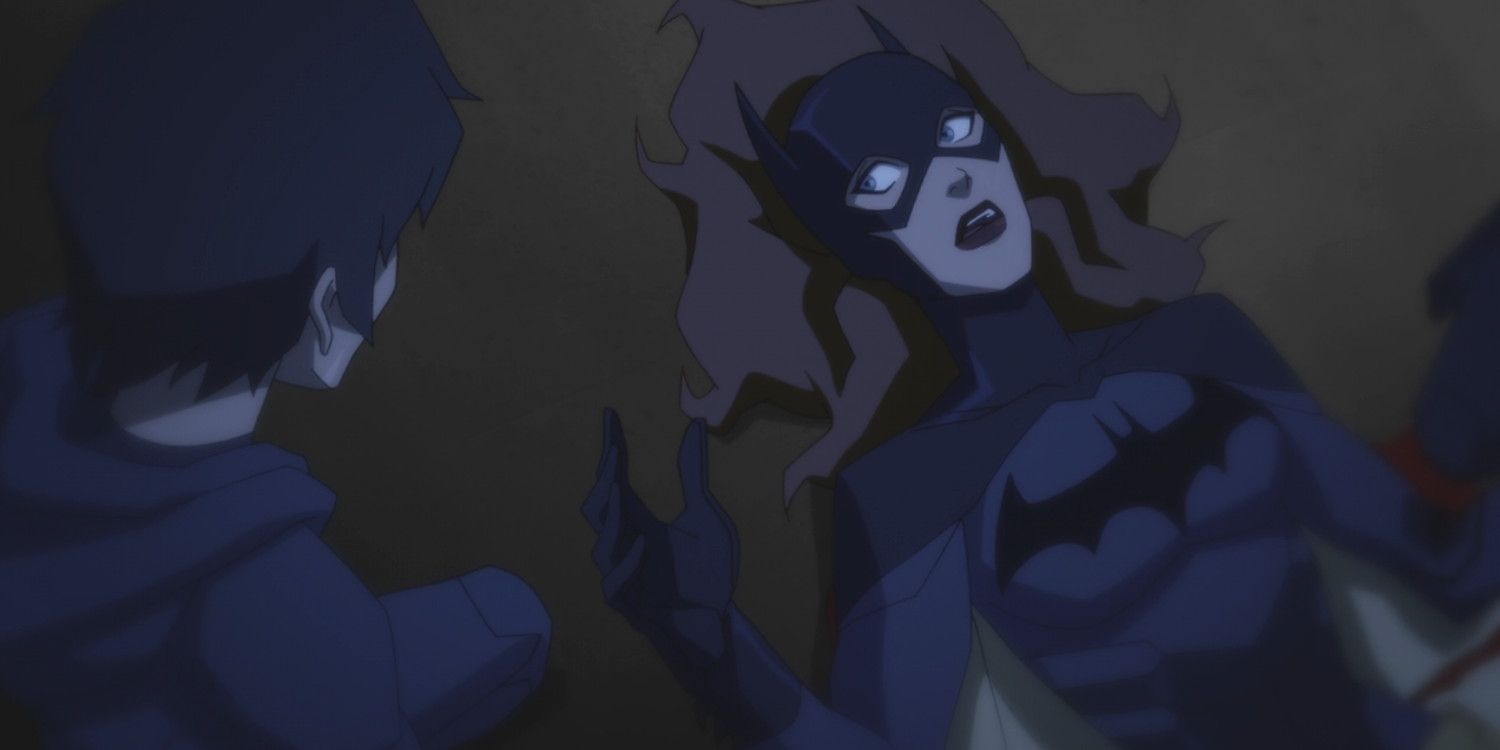
Most people think they know the story of how Barbara Gordon ended up in a wheelchair. If you’ve read The Killing Joke or seen the various animated adaptations, you probably picture the Joker at the front door, a camera, and a tragic shot that changed Batgirl's life forever. But honestly, Young Justice Barbara Gordon is a completely different beast. Greg Weisman and Brandon Vietti didn't just rehash the comics; they actually fixed a narrative problem that has haunted the character for decades.
In the Young Justice universe, Barbara isn't a passive victim of a home invasion. She’s a hero who makes a conscious, split-second choice. That change alone makes her one of the most compelling versions of the character ever put to screen.
The Evolution from Student to Spy
When we first meet Babs in Season 1, she’s just a student at Gotham Academy. She doesn't even have a mask yet. She’s a classmate of Dick Grayson, and their chemistry is obvious from the jump. By the time the five-year time skip happens in Season 2, she's fully integrated into the Team as Batgirl.
She wasn't just "female Robin" in this show. She was tactical, fierce, and often the voice of reason when the boys were busy measuring their egos. Her fighting style felt heavy and grounded. You’ve probably noticed how she uses her environment—swinging off pipes or using gadgets with surgical precision. It made her transition into a leadership role feel earned rather than forced.
Why the Young Justice Oracle Origin is Better
By Season 3, Outsiders, fans were shocked to see Barbara in a wheelchair. The show skipped the actual injury initially, leaving us to piece it together. Then came Season 4, Phantoms, and we finally got the flashback. It wasn't the Joker shooting her at home.
Instead, Barbara was paralyzed while protecting Cassandra Wu-San (Orphan). During a mission to stop Orphan from assassinating the Joker, Barbara realized that if Cassandra pulled that trigger, she’d be lost to the darkness forever. Babs literally threw herself into the path of a sword to save a "villain" and an assassin's soul.
- Agency: In the comics, the injury happens to her. In Young Justice, she chooses the sacrifice.
- The Joker Factor: He's still involved, but he isn't the primary driver of her trauma. He’s the catalyst for her heroism.
- Relationship with Cassandra: This sacrifice creates a deep, emotional bond between Babs and the future Batgirl that the comics often struggle to articulate.
It’s kind of a big deal because it removes the "fridging" aspect. Barbara isn't just a plot device to make Batman or Nightwing sad. She’s the architect of her own destiny.
Relationships and the "DickBabs" Dynamic
Let’s be real: the romance between Dick Grayson and Barbara Gordon is the heart of the Bat-family drama in this show. Unlike other versions where they’re constantly "will-they-won't-they" until someone dies or gets rebooted, Young Justice actually lets them be a functional, adult couple.
They live together. They work together. In Season 3, we see them sharing quiet moments in their apartment that feel more "human" than almost anything else in the DC animated multiverse. Nightwing relies on her—not just for data, but for emotional stability. She’s his North Star. When he’s spiraling during the meta-human trafficking crisis, she’s the one who pulls him back.
The Power of Oracle
Transitioning to Oracle didn't bench Barbara. If anything, it made her more powerful. She became the "All-Mother" of the Team’s communications.
Basically, she’s the tactical brain. While the heavy hitters are out punching aliens, Barbara is managing global satellite feeds, hacking LexCorp servers, and coordinating three different covert squads simultaneously. Alyson Stoner’s voice performance brings this incredible mix of warmth and "don't-mess-with-me" authority to the role.
What Most People Get Wrong
There’s a common misconception that Barbara was "retired" because she couldn't keep up. That's total nonsense. In Young Justice, she’s arguably more active as Oracle than she ever was as Batgirl. She leads the "Anti-Light" operations. She mentors the new generation.
Some fans complained that the show didn't show the recovery process enough, but the narrative choice to focus on her competence rather than her disability was a deliberate move toward "expert" representation. She doesn't need to walk to be the smartest person in the room.
How to Dive Deeper into the Lore
If you're looking to fully appreciate this version of Barbara Gordon, don't just stick to the show. You should definitely:
- Read the Tie-in Comics: Specifically Young Justice: Targets. It fills in the gaps between seasons regarding her training and her relationship with her father, Commissioner Gordon.
- Re-watch Season 4, Episode 7: "The Lady, or the Tigress?" This is the definitive Oracle origin story. Pay attention to the choreography of the fight—it’s tragic but beautiful.
- Analyze her Tech: Notice the holographic interfaces she uses as Oracle. They aren't just for show; they represent how she perceives the battlefield as a digital landscape.
Understanding Barbara in this series requires looking past the mask. She’s a character defined by the weight of her choices, not the limitations of her body. Whether she's Batgirl or Oracle, she remains the tactical heart of the Justice League's next generation.



