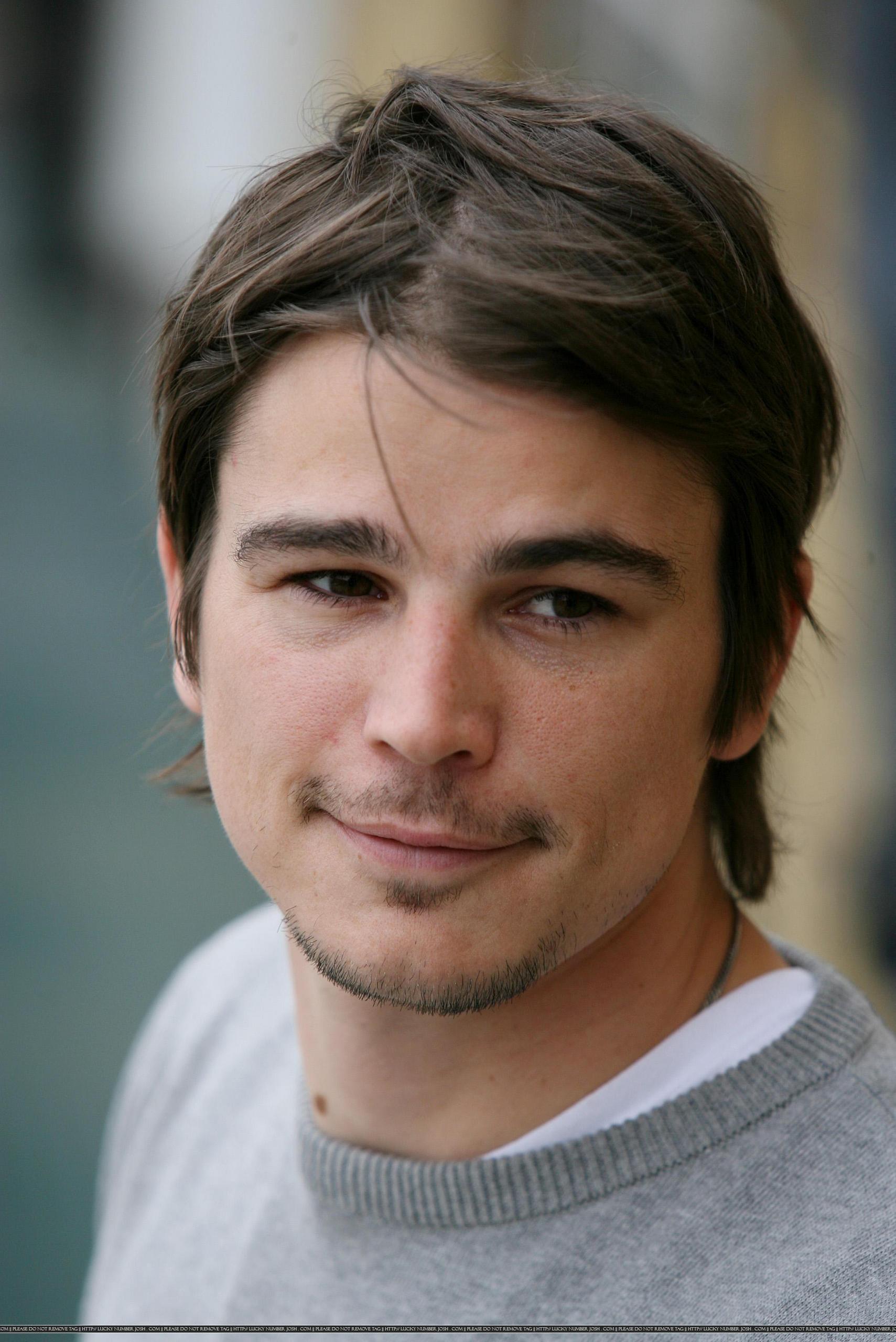
You remember the face. It was everywhere. Between 1998 and 2002, you couldn't walk into a mall or open a magazine without seeing those heavy brows and that specific, slightly moody stare. Young Josh Hartnett wasn't just another actor; he was the blueprint for the turn-of-the-century leading man.
He had this weirdly effortless cool. One minute he was the bowl-cut kid in Halloween H20, and the next, he was the only reason half the planet cared about a three-hour war epic like Pearl Harbor. Hollywood tried so hard to make him the "next Tom Cruise," but the thing is? Josh didn't want it. If you liked this article, you might want to look at: this related article.
Honestly, he hated it.
The Breakout Year Nobody Saw Coming
Most people think he just appeared out of thin air, but his start was actually pretty gritty. He was a Midwest kid from Saint Paul, Minnesota, who got his start working at a video rental shop—basically the most '90s origin story ever. He moved to New York for art school, got kicked out or left (depending on who you ask), and ended up in Los Angeles. For another perspective on this development, check out the recent coverage from Variety.
His first real gig was a TV show called Cracker, but the big bang happened in 1998. He landed Halloween H20: 20 Years Later and The Faculty basically at the same time. In The Faculty, he played Zeke, the guy selling caffeine pills out of the trunk of his car. He was essentially playing a cooler version of every kid we knew in high school. That role, plus his turn as Trip Fontaine in Sofia Coppola’s The Virgin Suicides, turned him into a legitimate icon.
Trip Fontaine. I mean, come on. The hair, the swagger, the Heart song playing in the background? It was over for everyone else.
The Peak of the "Heartthrob" Machine
By 2001, the machine was in overdrive. He was starring in Black Hawk Down for Ridley Scott and Pearl Harbor for Michael Bay. That’s a lot of pressure for a guy in his early twenties. Imagine having Michael Bay constantly telling you to "smile more" because you’re being marketed as the romantic lead of the year.
Josh has talked about this later, saying it felt like he was a product. He wasn't "Josh" anymore; he was a poster.
- Pearl Harbor (2001): This was the big one. It made him a global name but also put him in the crosshairs of critics who hated the movie.
- O (2001): A modernized Othello where he played Hugo (the Iago character). This showed he actually had serious acting chops beyond the "pretty boy" label.
- 40 Days and 40 Nights (2002): The peak of his rom-com era. Everyone was obsessed with the premise. It basically solidified his status as the guy every girl wanted to date and every guy wanted to be.
Why Young Josh Hartnett Said "No" to $100 Million
This is the part of the story that still breaks people's brains. At the height of his power, Josh Hartnett started turning things down. Huge things. He famously walked away from a three-movie deal to play Superman. He also said no to Christopher Nolan for Batman Begins.
People in Hollywood thought he was crazy. You don't say no to a $100 million paycheck unless something is seriously wrong.
But for Josh, it was about self-preservation. He’s been pretty open lately about the fact that fame was becoming "unhealthy." He had stalkers showing up at his house. One guy even showed up at a premiere with a gun, claiming to be Josh's father. When you're 22 or 23 and dealing with that level of "borderline unhealthy" attention, the glitz of a superhero suit starts to look like a cage.
He didn't want to be "grist for the mill." So, he moved back to Minnesota. He stopped reading scripts for 18 months. He basically ghosted the A-list life.
The Misconception: He Never Really "Left"
There’s this idea that he vanished, but that’s not true. He just stopped doing the movies you saw on billboards. He did Lucky Number Slevin (which is a cult classic, seriously, go watch it) and The Black Dahlia. He chose projects because he liked the director or the script, not because it would make him a "star."
He spent years doing indie films and eventually found a home in TV with Penny Dreadful. He moved to the UK, married actress Tamsin Egerton, and started a family. He traded the Hollywood hills for a quiet life in the English countryside, where he reportedly raises chickens and lives a very "normal" life.
What We Can Learn From the "Hartnett Maneuver"
Looking back at the career of young Josh Hartnett from the perspective of 2026, it’s clear he was ahead of his time. Today, we talk about "quiet quitting" or protecting our mental health, but back in 2003, walking away from fame was seen as career suicide.
He survived it. Not only did he survive, but he’s had a massive resurgence recently with Oppenheimer, Black Mirror, and M. Night Shyamalan’s Trap. He looks better than ever, mostly because he isn't carrying the weight of a franchise on his back.
Actionable Insights for the Hartnett Fan:
- Watch the "Unseen" Gems: If you only know him from the big hits, go back and watch The Virgin Suicides or Lucky Number Slevin. That’s where he’s actually doing his best work.
- Respect the Pivot: His career is proof that you can redefine your "success" on your own terms. You don't have to take the $100 million if it costs you your peace of mind.
- The "Josh Style" is Back: If you’re looking for style inspiration, his late-'90s layered look (oversized coats, messy hair, simple tees) is basically the current "clean boy" aesthetic.
Josh Hartnett didn't fail at being a movie star. He just decided he'd rather be a real person. And honestly? That's probably the coolest thing he ever did.
Next Steps for Your Deep Dive: Check out Josh Hartnett’s recent performance in Trap to see how he’s evolved from the 2000s heartthrob into one of the most interesting character actors working today. Compare his early work in The Faculty with his role in Oppenheimer to see the literal growth in his screen presence.



