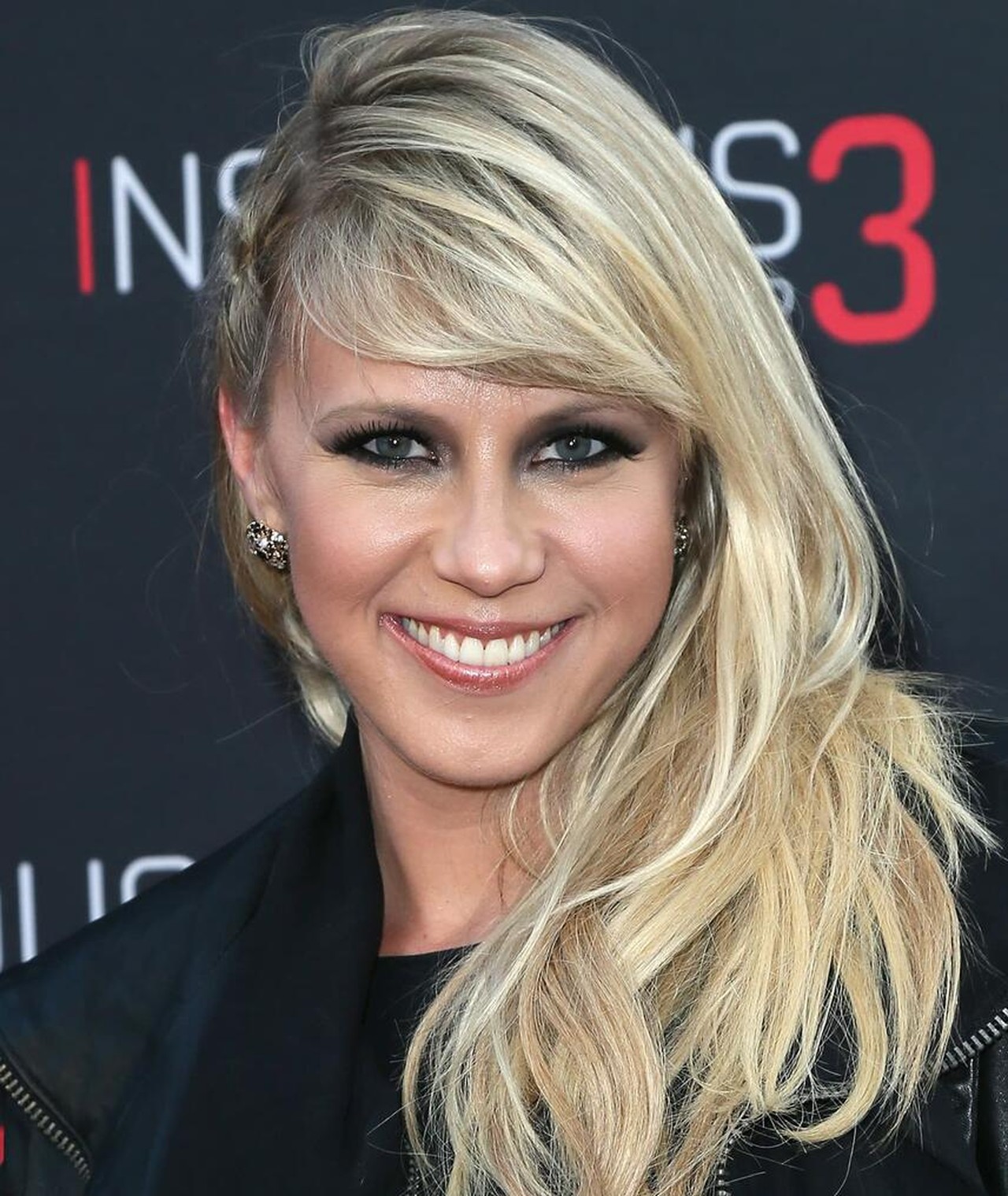
You know that feeling when you're watching an old rerun of Full House and you see that spunky little girl with the side ponytail and the "How rude!" attitude? That was young Jodie Sweetin. She was basically the heartbeat of the 1990s TGIF lineup. People think they know her whole story because they saw her grow up on their TV screens every Friday night, but the reality of her childhood was way more complicated than a 22-minute sitcom plot. Honestly, being a kid in the spotlight in the late '80s wasn't all just "playing pretend" and hanging out with John Stamos.
While fans were busy laughing at Stephanie Tanner's antics, the real Jodie was navigating a life that most people would find pretty intense. It’s kinda wild to look back now and realize that the girl who seemed to have the "perfect" TV family was dealing with things like adoption, school bullies, and a work schedule that would break most adults. Also making waves recently: The Anatomy of Manufactured Rage: Technical Substitution in High-Budget Performance Architecture.
The Adoption Secret and Her "Modeling" Dreams
Most people don't realize that Jodie was actually adopted. Her biological parents were both in prison when she was born in Los Angeles in 1982. Her birth father actually died in a prison riot, and her birth mother was unable to care for her. When she was only nine months old, her uncle Sam Sweetin and his wife Janice took her in and eventually adopted her.
They didn't hide the adoption from her, but they were super protective. They actually told her not to tell people in the industry that she was adopted. Why? Because they were terrified people would think they only adopted her to turn her into a meal ticket. Further insights on this are detailed by Vanity Fair.
Jodie was the one who wanted to be on TV, though. She used to call actors "modelers" and told her parents she wanted to be one. By the time she was four, she was already booking national commercials. One of her first big gigs was for Oscar Mayer—you might remember her singing about hot dogs. She also did a Sizzler commercial where the producers actually gave her a Lhasa Apso puppy named Lacey as a gift.
How She Became Stephanie Tanner Without an Audition
It’s one of those "right place, right time" Hollywood stories. In 1987, Jodie got a guest spot on a show called Valerie (which later became The Hogan Family). She played a character named Pamela Poole. The producers of a new show called Full House, Thomas Miller and Robert Boyett, saw her and basically said, "That’s our girl."
She didn't even have to audition.
At just five years old, she became Stephanie Tanner. For the next eight years, she was the middle child of the most famous family in America. While she loved the "soul sisters" she found in Candace Cameron Bure and the Olsen twins, the "real world" wasn't always as welcoming as the set at Warner Bros.
The Public School Struggle
Unlike some child stars who are strictly homeschooled, Jodie’s parents wanted her to have a "normal" life. This meant she went to a public school in Orange County in the mornings.
It wasn't easy.
- She would go to school until lunch and then rush to the set.
- Classmates often teased her for being famous.
- She felt like an outsider in both worlds—too famous for the "normal" kids and too "normal" for the Hollywood scene.
- The library became her "safe place" where she could just be a "book nerd" and hide from the social pressure.
The 4-Day Work Week and "The Rules"
By the second season of Full House, the producers actually moved to a four-day work week to help the kids. Mondays were for school, and then the rest of the week was a blur of rehearsals, tutoring on set, and filming.
Jodie has talked openly in recent years about the psychological weight of that life. By age six, she knew that 250 people were counting on her. She learned very early that "you don't get sick days." If she wasn't feeling it, it didn't matter. You put your needs on the back burner and you do the job.
That kind of "work ethic" is great for a career, but it’s a lot for a first-grader to carry. She grew up believing that her value was tied to her performance and how well she could make people laugh.
Life After the "Cut It Out" Era
When Full House was canceled in 1995, Jodie was 13. Imagine having a steady, high-profile job from age five to 13 and then... nothing. The show ended right as she was entering high school, which is already the most awkward time in anyone's life.
She attended Los Alamitos High School, where she did musical theater alongside Matthew Morrison (yeah, the Glee guy). But the transition was rough. The "virtuous" image of Stephanie Tanner felt like a cage. She started drinking at 14, largely out of boredom and a desire to finally "fit in" with people who didn't see her as a TV character.
What Most People Miss About Her Journey
We often focus on the "downward spiral" stories of child stars, and Jodie’s struggles with addiction in her late teens and early twenties are well-documented in her memoir, UnSweetined. But the real story of young Jodie Sweetin is about the resilience of a kid who was navigating an adult world with very little roadmap.
She wasn't just a "cute kid with a catchphrase." She was a professional who knew how to navigate a Thomas Guide map to get to auditions by age five. She was a girl who found her real family in a group of actors while her biological story was kept in the shadows.
Moving Forward: Lessons from the Tanner Years
If you're looking at Jodie's story as a cautionary tale or just a bit of nostalgia, there are a few real takeaways:
- Advocate for Mental Health Early: Jodie has been vocal about how ADHD played a role in her early life and how understanding her brain sooner might have changed things.
- Separate Identity from Output: For child actors (and even high-achieving kids today), it’s vital to know that your worth isn't just what you produce for others.
- Support Systems Matter: Despite the chaos, Jodie credits her "soul sisters" from the show and her parents for keeping her grounded enough to eventually find her way back to herself.
Today, Jodie is a counselor, an activist, and a mother. She’s proof that you can survive the "child star" machine, but it takes a lot of work to unlearn the lessons you're taught on a soundstage at age five.
If you want to understand the reality of child stardom better, check out Jodie's podcast Never Thought I’d Say This, where she talks about the messy parts of parenting and her own upbringing. You can also look into the work of Girls Inc., an organization she supports that helps young women navigate the exact kind of pressures she faced growing up.



