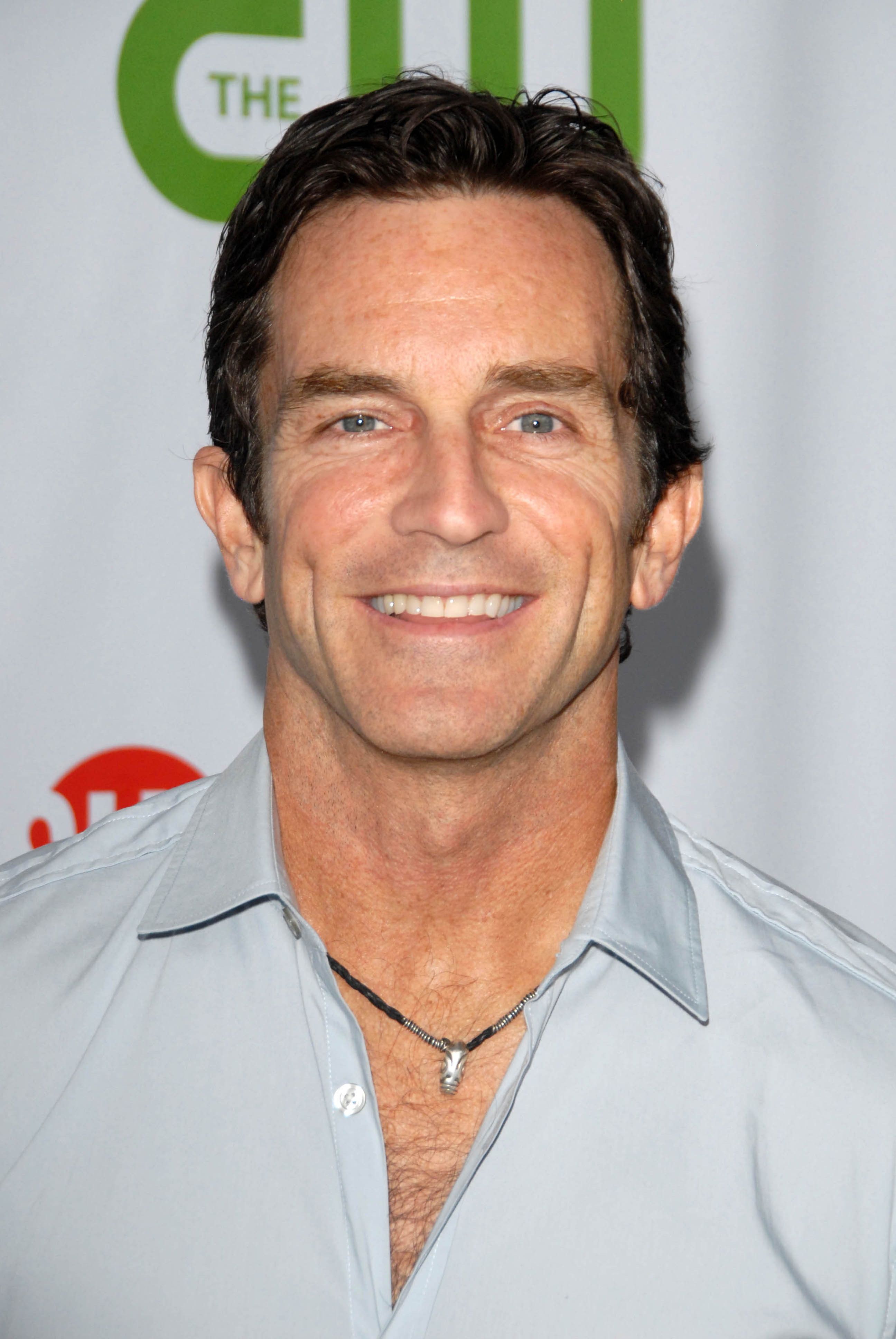
Before the blue button-downs and the dramatic torch snuffing, Jeff Probst was just a guy in Seattle trying to figure out how to be on camera. Honestly, if you saw him back then, you might not even recognize him. No khakis. No "come on in!" energy. Just a kid from Wichita who moved to the Pacific Northwest and decided that college wasn't really his vibe.
He dropped out of Seattle Pacific University. That’s a bold move for anyone, let alone someone who would eventually become the face of a multi-billion dollar franchise. But young Jeff Probst had a weirdly specific kind of hustle. He didn't just sit around; he went to work for Boeing. Not as an engineer, obviously, but producing marketing videos. Imagine being a Boeing employee in the 80s and having a future Emmy winner explain airplane safety or corporate logistics to you in a training film.
It was the ultimate low-stakes training ground.
From Corporate Training to the Wild West of FX
Probst didn't stay in the corporate world for long. He had this itch for real television. He ended up at a local Seattle station, KIRO-TV, hosting a gardening show. Yeah, you read that right. Gardening. It was sponsored by a hardware store. It's about as far from "outwit, outplay, outlast" as you can get, unless you're counting outlasting a stubborn weed in a flower bed.
The real shift happened when he decided to move to New York. In the mid-90s, the FX network was just starting up, and they had this bizarre concept where they broadcasted live from a literal apartment in Manhattan. Probst landed a gig hosting a show called Backchat.
The job was basically reading viewer mail.
He’d sit there, look into the camera, and answer letters from people complaining about the signal or asking about other shows. It was raw, it was awkward, and it was exactly where he learned how to handle live, unpredictable energy. If you look up old clips of Backchat, he’s got this floppy 90s hair and a much softer edge. He wasn't the "Alpha" host yet. He was more like the friendly neighbor who happened to be on your TV screen.
The Rock & Roll Jeopardy Era
By 1998, Probst was moving up the food chain. VH1 was at the peak of its "Cool Older Brother" phase, and they launched Rock & Roll Jeopardy!. This is probably the most famous version of young Jeff Probst before the island.
He was high-energy. He wore leather jackets and darker clothes. He had to keep track of obscure music trivia while dealing with rock stars who were often... let’s say, "unfocused."
It’s actually a great study in his development. On Survivor, he has to be the moral authority. On Rock & Roll Jeopardy!, he was the ringleader of a circus. He was also working as a correspondent for Access Hollywood around this time. He reportedly logged about 300,000 miles traveling the world to interview celebrities like Sandra Bullock.
That travel bug was already there. He was getting used to living out of a suitcase long before he ever set foot in Borneo.
The Meeting That Changed Everything (And the Phil Keoghan Rivalry)
Here is a detail most people miss. In 2000, Probst heard a radio interview with a "crazy British guy" named Mark Burnett. Burnett was talking about a new show where 16 people would be stranded on an island.
Probst heard it and went into full-on stalker mode.
He didn't just apply; he campaigned. He reportedly got down on his knees during a meeting with Burnett to prove how much he wanted the job. But he wasn't the only one in the running. The final two for the Survivor hosting gig were Jeff Probst and Phil Keoghan.
Probst has told this story about the day of the final audition. He saw Keoghan in the waiting room wearing a suit. Probst was in a t-shirt and jeans. He remember thinking, "A suit isn't Survivor." He was right. Burnett chose Probst for the island, and Keoghan, of course, went on to host The Amazing Race.
It’s one of those "sliding doors" moments in TV history. If Keoghan had worn a t-shirt, the entire vibe of reality TV might be different today.
More Than Just a Host
While he was becoming a household name, Probst was also trying to be a "serious" filmmaker. People forget that in 2001—the same year Survivor was exploding—he wrote and directed a movie called Finder's Fee.
It wasn't some tiny student project. It starred:
- James Earl Jones
- Ryan Reynolds (way before Deadpool)
- Robert Forster
It actually won the Best Picture award at the Seattle International Film Festival. It showed that he wasn't just a guy who could narrate a challenge; he understood story structure and character. That’s probably why he eventually became an Executive Producer on Survivor. He stopped being just the talent and started running the room.
The Legacy of the Early Years
Looking back at young Jeff Probst, the common thread is a total lack of fear regarding "starting over." He went from Boeing to gardening to viewer mail to rock trivia to the most famous reality show on earth.
He didn't wait for the perfect role. He just took whatever put him in front of a lens and worked it until something bigger showed up.
If you’re looking to apply some of that "Probst Energy" to your own life, here are a few takeaways from his early career:
- Hustle where you are: Don't turn your nose up at the "gardening show" version of your career. It’s where you find your voice.
- Listen to the radio: Or the modern equivalent. Probst found his life’s work by paying attention to a random interview.
- Dress for the job: Literally. His intuition that a suit didn't fit the "survival" brand is what gave him the edge over Keoghan.
- Don't be afraid to beg: If you really want the meeting, show the "Mark Burnett" in your life that you're willing to do the work.
Next time you see him in Fiji, remember the guy in the Manhattan apartment reading letters from grumpy viewers. He didn't just "get lucky." He outlasted everyone else in the waiting room.
Check out some of the early clips of Rock & Roll Jeopardy! on YouTube to see the transition for yourself. It’s a masterclass in how to evolve a TV persona without losing the core of who you are.



