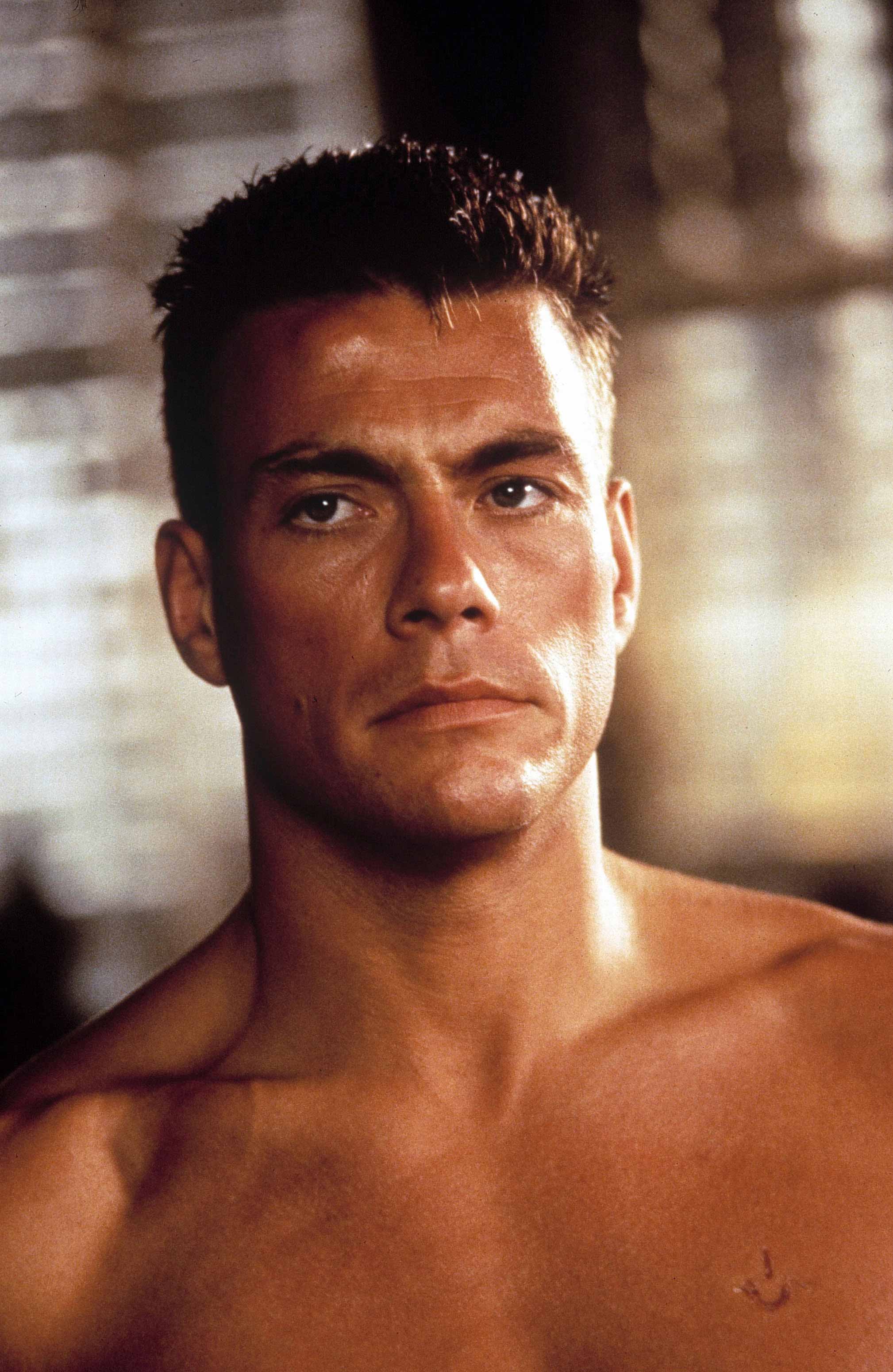
Before the multi-million dollar paychecks and the "Muscles from Brussels" moniker, Jean-Claude Van Damme was just a skinny, geeky kid in thick glasses named Jean-Claude Camille François Van Varenberg. Honestly, the image of him as a frail boy selling flowers in his father’s Brussels shop is hard to reconcile with the man who would eventually perform a 360-degree helicopter kick inches from a Hollywood producer’s face. But that’s the real story. It wasn't just luck. It was a weird, intense combination of Belgian grit, five years of classical ballet, and a level of audacity that most people would call "crazy."
The Scrawny Kid from Berchem-Sainte-Agathe
Born in 1960, Van Damme didn't start out with those iconic biceps. His father, Eugène, was an accountant and a florist. He saw his son was physically weak and enrolled him in Shōtōkan karate at age ten. That’s where everything changed.
The young Jean-Claude Van Damme wasn't a natural athlete. He had to work for every bit of flexibility he possessed. Under the mentorship of Claude Goetz, he spent years in the gym, often training for hours before most kids his age even woke up for school. By 18, he had his black belt. But he didn't stop at karate. He started lifting weights to build mass, eventually winning the Mr. Belgium bodybuilding title in 1978.
Then comes the part that usually surprises people. He took five years of ballet. He’s been quoted saying that ballet is one of the most difficult sports in the world. "If you can survive a ballet workout, you can survive a workout in any other sport," he famously claimed. That’s where that legendary flexibility—the splits that would later define his movies—actually came from. It wasn't just a martial arts trick; it was classical training.
Was He Actually a Real Fighter?
There is always this debate in martial arts circles: Is he a "fake" fighter?
The record says otherwise. Between 1976 and 1980, Van Damme compiled a semi-contact record of 44 wins and only 4 losses. In full-contact kickboxing, his record is even more staggering: 18 wins, all by knockout, and just 1 loss. He was a member of the Belgian Karate Team when they won the European Championship in 1979.
- Tournament wins: 44-4 (Semi-contact).
- Knockout power: 18-1 (Full-contact/Kickboxing).
- The Teugels Match: His 1980 TKO of Patrick Teugels is often cited as his most impressive real-world showing.
Some critics, including Joe Rogan in recent years, have questioned the caliber of his opponents. They argue he was a "point fighter" who fought nobodies. While he wasn't a K-1 champion, you can't ignore 18 knockouts. He was a legitimate, high-level competitor in the European circuit before he ever touched a movie set. He retired from active competition in 1982 to chase a different kind of glory in Los Angeles.
Homeless in Hollywood: The Lean Years
When Van Damme arrived in the U.S. in 1982 with his friend Michel Qissi (who played Tong Po in Kickboxer), he had about $2,000 to his name. That money didn't last long.
He was essentially a "gym rat" sleeping in his car. He took every odd job imaginable to keep the dream alive. He laid carpets. He delivered pizzas. He drove limousines. He even worked as a bouncer at a club owned by Chuck Norris. Think about that for a second. The future global superstar was checking IDs and tossing drunks for a living.
His first "role" was as an extra in the 1984 breakdancing movie Breakin'. If you look closely at the background during the beach scene, you can see a young Jean-Claude Van Damme in a black singlet, dancing like his life depended on it. It’s hilarious, but it shows his desperation. He just wanted to be on camera.
The Kick That Changed Everything
His big break is literally the stuff of Hollywood legend. In 1986, he spotted Menahem Golan, the head of Cannon Films, leaving a restaurant in Beverly Hills.
Van Damme didn't ask for an autograph. He didn't hand over a resume. Instead, he performed a roundhouse kick that stopped just a hair's breadth from Golan’s face. Most people would get arrested for that. Golan gave him a business card.
That meeting led to Bloodsport. The movie was filmed for a measly $1.5 million and sat on a shelf for two years because the producers thought it was terrible. Van Damme reportedly helped re-edit the film himself to make the fight scenes pop. When it finally hit theaters in 1988, it made over $30 million. A star was born.
Moving Beyond the Hype
If you want to understand the impact of the young Jean-Claude Van Damme, don't just look at the box office. Look at the technique. He brought a specific aesthetic to action cinema—fluidity, grace, and that trademark 360-degree kick—that wasn't there before. He wasn't just a brawler like Stallone or a stoic presence like Schwarzenegger. He was a performer.
Practical Lessons from the JCVD Era:
- Diversify your training: His success came from mixing karate, bodybuilding, and ballet. Narrow specialization is often a trap.
- Audacity works: The kick at Menahem Golan was a massive risk. In a crowded market, being "polite" rarely gets you noticed.
- Longevity requires evolution: He eventually struggled with the "tough guy" image, but his later work, specifically the film JCVD (2008), proved he actually had acting chops.
If you’re looking to dive into his early filmography, start with No Retreat, No Surrender (1986). He plays the villain, Ivan the Russian, and he’s absolutely terrifying. You can see the raw hunger in his performance. He wasn't a celebrity yet; he was a guy who knew this was his one and only shot.
To truly appreciate the "Muscles from Brussels," you have to see past the 90s action-hero tropes. You have to look at the kid who spent five years in a leotard just so he could be more dangerous in a gi. That kind of dedication is rare, and it’s why we’re still talking about him forty years later.
Watch Bloodsport again. Pay attention to the footwork. That isn't just movie magic; that's 15 years of Brussels-bred discipline.
Next Steps: If you want to verify his fighting credentials, you can look up the archived records of the Professional Karate Association (PKA) from the late 70s. For a deeper look at his transition to acting, seek out the documentary JCVD: Behind Closed Doors, which offers a surprisingly raw look at his personal struggles and his early career aspirations.



