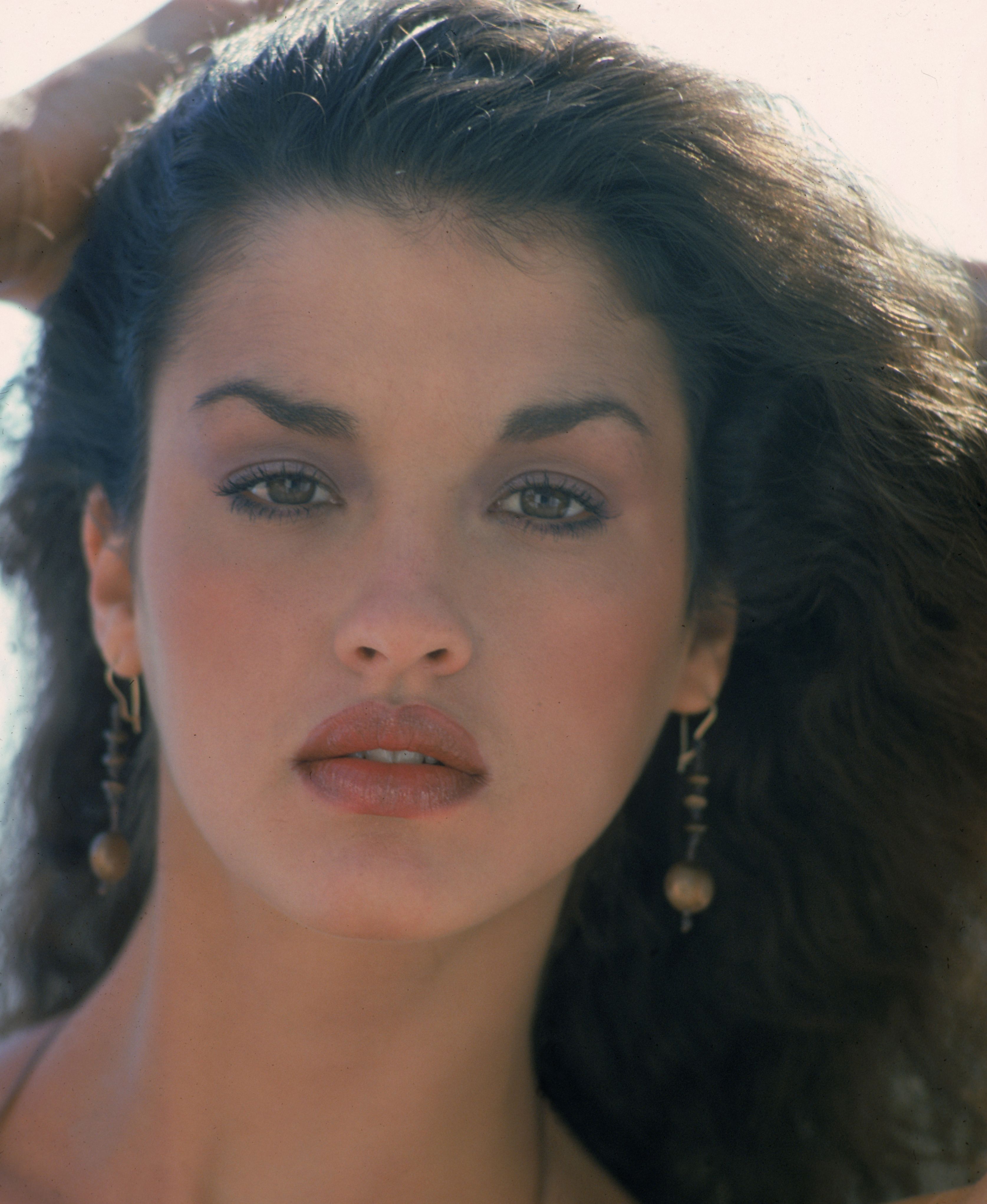
Janice Dickinson didn't just walk into a room; she detonated in it. Long before the reality TV meltdowns and the "witch" persona on America’s Next Top Model, there was a girl from Hollywood, Florida, with big brown eyes and a mouth that refused to stay shut. Most people today know her as a caricature of a bygone era. They’re wrong. Young Janice Dickinson modeling was a tectonic shift for the fashion industry.
She was the "Polish mutt" who broke the "blonde-only" rule. Meanwhile, you can read related events here: The Bonnie Tyler Health Falsehoods and the Toxic Mechanics of Celebrity Death Hoaxes.
In the early 1970s, the "look" was Barbie. Think Cheryl Tiegs. Think Christie Brinkley. If you didn't have blue eyes and hair the color of Kansas wheat, you didn't exist. Janice showed up at the doorstep of Eileen Ford—the most powerful woman in modeling—and was told she was "too ethnic." Ford famously told her she would never work. That kind of rejection would break most teenagers. Janice just got angry.
The Paris Pivot and the $2,000 Day
Rejection in New York sent her packing for Paris. It was the smartest move she ever made. European editors didn't want the girl-next-door; they wanted the girl you’d never meet in real life. They wanted "exotic." They wanted the sharp jawline and the "bee-stung" lips that photographers like Jacques Silberstein and Mike Reinhardt couldn't stop shooting. To see the complete picture, we recommend the recent analysis by Associated Press.
By the time she returned to Manhattan in 1978, the power dynamic had flipped. She wasn't just working; she was dominating.
She was pulling in $2,000 a day. That’s roughly $9,000 in today’s money.
Why the "Supermodel" Label Actually Started Here
Janice claims she coined the term "supermodel" in 1979. Whether she actually invented the word or just branded herself with it is still a debate for fashion historians, but the story is legendary. Her manager, Monique Pillard, told her she was working too hard and asked, "Who do you think you are, Superman?" Janice fired back: "No, I'm a supermodel."
She had the receipts to back it up:
- 37 Vogue covers (International editions)
- Seven consecutive covers of Elle
- Campaigns for Versace, Valentino, and Calvin Klein
- The face of Revlon, Max Factor, and Christian Dior
Her work with photographer Richard Avedon changed the game. He told her her eyes were like "liquid pools," and together they created images that were less about selling a dress and more about selling a mood—dangerous, expensive, and slightly unhinged.
Studio 54 and the Dark Side of the Flash
You can't talk about young Janice Dickinson modeling without talking about the chaos. This was the era of Studio 54. Janice was right in the thick of it with Andy Warhol, Mick Jagger, and Jack Nicholson. The lifestyle was fueled by champagne and cocaine. It kept her thin, and it kept her "on," but it also started the cracks in her foundation.
She once fell off a Valentino runway and landed directly in Sophia Loren’s lap because she was too drunk to walk.
Honestly, the 80s were a blur of high fashion and high stakes. She was a pioneer of the "work hard, play harder" ethos that eventually claimed peers like Gia Carangi. Janice survived, but the industry took its toll. She witnessed the transition from the "glamour girl" era to the "heroin chic" 90s, and she didn't always go quietly.
Breaking the Ford Monopoly
One of the most overlooked parts of her early career was her "revenge" on Eileen Ford. After Ford told her she'd never make it, Janice eventually signed with the agency anyway—only to lead a mass exodus of models to John Casablancas’s upstart agency, Elite Model Management. It was a business move that changed how modeling agencies operated forever. She wasn't just a pretty face; she was a disruptor.
How to Apply the Janice Dickinson Mindset Today
If you’re looking at Janice’s early career for inspiration, it’s not about the partying—it’s about the resilience. She entered an industry that told her she didn't belong because of her ethnicity and her features. She forced the industry to change its definition of beauty.
- Weaponize Rejection: When Eileen Ford said no, Janice used that as fuel. If one market (New York) isn't buying what you're selling, find the market that will (Paris).
- Define Your Own Category: She didn't wait for someone to call her a supermodel; she claimed the title. In any career, branding yourself is half the battle.
- Study the Craft: Janice didn't just pose. She studied the photographers. She learned about lighting and film. This is why she was able to transition into photography and talent scouting later in life.
The real legacy of young Janice Dickinson modeling isn't just the photos in the archives. It’s the fact that she paved the way for models like Naomi Campbell and Cindy Crawford. She proved that you didn't have to be "safe" to be a star. You just had to be undeniable.
If you want to understand the modern influencer or the reality-star-as-mogul, you have to look at Janice. She was the blueprint. She was the first to realize that being a "model" was a job, but being a "supermodel" was a business.
Actionable Next Steps:
- Research the "Avedon Years": Look up the specific Vogue covers from 1978-1982 to see how the lighting shifted to accommodate more "Mediterranean" features.
- Read "No Lifeguard on Duty": This is Janice’s first memoir. It’s raw and gives the best context for the 70s fashion scene.
- Contrast with the 90s: Compare Janice's early work with the "Big Five" (Naomi, Linda, Cindy, Christy, Tatjana) to see how her "exotic" look became the industry standard.