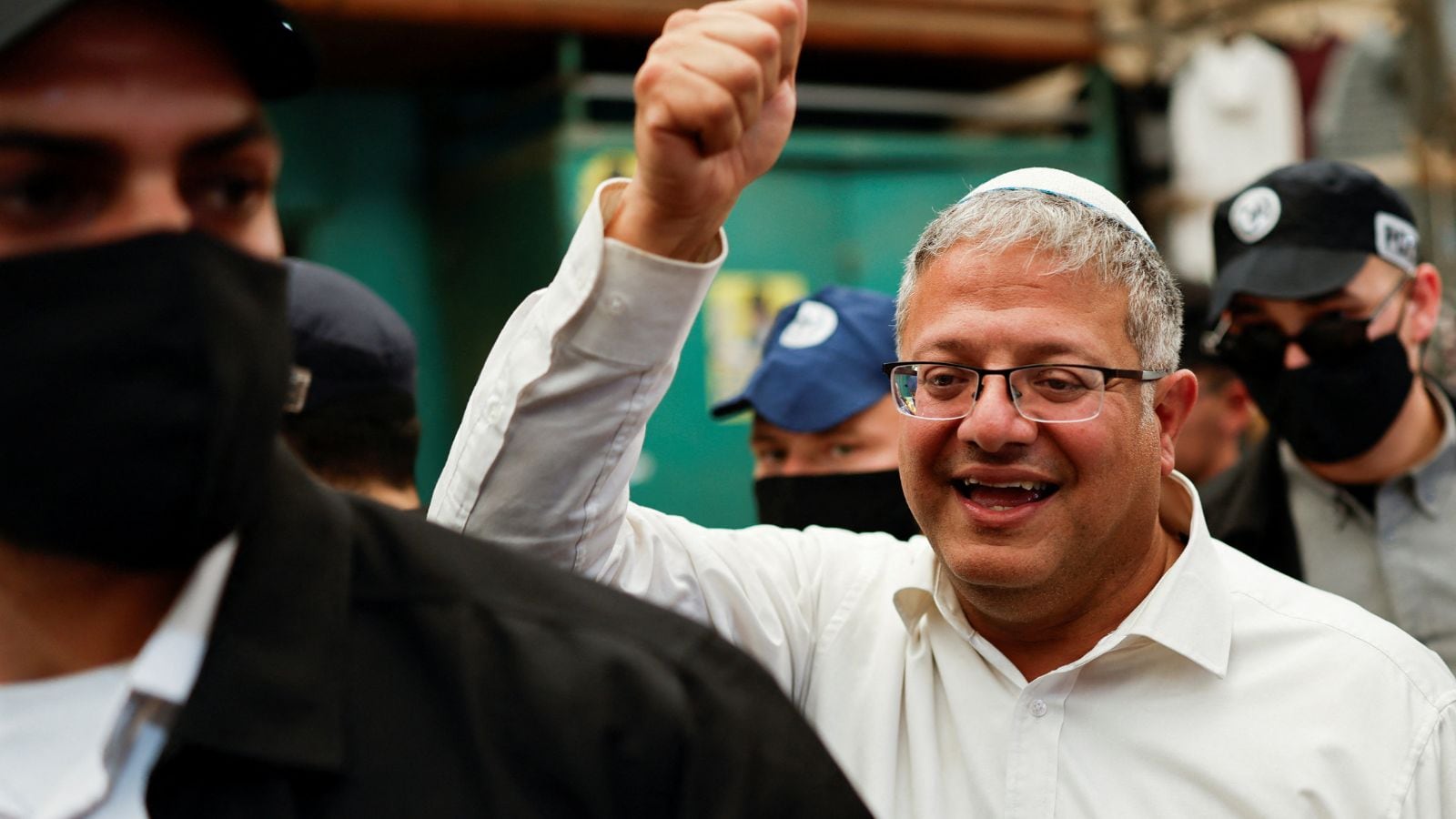
Young Israelis are turning toward Itamar Ben-Gvir and Otzma Yehudit (Jewish Power) because years of acute security trauma, prolonged military conflict, and distrust of legacy political institutions have pushed a growing share of first-time and urban voters to favor uncompromising force over diplomatic compromise. Ahead of Israel's October 27, 2026 parliamentary election, pre-election surveys predicted that Ben-Gvir would expand his base beyond West Bank militant enclaves into younger and urban cohorts, forecasting eight or more seats for his party even as Benjamin Netanyahu's Likud faced projected seat losses. When the official ballots were counted for the 26th Knesset, Otzma Yehudit finished with seven seats and 5.74% of the vote, holding steady in seat count from the prior election while Likud dropped to 27 seats and overall voter turnout climbed to nearly 78%—the highest mark since 1999.
Surface-level coverage often treats a youth shift to the far right as a simple story of radicalization or shock politics. That framing misses the mechanics of how generational trauma, demographic expansion, and coalition arithmetic actually interact at the ballot box.
Generational Trauma Rewrites the Youth Baseline
Eighteen-year-olds entering the electorate in late 2026 were infants when Netanyahu returned to the premiership in 2009. They have never known a political era defined by peace negotiations or centrist consensus.
For this cohort, politics is not an abstract debate over borders or international standing. It is shaped by rocket sirens, wartime mobilization, and the memory of the October 7 attack, which left roughly 1,200 people dead in Israel and 251 taken hostage. Among young voters who came of age amid repeated rounds of violence, hardline security rhetoric often registers as clarity rather than extremism. A voter in Sderot captured that calculus plainly during the 2026 campaign, saying he backed Ben-Gvir because he believed he was the one who fought terrorists best.
Older generations of Israelis often carried memories of earlier diplomatic openings, labor-era institutions, or a post-Cold War belief that international integration offered safety. Younger voters have fewer such reference points. When established security and political models appear to have failed to prevent catastrophe, an unfiltered demand for maximum deterrence feels like realism to many young citizens, even when critics warn it deepens long-term isolation and internal division.
The Myth of the Monolithic Far-Right Surge
Pre-election headlines frequently warned of an unchecked far-right wave sweeping young Israelis into Ben-Gvir's camp. The actual 2026 vote tells a more complicated story.
While pre-election polls suggested Ben-Gvir could reach eight or more Knesset seats on the strength of younger and urban appeal, the final result of seven seats showed resilience rather than a runaway breakthrough. Across the broader extremist and ultranationalist far right, multiple lists competed separately—including Otzma Yehudit, an alliance of the Religious Zionist Party and Zehut, and Amcha Yisrael—with the far-right lists winning 13 seats combined compared to 14 when they ran together in 2022.
Just as importantly, the youth electorate is not moving in a single direction. Demographic analysis of the 2026 election cycle highlighted that roughly 600,000 new voters had been added to the eligible rolls compared with 2022, including strong voting intent among young Palestinian Arab citizens seeking to unseat the ruling coalition. Among Jewish Israelis, polling showed sharp ideological polarization, with large shares identifying on the right while substantial minorities backed opposition and anti-establishment alternatives.
| Electoral Dimension | Pre-Election Narrative (Oct 2026) | 26th Knesset Outcome (Oct–Nov 2026) | What It Reveals |
|---|---|---|---|
| Otzma Yehudit (Ben-Gvir) | Forecast at 8 or more seats on rising youth and urban support | 7 seats (5.74% of valid votes) | Durable hardline core, but not an unlimited surge |
| Likud (Netanyahu) | Projected to lose roughly one-third of its seats | 27 seats (down from 32 in 2022) | Incumbent erosion without an opposition majority |
| Overall Turnout | High stakes around war, security, and judicial clashes | 77.9%–78.0%, highest since 1999 | Intense mobilization across competing camps |
| Knesset Bloc Balance | Deadlock predicted between governing and opposition blocs | Netanyahu bloc 53, opposition 48, Arab parties 19 | Fragmentation leaves no clear 61-seat majority |
How Ben-Gvir Competes for Urban, Mizrahi, and Religious Youth
To understand Ben-Gvir's appeal beyond traditional West Bank settlement strongholds, look at how he packages grievance and defiance. Ben-Gvir has long cultivated an outsider persona built on confrontation—with Palestinian prisoners, anti-government protesters, foreign activists, and legal institutions alike.
In Israeli politics, that theatrical toughness resonates with segments of working-class and Mizrahi voters who have felt looked down upon by an Ashkenazi secular elite or underserved by state institutions. When Ben-Gvir attacks courts, bureaucrats, or diplomatic critics, supporters often hear him defending ordinary people who feel ignored by establishment gatekeepers.
He has also pushed directly onto Shas's traditional turf among conservative Mizrahi voters while positioning himself as a louder, more combative alternative to a graying Likud. Surveys of younger Jewish voters in 2026 also pointed to high levels of religious self-identification and hardline security attitudes, creating fertile ground for a leader who blends religious nationalism with street-level populism.
Yet that same brand carries built-in friction. Provocations—from theatrical stunts and harsh rhetoric on detainees and activists to clashes over judicial authority and international pressure—energize loyalists while alienating swing voters who want stability, economic predictability, or broad coalition governing power.
Coalition Math Turns Youth Votes Into Leverage
In a proportional system with a 3.25% electoral threshold and 120 seats, a party does not need a national majority to shape government policy. It needs leverage inside a tight coalition.
The 2026 election produced a deeply fractured Knesset with 11 parties clearing the threshold. Netanyahu's bloc ended up with 53 seats, Gadi Eisenkot's opposition camp won 48, and Arab parties secured 19—leaving no bloc at the 61-seat mark needed for a simple majority.
Even a modest share of youth votes matters enormously in that arithmetic. Every seat a hardline faction wins or holds increases its bargaining power over cabinet portfolios, policing priorities, judicial appointments, and West Bank or Gaza policy. A hypothetical example illustrates the dynamic: if a right-wing bloc sits at 58 seats and a hardline party holds seven rather than four, coalition negotiations become far more expensive for the prime minister in policy concessions.
What Analysts Often Overlook
One common mistake in reading youth shifts is assuming a teenager's first ballot locks in a lifelong political identity. Young voters often vote with sharper emotional urgency than middle-aged voters, yet they also face shifting economic pressures, military service realities, and disillusionment when politicians fail to deliver immediate security or cost-of-living relief.
Another blind spot is treating Israel's political split solely as left versus right. The 2026 landscape showed deep fissures inside both major camps—such as Likud losing ground while Yashar emerged with 21 seats and Beyachad took 12—proving that voter anger at political stagnation cuts across ideological lines.
For anyone tracking Israeli politics, the real takeaway from the youth shift toward Ben-Gvir is not that democracy has vanished overnight or that every young Israeli shares his worldview. It is that a generation raised in perpetual conflict is willing to reward uncompromising force, forcing every mainstream leader in Jerusalem to reckon with a harder, more polarized electorate.