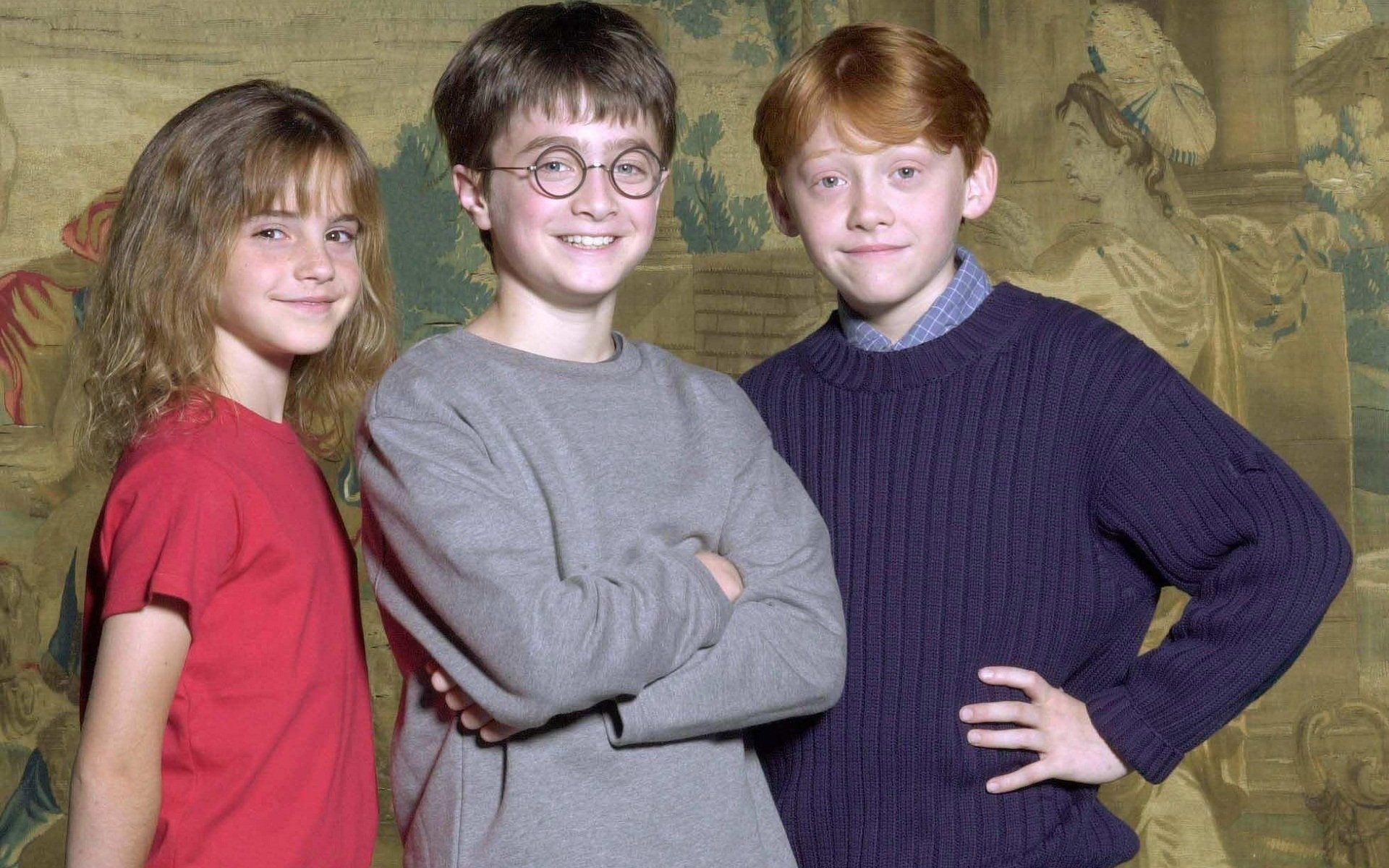
We all think we know Hermione. She’s the girl with the bushy hair, the hand always in the air, and a brain that basically functioned as a GPS for the Wizarding World. But the young Hermione Granger we meet on the Hogwarts Express didn't just appear out of thin air. Honestly, if you look closely at the breadcrumbs J.K. Rowling left in the books and various interviews, her life before she ever held a wand explains exactly why she was so intense—and why she was so lonely.
Most people assume she was just a natural genius. That’s actually a bit of a misconception. Hermione wasn’t just "born with it." She was a girl who used books as a shield. Before she was a witch, she was a Muggle girl who probably felt like she didn't fit in, and that drive to be the best wasn't just about ego. It was about survival.
The Mystery of the Granger Household
It’s kinda wild how little we actually know about Hermione’s parents. We know they were dentists. We know they were "ordinary" and maybe a bit "bemused" by their daughter's magic. But Rowling famously kept them in the shadows. Unlike the Weasleys, whose every dinner table argument is documented, the Grangers remain nameless. We don’t even have their first names; "Wendell and Monica" were just the aliases Hermione gave them when she wiped their memories in Deathly Hallows.
Growing up as an only child in a professional, middle-class household, young Hermione Granger likely spent a lot of time around adults. This explains her comfort with authority figures like Professor McGonagall. While other kids were playing outside, she was likely in a library. She was the kid who probably preferred the company of a thick encyclopedia to a group of peers who didn't understand why she was "so weird."
The Birthday Gap: A Year of Secret Study
Here is a fact that usually blows people’s minds. Hermione’s birthday is September 19th. Because she was born in 1979, she was actually almost twelve when she started Hogwarts in 1991. Harry and Ron were still eleven.
That almost-entire-year between receiving her letter and actually getting on the train? She didn't spend it playing video games. She spent it memorizing Hogwarts: A History. Imagine being a Muggle-born kid, discovering you’re a witch, and having twelve months to obsessively prepare so you don't look "stupid" in front of the "real" wizards. That's a lot of pressure for a kid. No wonder she was such a know-it-all when she finally arrived. She had a massive head start and was terrified of losing it.
Why Young Hermione Granger Almost Went to Ravenclaw
A lot of fans forget that Hermione was almost a "Hatstall." That’s the term for when the Sorting Hat takes longer than five minutes to decide. It sat there, wavering between Ravenclaw and Gryffindor.
You’d think Ravenclaw was the obvious choice, right? She’s smart. She loves books. But the Hat saw something else. Even as a young girl, Hermione valued bravery and friendship over "mere" cleverness. Remember what she told Harry at the end of the first book?
"Books! And cleverness! There are more important things — friendship and bravery..."
That quote is basically her entire character arc in a nutshell. She started as a girl who thought rules and grades were the only things that made her valuable. By the time she was twelve, she was setting a teacher on fire to save her friend. That’s a pretty steep learning curve.
The Reality of Being "The Smart Girl"
Honestly, the way people treated young Hermione Granger in the early books was pretty brutal. Ron was actually kind of a jerk to her. He called her a "nightmare" and made her cry in a bathroom stall.
We see this pattern in the Muggle world too. Expert analyses of her character often point out that Hermione likely faced bullying long before Hogwarts. She was the teacher’s pet. The girl who corrected your grammar. In the Muggle world, that makes you a target. In the Wizarding world, it made her "annoying."
But there’s a nuance here: her "bossiness" was a defense mechanism. If she was the smartest person in the room, nobody could tell her she didn't belong. For a Muggle-born girl in a world that literally has a slur for people like her ("Mudblood"), being perfect was her way of proving she had a right to be there.
The Emma Watson Factor
We can't talk about young Hermione without mentioning Emma Watson. Casting her was a huge turning point. Interestingly, Rowling initially thought Emma was "too pretty" to be Hermione, but after a single phone call where 9-year-old Emma talked her ear off for sixty seconds straight, Rowling knew she had the personality right.
Emma Watson actually lived out Hermione’s life in real time. She was tutoring for five hours a day on set and eventually got straight A's in her GCSEs. She was literally living the "brightest witch of her age" life while filming.
Common Misconceptions About Her Early Years
- She was always a rule-breaker: Nope. Young Hermione was terrified of breaking rules. She famously said getting expelled was worse than being killed. It took the trauma of a Mountain Troll to make her realize that sometimes, rules are dumb.
- She had a sister: Rowling actually intended to give Hermione a younger sister. She mentioned this in several early interviews, but as the books got longer, she realized there just wasn't room for her. So, Hermione stayed an only child.
- She knew she was a witch since birth: Unlike Harry, who had "accidental magic" moments he didn't understand, Hermione likely didn't know what was happening until a professor (likely McGonagall) showed up at her house to explain the letter.
What This Means for Us
The story of young Hermione Granger is actually a masterclass in building resilience. She didn't start out as a hero. She started out as a lonely, insecure girl who used her brain to build a wall around herself.
If you're looking to apply "The Hermione Method" to your own life or even just understand the series better, look at her transition from 1991 to 1993. She stopped trying to be right and started trying to do right.
Next Steps for Potterheads: If you want to see the "real" Hermione, re-read the first three chapters of Philosopher's Stone and pay attention to how she introduces herself. Look for the moments where she mentions her parents—those brief glimpses are the only windows we get into the Muggle life she left behind. You might also want to look up the "Hatstall" lore on the official Wizarding World site; it adds a lot of depth to why she ended up in red and gold instead of blue and bronze.



