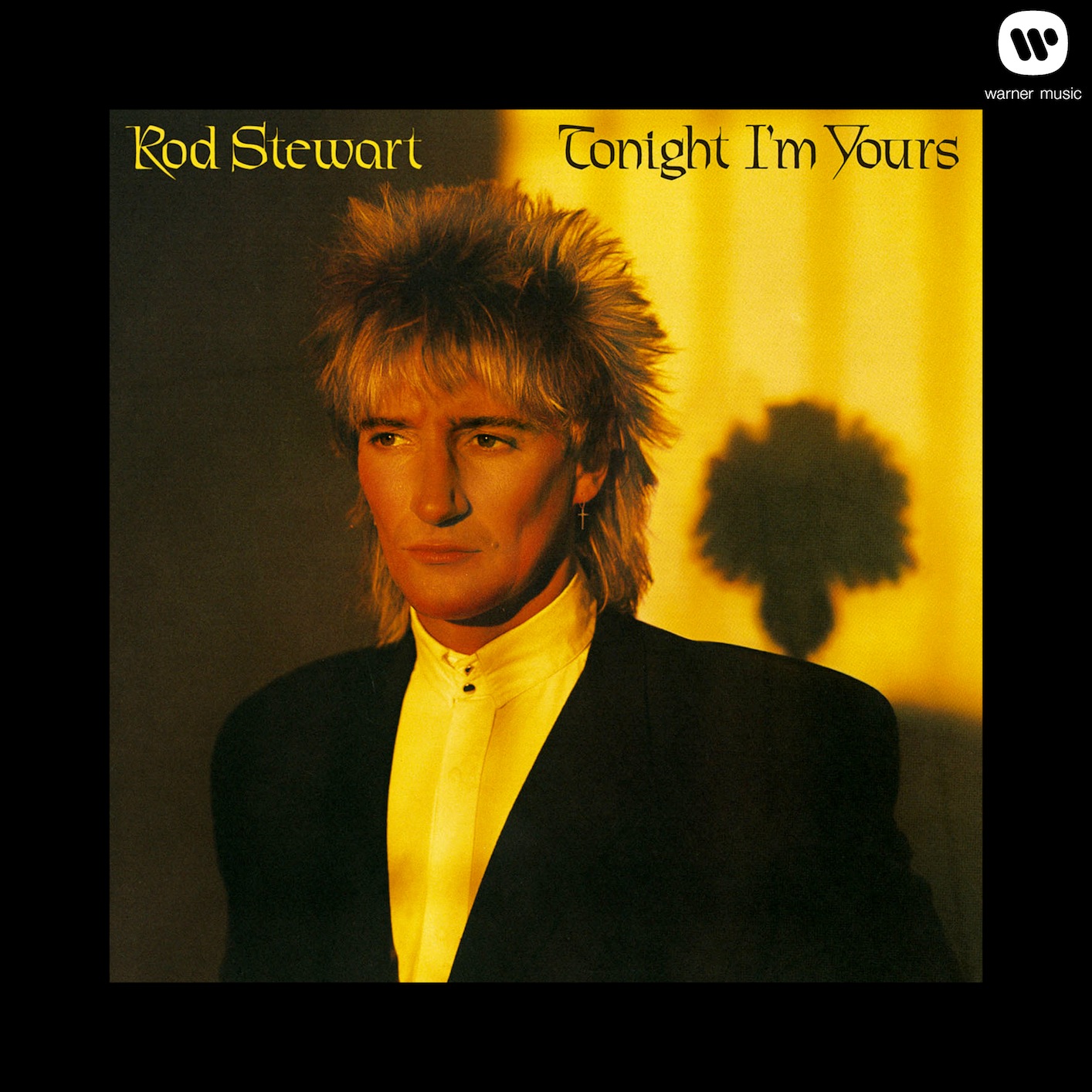
You’ve probably been there. You’re at a wedding or a bar, that driving 80s synth-pop beat kicks in, and everyone hits the floor shouting, "Young hearts be free tonight!" It’s one of those quintessential anthems of rebellion. But if you went to look for it on a jukebox back in the day, or even on Spotify now, you might have been confused to find that the track isn’t actually called "Young Hearts."
It’s "Young Turks."
Honestly, it’s one of the great "Mandela Effect" moments in pop history, except it's not a memory slip—it’s just a weird titling choice by Rod Stewart. The phrase "Young Turks" literally never appears in the lyrics. Not once. Yet, this 1981 smash hit defined a pivot point in Rod’s career, shifting him from the "Da Ya Think I'm Sexy?" disco era into a sleek, New Wave sound that somehow managed to feel both gritty and polished.
The Story of Billy and Patti
Basically, the song is a miniature movie. Rod Stewart has always been a storyteller—think "Maggie May" or "The Killing of Georgie"—and here he tackles the classic trope of the runaway couple. We have Billy, who leaves home with "a dollar in his pocket and a head full of dreams," and Patti, just seventeen, kissing her little sister goodbye with tears in her eyes.
It’s a tale as old as time.
But Rod gives it a very specific 1981 energy. They aren't just running away; they’re escaping the suffocating expectations of a "paradise" that was closed to them. They head to the coast, find a two-room apartment that’s "jumping every night," and—in a surprisingly grounded twist for a pop song—they actually make it work. Patti has a ten-pound baby boy. Billy writes a letter home to explain. There’s a sense of bittersweet victory here that most "young love" songs miss.
What’s With the Title?
So, why "Young Turks"?
Historically, the term refers to a secular nationalist reform party in the early 20th-century Ottoman Empire. By the 1980s, it had become slang for a rebellious youth who acts contrary to societal norms. It fits the vibe of Billy and Patti, sure, but it’s still a bit of a curveball. Carmine Appice, who co-wrote the music, has mentioned in interviews that the title came from Rod's fascination with the term as a descriptor for the "new breed" of kids.
Interestingly, the song almost didn't sound like this. It was composed by Appice along with Duane Hitchings and Kevin Savigar. Hitchings actually noted that they were trying to stay contemporary. Synth-pop was exploding. If Rod wanted to stay on the charts, he couldn't just keep doing blues-rock.
A Pivot Toward the Future
Tonight I'm Yours, the album featuring the track, was a major stylistic shift. After the late 70s, critics were starting to write Rod off as a "disco casualty." Then came young hearts be free tonight Rod Stewart style—powered by a Roland TR-808 drum machine (one of the earliest uses in a major rock hit) and a sequence of fast, aggressive synthesizers.
It worked.
The song peaked at #5 on the Billboard Hot 100. It proved that Rod wasn't just a legacy act; he was a chameleon.
The Video That Changed MTV
You can't talk about this song without mentioning the music video. Directed by Russell Mulcahy—the guy who later did Highlander and was basically the king of early 80s music videos—it was filmed in the industrial heart of Los Angeles.
It’s famously the first video played on MTV to feature breakdancing.
Think about that for a second. Rod Stewart, the British rocker with the rooster hair, was the one who helped introduce hip-hop dance culture to a mainstream television audience. The video has this West Side Story aesthetic: dancers in the street, moody lighting, and Billy climbing down ladders from abandoned buildings. It captured the urban urgency of the decade perfectly.
Why Young Hearts Be Free Tonight Still Hits
There is something deeply optimistic about the chorus. "Young hearts be free tonight, time is on your side." It’s a direct contradiction to the usual "life is hard and then you die" trope. Rod is telling the youth—and maybe himself—that the window of freedom is open, even if only for a night.
Musically, the song is a masterclass in tension. That hi-hat is relentless. The bass line, which Rod actually admitted was inspired by the song "Native New Yorker" by Odyssey, keeps the whole thing leaning forward. It’s a song that refuses to sit still.
Common Misconceptions
- The "Young Hearts" Title: As mentioned, it’s a phantom title. If you search for it, you’ll find it, but the record sleeve says "Young Turks."
- The Lyrics: People often mishear the line "Billy pierced his ears, drove a pickup like a lunatic." It’s a tiny detail that makes Billy feel like a real person rather than a caricature.
- The Meaning: Some people think it's a sad song about kids ruining their lives. It's actually the opposite. It's about finding happiness in each other's arms "as expected" and building a life out of nothing.
Actionable Insights for Fans and Musicians
If you’re a songwriter looking to capture this kind of magic, or just a fan who wants to dive deeper, here is how you can apply the "Young Turks" philosophy:
- Embrace the "Pivot": Don't be afraid to change your sound. Rod went from folk-rock to disco to synth-pop. Each shift kept him relevant.
- Specifics Matter: Don't just write about "love." Write about a "ten-pound baby boy" and "tears in her eyes when she kissed her little sister." The more specific the story, the more universal the feeling.
- Visual Identity: If you’re a creator, remember that the "Young Turks" video did half the work. It gave the song a face and a location.
The legacy of young hearts be free tonight Rod Stewart remains untouched because it captures a feeling that never goes out of style: the terrifying, exhilarating moment you decide to leave home and start your own life. Whether you call it "Young Turks" or "Young Hearts," the sentiment is the same. Time is on your side, but it’s also a thief. You might as well take the shot while you’re still not afraid.
Next time you hear that synthesizer riff, don't just dance. Listen to the story of Billy and Patti. It’s a reminder that even when paradise is closed, you can always head for the coast.
Practical Next Steps:
- Listen to the 12-inch "Full Length" version: It features a much longer instrumental break that highlights the intricate synth work of Duane Hitchings.
- Watch the HD Remastered video: Look for the specific choreography by Kenny Ortega, who later went on to direct Dirty Dancing and High School Musical.
- Compare it to "Small Town" by John Mellencamp: It’s interesting to see how different artists handled the "escaping the hometown" narrative in the early 80s.



