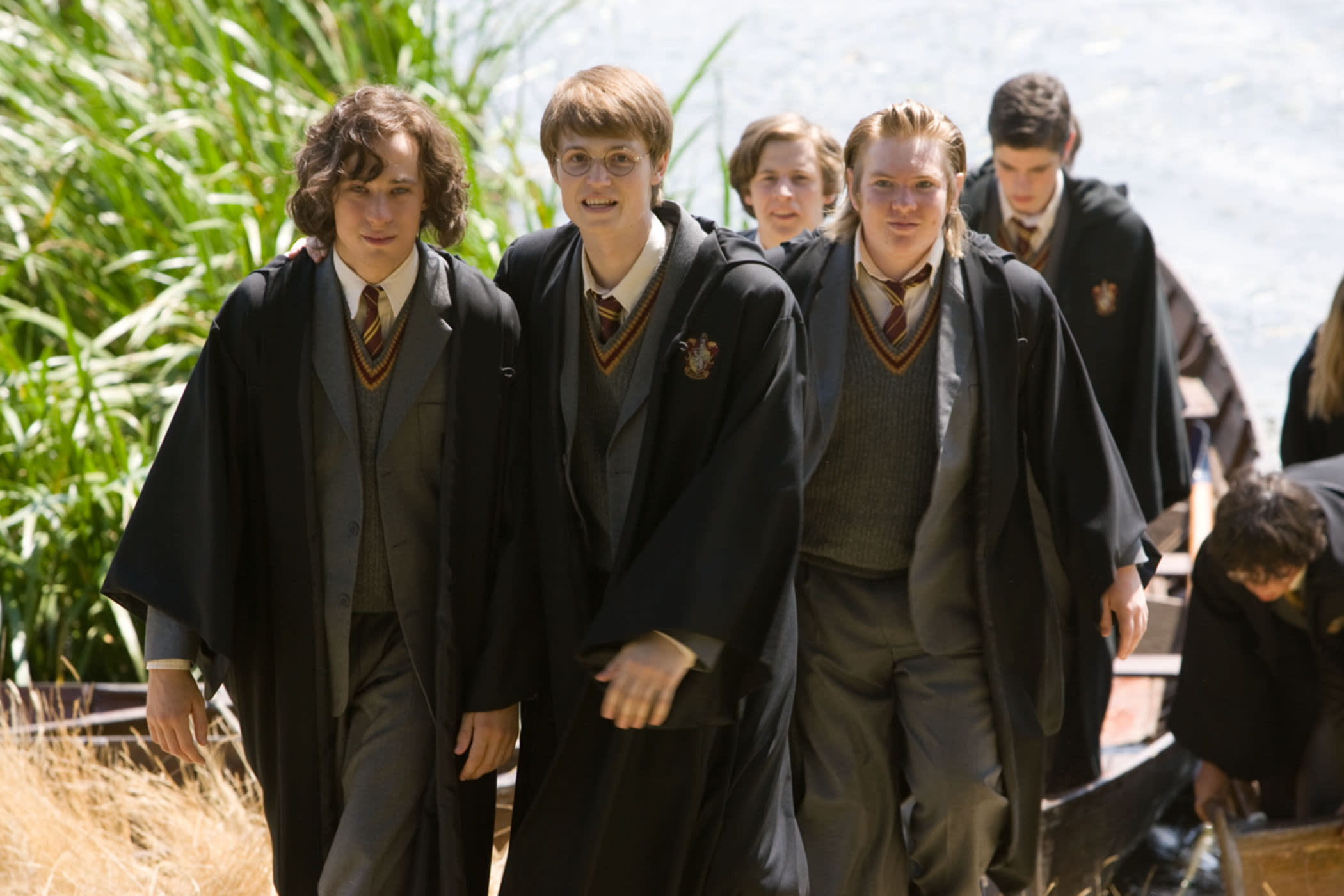
He lived in a cupboard. It’s the first thing we really learn about young Harry Potter, and it sets the tone for everything that follows. Honestly, if you look back at those early chapters of The Sorcerer’s Stone, J.K. Rowling wasn't just writing a kids' book; she was documenting a case of extreme childhood resilience. People often focus on the lightning scar or the round glasses, but the real story of the boy before Hogwarts is one of psychological survival.
He didn't know he was famous. He didn't know he was a wizard. All he knew was that he was "Harry," the unwanted nephew of Vernon and Petunia Dursley.
The Dursleys weren't just mean; they were systematically trying to erase his identity. Think about it. They told him his parents died in a car crash. They cut his hair till he was nearly bald—only for it to grow back overnight. They treated his accidental magic like a shameful disease. Yet, despite a decade of being told he was nothing, the young Harry Potter who walks into Diagon Alley for the first time isn't a broken shell. He’s curious. He’s observant. He’s surprisingly sassy for a kid who spent ten years getting pushed around by a cousin who looked like a "pig in a wig."
The Psychological Grit of Young Harry Potter Before Hogwarts
Most people forget how observant he actually was. In the early books, Harry has this dry, internal monologue that rarely makes it into the films. When Uncle Vernon tries to outrun the Hogwarts letters by driving to a shack on a rock in the middle of the sea, Harry isn't just scared. He’s counting. He’s tracking the time until his eleventh birthday. That’s a specific kind of mental toughness.
It’s called "The Cinderella Effect" in literature, but for Harry, it was literal survival.
Psychologists often point to Harry as a classic example of a "resilient child." Despite the lack of "Primary Caregiver" affection—something experts like John Bowlby argued is essential for healthy development—Harry managed to maintain a core sense of right and wrong. He didn't become a bully like Dudley. He didn't become a recluse. Instead, he developed a sharp sense of justice. When he meets Draco Malfoy in Madam Malkin’s robe shop, he doesn't need Hagrid to tell him Malfoy is a jerk. He feels it. He recognizes the same entitlement he saw in Dudley, and he rejects it instantly.
Why His Magic Was Different as a Child
Before he had a wand, young Harry Potter was performing what the Wizarding World calls "Underage Magic." But it wasn't controlled. It was reactionary.
Remember the school sweater? Aunt Petunia tried to force him into a hideous, shrinking rag, and the sweater just... got smaller and smaller until it wouldn't fit a hand puppet. Or the time he ended up on the school roof while running from Dudley’s gang. These weren't spells. They were outbursts of survival.
- The Vanishing Glass: At the zoo, Harry’s empathy for a boa constrictor literally dissolved a physical barrier.
- The Regrowing Hair: A subconscious rejection of the Dursleys' attempt to control his appearance.
- The Roof Jump: Physical teleportation (Apparition) born from pure adrenaline.
This kind of "wild" magic is actually a pretty big deal in the lore. It shows that Harry’s magical core was exceptionally strong even before formal training. Most wizarding kids do a bit of light hovering or maybe break a plate. Harry was accidentally rewiring local physics.
The Misconception of the "Chosen One" Burden
We tend to look at the prophecy as the thing that defined him. "Either must die at the hand of the other." But for the actual young Harry Potter—the eleven-year-old trying to figure out why his coins are gold instead of pounds—the prophecy didn't exist. He wasn't a hero yet. He was a boy who finally had friends.
That’s the real magic of the early years. It’s the friendship with Ron and Hermione.
If you look at the first few books, Harry is constantly trying to downplay his "Chosen One" status. He hates the attention. He hates that people stare at his forehead before they look at his eyes. When he looks into the Mirror of Erised, he doesn't see himself holding the House Cup or defeating Voldemort. He sees his family. He sees a version of himself that isn't alone. It’s a gut-wrenching moment that reminds us he’s just a kid who wants to belong.
Dealing With Fame He Didn't Ask For
Imagine being eleven and walking into a pub where everyone knows your name. It sounds cool until you realize they know your name because your parents were murdered.
The fame of young Harry Potter was built on tragedy. This created a weird duality in his personality. On one hand, he’s humble to a fault. On the other, he has a bit of a temper. He’s human. He gets frustrated when people think he’s a legend, especially because he knows he survived Voldemort as a baby through no effort of his own. It was Lily’s sacrifice, not his power.
This creates a massive amount of "Survivor’s Guilt" that bubbles under the surface of the entire series.
In The Chamber of Secrets, we see this peak. The school turns on him because they think he’s the Heir of Slytherin. One day he’s the hero, the next he’s the villain. For a kid who already spent ten years being the villain in the Dursleys' eyes, this was a massive psychological trigger. He handles it with a level of stoicism that most adults would struggle to find.
The Evolution of the Boy Who Lived
By the time he hits thirteen in Prisoner of Azkaban, the "young" Harry Potter is starting to fade into the "teen" Harry Potter. This is a pivotal shift. He stops reacting to the world and starts trying to change it.
He learns the Patronus Charm. This is arguably the most important piece of magic he ever performs. Why? Because a Patronus is fueled by a happy memory. For a kid who grew up in a cupboard, finding a memory strong enough to repel a Dementor is a monumental task. It shows he was actively choosing to focus on the good he’d found at Hogwarts rather than the trauma he’d left at Privet Drive.
He also starts to understand the complexity of his enemies. Seeing Peter Pettigrew—the man who actually betrayed his parents—and choosing not to kill him? That’s not "Chosen One" behavior. That’s a kid with an incredibly strong moral compass making a decision that even many adults would fail.
What You Can Learn From Harry’s Early Years
If we strip away the dragons and the flying broomsticks, the story of young Harry Potter is a masterclass in building resilience. It’s about how your environment doesn't have to define your character.
- Resilience is a muscle. Harry’s ability to handle the Dursleys prepared him for the Dementors. Whatever "cupboard" you feel stuck in right now is likely building the grit you'll need for your own "Hogwarts" moment later.
- Choose your influences. Harry chose Ron—a kid with a loving but poor family—over Malfoy, who offered power and status. Your circle determines your trajectory.
- Embrace your weirdness. The things that made Harry "freakish" to the Dursleys were the exact things that made him special in the real world.
- Action matters more than origin. It doesn't matter that he was born to be the Chosen One; it matters that he chose to go down the trapdoor in the third floor corridor.
The next time you re-watch the movies or crack open the books, look past the wand-waving. Look at the kid who decided to be kind even when the world gave him every reason to be bitter. That’s the real magic of the boy who lived.
If you're looking to dive deeper into the lore, your next step should be a focused re-read of the first three books specifically through the lens of Harry's internal dialogue. Pay close attention to how his thoughts differ from what he actually says out loud. You'll find a much snarkier, more complex character than the one often portrayed in pop culture summaries. Also, check out the "MinaLima" editions of the books if you want to see the physical artifacts—like the Hogwarts letter—reimagined in a way that highlights just how overwhelming that transition was for an eleven-year-old boy.



