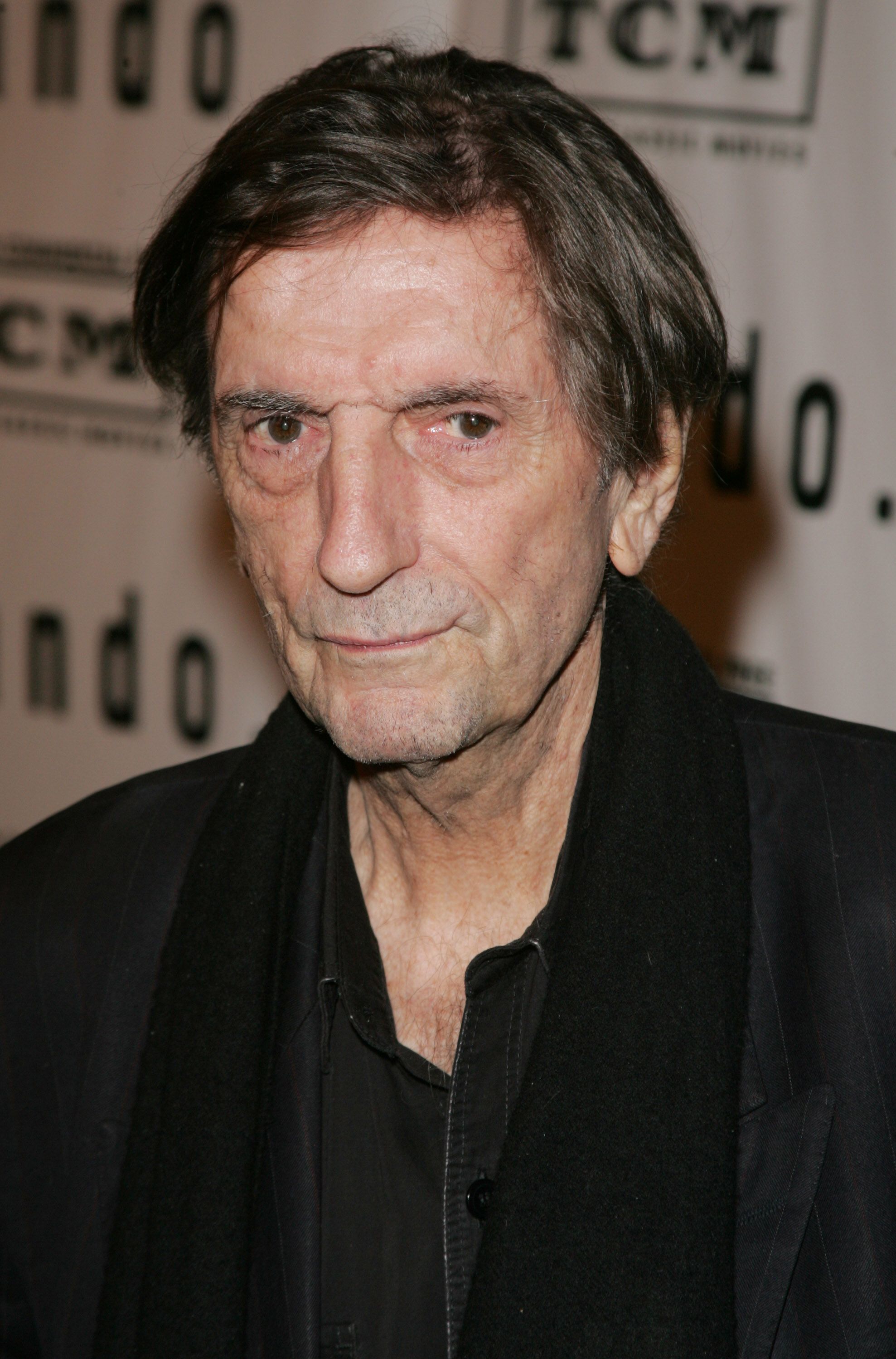
You know the face. It’s a face like a crumpled paper bag, full of lines that seem to tell stories he isn't quite ready to share. But long before he was the skeletal, silent drifter in Paris, Texas or the grumbling engineer in Alien, there was a young Harry Dean Stanton trying to find his footing in a Hollywood that didn't quite know where to put him.
He wasn't a leading man. Not then. Honestly, he wasn't really a "leading man" in the traditional sense ever, but in the 1950s and 60s, he was just another guy in a cowboy hat or a military uniform. He was "Dean Stanton" back then. He dropped the "Harry" to avoid being confused with another actor, Harry Stanton. It’s funny to think about now, considering he became one of the most singular presences in cinema history.
The Kentucky Boy and the Battle of Okinawa
Harry Dean was born in West Irvine, Kentucky, in 1926. His dad was a tobacco farmer and a barber; his mom was a cook and a hairdresser. It was a Depression-era upbringing, the kind of childhood that leaves a person with a permanent sense of restlessness. He grew up around Lexington and, like a lot of guys his age, the world changed when 1944 rolled around.
He joined the Navy.
He wasn't some high-ranking officer. He was a cook. Specifically, a cook on a Landing Ship Tank (LST-970) during the Battle of Okinawa. Imagine that for a second. You’re below deck, probably smelling like grease and salt, while the largest amphibious assault of the Pacific Theater is screaming overhead. He saw the kamikaze planes coming in. He later said he was lucky—most of the ships around them were getting hit, but his stayed afloat. That kind of experience stays in a man's eyes. When you see him in those early Westerns, looking a little hollowed out, that isn't just acting.
Learning the Craft at the Pasadena Playhouse
After the war, the G.I. Bill was his ticket out. He went back to the University of Kentucky, messed around with journalism and radio, but the acting bug bit him during a college production of Pygmalion. He played Alfred Doolittle. Apparently, he was good enough to realize he needed to head West.
He ended up at the Pasadena Playhouse.
This place was a legendary factory for talent. We're talking about the same era that saw guys like Gene Hackman and Robert Duvall passing through. Stanton spent four years there—two years studying and another two just living and breathing the theater. He was honing a style that was almost "anti-acting." He wasn't big. He wasn't loud. He was just there.
But even with all that training, Hollywood didn't hand him a golden key. He spent the late 50s and the entire 60s as a "that guy" actor. You'd see him on Gunsmoke—he was in eight different episodes playing different characters—or Bonanza or The Rifleman. He was the outlaw, the drifter, the guy who gets shot in the first ten minutes so the hero has something to do.
Why Young Harry Dean Stanton Refused to "Act"
There’s a famous story about him and Jack Nicholson. They were roommates for a while in the 60s, living in a house up on Mulholland Drive. They were part of this New Hollywood vanguard that was tired of the old, theatrical style of the studio system.
Jack once gave him some advice that basically defined Harry Dean’s entire career. He told him, "Let the wardrobe do the acting. Just play yourself."
It sounds simple. It’s actually incredibly hard.
Most actors feel the need to show you they are angry or show you they are sad. Harry Dean realized that if he just stood there and felt it, the camera would pick it up. This is why his early roles, even the tiny ones, feel so heavy. In Cool Hand Luke (1967), he plays Tramp. He’s the one singing "Just a Closer Walk With Thee." He actually taught Paul Newman the "Plastic Jesus" song. He wasn't just a face; he was a musician, a singer, and a soul that felt older than his years.
The Long Road to Paris, Texas
It took thirty years.
Thirty years of being a supporting player before Wim Wenders and Sam Shepard gave him the lead in Paris, Texas (1984). By then, the young Harry Dean Stanton was gone, replaced by the iconic, weathered version of the man we remember. But the foundation was laid in those decades of television Westerns and uncredited bit parts in movies like Hitchcock’s The Wrong Man.
He lived a philosophy that was sort of a mix of Taoism and "whatever happens, happens." He didn't believe in the "soul," but he believed in the moment.
If you want to understand his early work, look at the eyes. Whether he was a beatnik in The Man from the Diners' Club or a soldier in Pork Chop Hill, he was never faking it. He was just being.
Actionable Insights for Film Buffs
If you want to truly appreciate the evolution of this legend, don't just watch his hits. Do this:
- Track the "Dean Stanton" Credits: Go back to the late 50s episodes of Zane Grey Theater or The Texan. Watch how he carries himself before he became a "cult icon."
- Listen to the Music: Find the documentary Harry Dean Stanton: Partly Fiction. He sings "Across the Borderline." It explains more about his acting than any textbook ever could.
- Watch the Background: In movies like How the West Was Won, find him in the crowd. Even when he isn't the focus, his presence draws the eye because he’s the only one not "performing."
He was a man who lived by the idea that there is no "self." He told everyone who would listen that we're all just part of a big phantasmagoria. Maybe that's why he was so good at disappearing into those early roles—he wasn't trying to be a star. He was just trying to be present.



