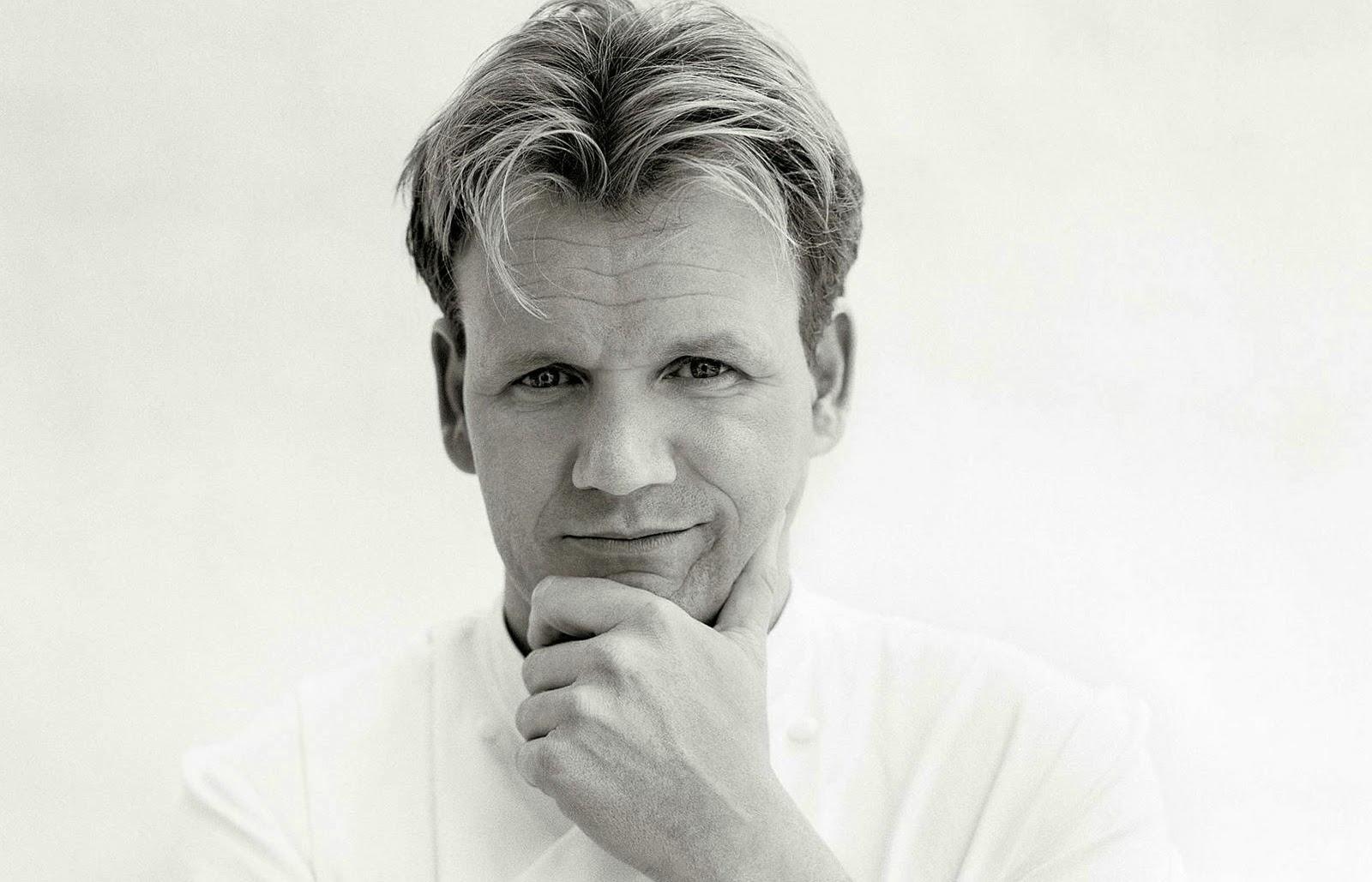
Everyone knows the guy who screams about raw sea bass on television. You've seen the memes, the forehead veins, and the "idiot sandwich" bits. But honestly, the version of the man we see today—this polished, global brand with a private jet lifestyle—is a far cry from the scrappy, slightly desperate young Gordon Ramsay who was wandering around London in the late 1980s with nothing but a failed sports career and a chip on his shoulder.
The transition from a rejected athlete to a culinary powerhouse wasn't a clean one. It was messy. It involved a lot of swearing, even more sweat, and a series of high-stakes gambles that almost didn't pay off. If you look back at the footage from his early days, especially the stuff before he became a household name, you see a guy who wasn't just angry; he was driven by a genuine, terrifying fear of failure.
The Football Myth vs. The Reality
Most people think Gordon was some sort of Premier League prodigy who got robbed by a freak accident. The truth is a bit more nuanced. Ramsay was a talented left-back, sure. He was aggressive, a "cut-throat tackler" by his own admission, and he did have a trial with the Glasgow Rangers, the club he supported as a kid.
But he wasn't exactly the next David Beckham.
He played a couple of non-league matches as a trialist. He was monitored by scouts. But the big "what if" of his life ended in 1985 when a torn cruciate ligament basically turned his knee into jelly. At 19, his identity was gone. He didn't have a backup plan. He wasn't some culinary savant who had been baking soufflés since he was five; he was a kid from a rough household who needed a job so he wouldn't end up like his alcoholic father.
He enrolled in North Oxfordshire Technical College for hotel management. It was a fluke. He’s said before that it was basically the only course he could get into. No grand vision. Just a need to do something.
Surviving the "Kitchen From Hell"
If you think Gordon is a nightmare to work for, you should have seen his mentors. After finishing college, the young Gordon Ramsay landed in London. This is where the real education started. He didn't start at the top; he fought his way into the kitchen of Harvey’s under the legendary Marco Pierre White.
If Gordon is a firecracker, Marco was a nuclear bomb.
Working at Harvey’s in the late 80s was essentially a form of psychological warfare. Marco was the youngest chef to ever get three Michelin stars, and he was notorious for making his staff cry. Literally. There’s a famous story of Gordon slumped in a corner of the kitchen, head in his hands, sobbing while Marco watched. It sounds brutal because it was.
But that’s where the discipline came from. You can't survive that environment without developing a skin thick enough to stop bullets. Ramsay stayed for nearly three years before realizing that if he stayed any longer, he’d just become a mini-Marco. He needed his own voice.
The French Connection
To find that voice, he went to France. This was a massive risk. At the time, British chefs were looked down upon by the French culinary elite. He didn't speak the language. He was basically starting over.
He worked under:
- Albert Roux at Le Gavroche (who later sent him to the French Alps).
- Guy Savoy in Paris, whom Gordon still calls his "greatest mentor."
- Joël Robuchon, the man with the most Michelin stars in history.
Paris was a different kind of pressure. It wasn't just about shouting; it was about precision. If a garnish was two millimeters off, you started over. He spent three years in the trenches of Parisian kitchens before taking a weird detour as a personal chef on a private yacht called the Idlewild. He spent a year sailing the Mediterranean, learning about Italian flavors and, more importantly, how to relax for five minutes.
The Aubergine Gamble
When he came back to London in 1993, he wasn't a kid anymore. He was 27, battle-hardened, and ready to lead. He took the head chef job at a new restaurant called Aubergine.
This is where the legend really starts. Within 14 months, he won his first Michelin star. By 1997, he had two. He was the "it" chef of London, but he didn't own the place. He was an employee. And for someone with Gordon's ego and drive, being an employee was never going to last.
The breakup with Aubergine was legendary. After a massive row with the owners, Gordon walked out. But he didn't just quit—he took the entire staff with him. The restaurant was forced to close that night. It was a "scorched earth" move that led to a million-pound legal battle, but it cleared the way for him to open his own place: Restaurant Gordon Ramsay at Royal Hospital Road.
Boiling Point: The Birth of a TV Star
In 1998, a camera crew followed him for a documentary called Boiling Point. If you want to see the young Gordon Ramsay in his rawest form, watch this. It is stressful to even sit through.
He’s opening his first restaurant. He’s obsessed with getting three stars. He’s screaming at waiters, firing people on the spot, and losing his mind over a piece of burnt toast. It was the first time the public saw the "angry chef" persona. He wasn't playing a character for the cameras; he was a man on the edge of a nervous breakdown because everything he owned was on the line.
He got those three stars in 2001. He was 35. At that point, he was the first Scottish chef to ever achieve it.
Why the Early Years Still Matter
The reason Gordon Ramsay is still relevant in 2026 isn't just because of his TV shows. It's because he actually has the "receipts." He spent a decade in the most punishing kitchens on the planet before he ever stepped in front of a camera.
When you see him today on MasterChef or Hell's Kitchen, he's often playing a heightened version of himself. But that intensity comes from a real place. It comes from being 19 and having your football dreams crushed. It comes from being 22 and being humiliated by Marco Pierre White.
He knows what it’s like to have nothing, which is why he has no patience for people who waste talent.
Lessons from the Young Ramsay Era
If you're looking to apply some of that "young Gordon" energy to your own life—minus the constant swearing at your coworkers—there are a few takeaways:
- Failure is a pivot, not an end. The knee injury felt like the end of the world to him, but it was actually the best thing that ever happened. It forced him into a career where he had more longevity.
- Seek out the hardest mentors. He didn't look for "nice" bosses. He looked for the best ones. He stayed in toxic environments specifically to extract every bit of knowledge he could.
- Risk it all when you have to. Walking out of Aubergine was a terrifying financial risk. But if he hadn't, he’d still be working for someone else's dream.
- Master the basics first. He didn't try to be a celebrity until he was already a three-star chef. The skill came before the fame.
You can actually watch the original Boiling Point on YouTube if you want to see the unfiltered version. It’s a masterclass in high-pressure management, even if some of his methods wouldn't exactly pass an HR inspection today.
Start by looking up his early 1990s recipes for classic French dishes. You’ll see that underneath the shouting, there’s a level of technical skill that most modern "food influencers" couldn't touch in a lifetime. Try mastering his scrambled eggs or a basic omelet; it’s the first thing he uses to test any new chef, and it’s a lot harder to get perfect than you’d think.



