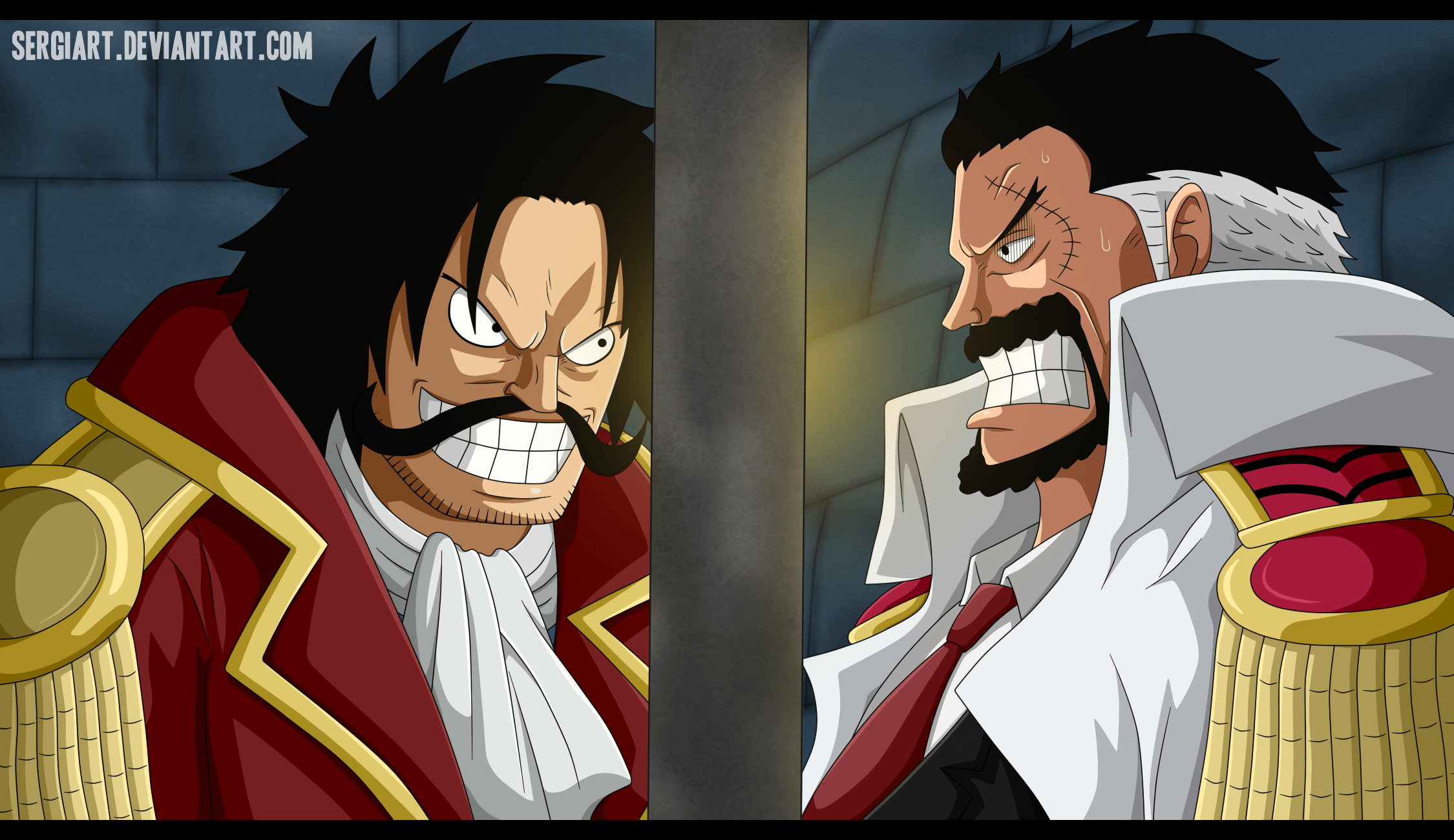
Most people think they know Gol D. Roger. They see the mustache, the red coat, and that grin on the execution platform in Loguetown and think, "Yeah, that’s the Pirate King." But honestly? That version of him was basically a dying man finishing a long-form plan. The real story—the one that actually explains why the world of One Piece looks the way it does—is hidden in the life of a young Gol D. Roger.
Before he was a legend, he was just a kid from the East Blue with a straw hat and a dream that sounded totally insane to anyone with a functioning brain.
The Loguetown Rookie Nobody Expected
Roger wasn't born into royalty or a family of legendary warriors. He was born 77 years before the current timeline in Loguetown. It’s funny because we usually think of Loguetown as the "Town of the Beginning and the End" because of his death, but it really was his literal beginning.
When you look at a young Gol D. Roger, the resemblance to Luffy is almost scary. He didn't have that iconic, curved mustache yet. He had a clean-shaven face and looked remarkably like his son, Portgas D. Ace.
The most important detail? The Hat.
Long before it was "Luffy’s Straw Hat" or even "Shanks’ Straw Hat," it belonged to Roger. We first see this in a flashback from Silvers Rayleigh's perspective. Roger is basically a teenager or in his very early twenties, wearing the straw hat, sitting on a stolen boat. He finds Rayleigh—who was literally just living on a boat because his house burned down—and says the line that changed history: "How about we team up and turn the whole world upside down?"
It’s such a simple, reckless invitation. Rayleigh thought he was crazy. He was right.
Why the Early Years Matter
For over 50 years, Roger was just another pirate in a sea full of them. People forget that he didn't become the Pirate King overnight. In fact, for a huge chunk of his life, he was considered a "rookie" or just another rising name.
- The Lodestar Mistake: About 39 years ago, Roger actually reached Lodestar Island. This is the "final" island of the Log Pose. Most pirates would have stopped there and called it a win. But Roger realized the Log Pose was pointing to nothing—there was something else.
- The New Journey: He had to start his entire journey over again to find the Road Poneglyphs. Think about that level of dedication. He spent decades sailing, reached the "end," and then said, "My bad, let's do it again from the top."
- The Voice of All Things: Unlike Robin, who reads the Poneglyphs with her mind, young Roger "heard" them. It wasn't a formal education; it was an innate, weird ability to sense the "voice" of the world, including Sea Kings and ancient stones.
The God Valley Incident: Roger at His Peak
If you want to see what young Gol D. Roger was actually capable of, you have to look at the God Valley Incident. This happened 38 years ago. At this point, Roger was 39 years old—prime fighting age.
He wasn't fighting fodder. He was up against the Rocks Pirates. This crew was a literal nightmare: Rocks D. Xebec, young Whitebeard, young Big Mom, and young Kaido.
To win, Roger had to do the unthinkable: he teamed up with a young Marine Vice Admiral named Monkey D. Garp. This is where their legendary rivalry/friendship really solidified. They fought side-by-side to protect the Celestial Dragons (and their slaves) from Xebec. It’s a messy piece of history because the World Government tried to erase the whole island from the maps afterward.
What Roger Was Like as a Captain
He was kind of a jerk, but in the best way. Much like Luffy, Roger was known for being incredibly selfish about his freedom but fiercely protective of his friends. If you insulted one of his crew members, he would destroy an entire country's military. He was "hot-headed" and "reckless," terms that Garp often uses to describe both Roger and Luffy.
He didn't have a Devil Fruit.
Let that sink in. In a world where people can turn into dragons or control earthquakes, Roger became the strongest man on the planet using nothing but high-level Haki and a saber named "Ace." His signature move, Divine Departure (Kamusari), was so powerful it could knock back a commander-level fighter with a single swing.
The Misconception of "Gold" Roger
Here is something that usually trips people up: his name. The World Government went out of its way to call him "Gold Roger." They wanted to hide the "D."
A young Gol D. Roger knew the significance of the D, even if he didn't fully understand the Void Century yet. He was part of that "Natural Enemy of God" lineage. When he finally met Whitebeard for their famous three-day duel and subsequent cherry blossom drink, he flat-out told Edward Newgate what the "D" actually meant.
How to Understand Roger’s Legacy Today
If you're trying to piece together the lore for your own theories or just to understand the manga better, you need to stop looking at Roger as a finished product. Look at the struggle.
- Study the Oden Flashback: Chapters 966 and 967 are the gold mine. They show Roger at the end of his life, but they still capture that youthful energy.
- Watch the Parallels: Notice how Roger’s interactions with Rayleigh mirror Luffy’s interactions with Zoro.
- Analyze the Hat: The straw hat isn't just clothing; it's a "will" being passed down. Roger gave it to Shanks, and Shanks gave it to Luffy. It represents a specific type of freedom that Roger pioneered.
The biggest takeaway from the life of a young Gol D. Roger is that he wasn't "destined" for greatness in a way that made it easy. He failed, he got sick, he had to restart his voyage, and he was often hunted like an animal. He just happened to be the only person brave enough to laugh when he finally found out the world's biggest secret.
Go back and re-read the God Valley chapters (around 957) and the Oden flashback. You’ll see a man who wasn't trying to be a King—he was just a guy who wanted to be the free-est person on the sea. That’s the real Roger.
Start by comparing the God Valley designs to modern Luffy; the visual parallels tell a story that the dialogue doesn't even need to cover.



