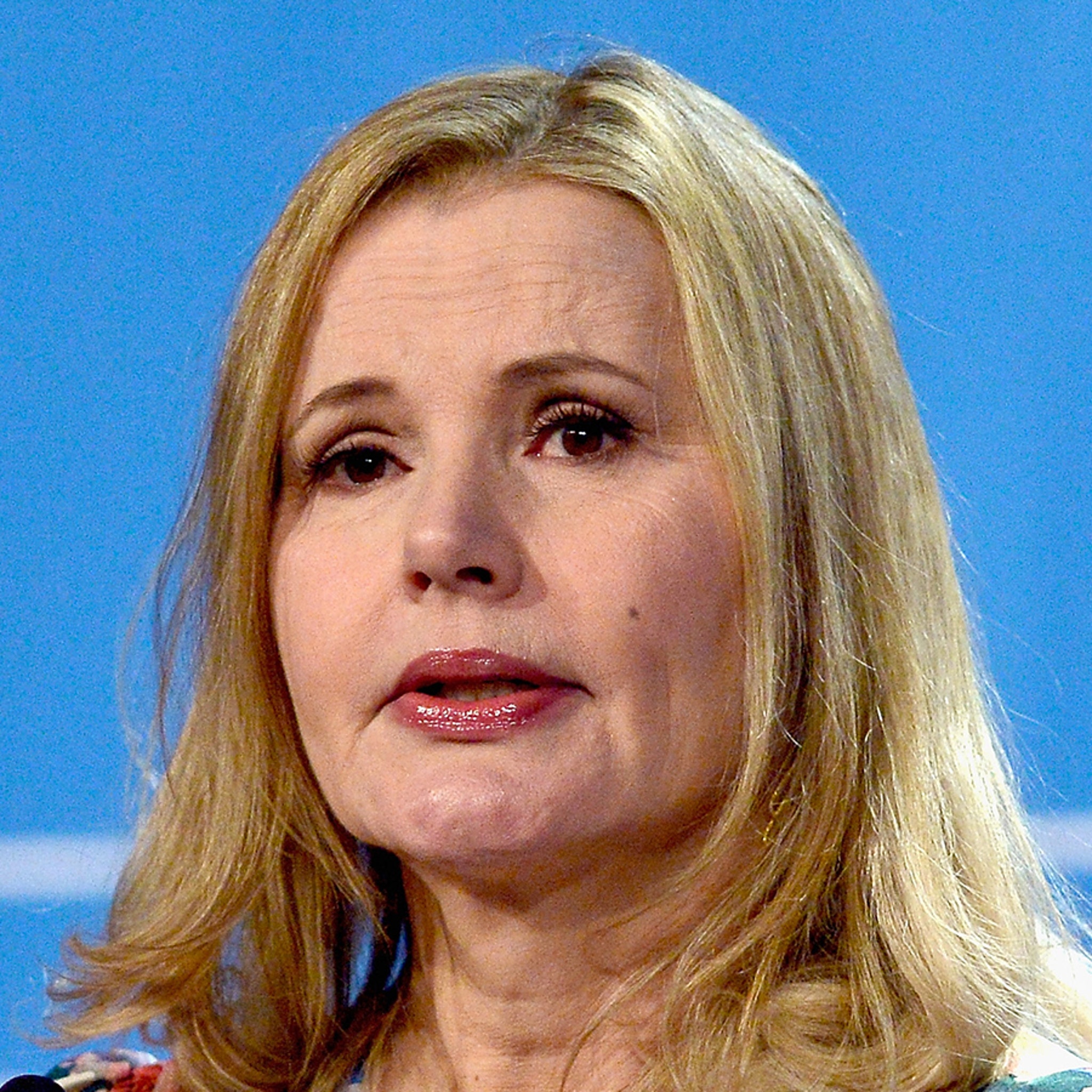
Honestly, most people think Geena Davis just fell out of the sky and onto the set of Thelma & Louise. It’s a nice story. But it's also completely wrong.
Before she was driving a Thunderbird off a cliff or hitting home runs in A League of Their Own, young Geena Davis was a six-foot-tall anomaly in New York City, working jobs that would make most modern influencers quit in a week. She wasn’t some overnight sensation. She was a kid from Wareham, Massachusetts, who decided at three years old she was going to be an actress, even though her parents were about as far from "showbiz" as you can get.
The Window Mannequin Phase You Didn't Know About
When people talk about her early days, they usually jump straight to her modeling for Victoria's Secret. We’ll get there. But the real story starts with her standing perfectly still in a store window.
Basically, after graduating from Boston University in 1979 with a drama degree—and briefly pretending to her parents she’d finished early when she actually hadn't—she hit New York. To pay the bills, she worked as a living mannequin for Ann Taylor. She would stand in the window and not move for long stretches. It sounds miserable, but she actually got good at it.
She wasn't just some "pretty face" in a window; she was an exchange student who spoke fluent Swedish and played the organ for her local church as a teenager. This is a recurring theme with Davis. She’s always been more interesting than the roles she was initially offered.
From Lingerie to Legitimate Stardom
The big break didn't happen in an audition room. It happened because of a catalog.
Director Sydney Pollack was looking for someone to play April Page in Tootsie (1982). He saw Davis in a Victoria's Secret catalog and thought she had the right look. If you go back and watch Tootsie now, her role is relatively small—she’s the soap opera actress who shares a dressing room with Dustin Hoffman’s character.
She spent most of her screen time in her underwear. Most actresses would have stayed in that "eye candy" box forever. But Davis was already a member of Mensa. She had an IQ in the top 2% of the population. She wasn't going to spend the 80s just standing around in lace.
The 80s "Working Actor" Grind
The years between 1982 and 1988 are where the real work happened. You’ve probably forgotten half of these roles, but they were the foundation of everything.
- Family Ties (1984): She played Karen Nicholson, an inept housekeeper. It was a recurring bit that showed off her comedic timing.
- Buffalo Bill (1983-1984): A short-lived but cult-favorite sitcom where she played Wendy Killian. This is where she really learned the ropes of TV comedy alongside Dabney Coleman.
- Fletch (1985): She played Larry, the associate to Chevy Chase’s lead. It’s a minor role, but she held her own in a high-energy comedy.
- The Fly (1986): This was the pivot. Starring opposite Jeff Goldblum (whom she eventually married), she played Veronica Quaife. This wasn't a "ditsy" role. It was a serious, intense sci-fi horror part that proved she could carry a movie.
Why 1988 Changed Everything
If you’re looking for the exact moment "young Geena Davis" became "Oscar-Winner Geena Davis," it’s 1988. Most actors are lucky to have one hit in a year. She had three.
First, there was Beetlejuice. She played Barbara Maitland, the recently deceased housewife. It’s a weird, whimsical performance that cemented her as a household name. Then came Earth Girls Are Easy, a neon-soaked musical comedy where she played a manicurist who falls for an alien (Goldblum again).
But the real kicker was The Accidental Tourist.
She played Muriel Pritchett, a dog trainer. It was a quirky, flamboyant role that most people didn't expect to win big. And yet, she walked away with the Academy Award for Best Supporting Actress.
The industry finally caught up to the fact that she wasn't just "the tall girl from the catalog." She was a powerhouse.
The Height Struggle and the Archer Pivot
It’s worth mentioning that being 6 feet tall in the 1980s was a nightmare for an actress.
Casting directors used to tell her she was too tall for leading men. Honestly, she spent a lot of her early career trying to shrink herself or "die of politeness," as she titled her memoir. It wasn't until she started playing roles like Dottie Hinson in A League of Their Own that she realized her physicality was an asset, not a liability.
Funny enough, she took that athleticism to an extreme later on. At age 41, she picked up archery. Two years later, she was a semi-finalist for the U.S. Olympic archery team. She placed 24th out of 300 women. That’s the kind of person she is—if she decides to do something, she does it at an elite level.
Actionable Takeaways from Geena's Early Arc
- Don't dismiss the "unrelated" jobs. Standing in a window at Ann Taylor taught her physical discipline. Modeling got her in the room for Tootsie. Every weird gig counts.
- Intellect is a secret weapon. Being "too smart" for a role (like her Mensa status) allowed her to bring depth to characters that could have been one-dimensional.
- The "Late Bloomer" is a myth. Davis was 32 when she won her first Oscar. In Hollywood years, that was considered "old" for a breakout in the 80s. It wasn't.
If you want to understand the modern Geena Davis—the one who runs the Geena Davis Institute on Gender in Media and fights for better representation—you have to look at those early years. She saw firsthand how women were cast as the "scantily clad soap star" or the "bumbling housekeeper." She lived the data before she ever started collecting it.
The next time you see her on screen, remember she isn't just an actress. She's a Swedish-speaking, organ-playing, Olympic-level-archer genius who refused to be told she was too tall for the room.
To truly appreciate her range, go back and watch The Fly followed immediately by Beetlejuice. The contrast in those two performances, filmed just two years apart, tells you everything you need to know about why she’s still a legend today.