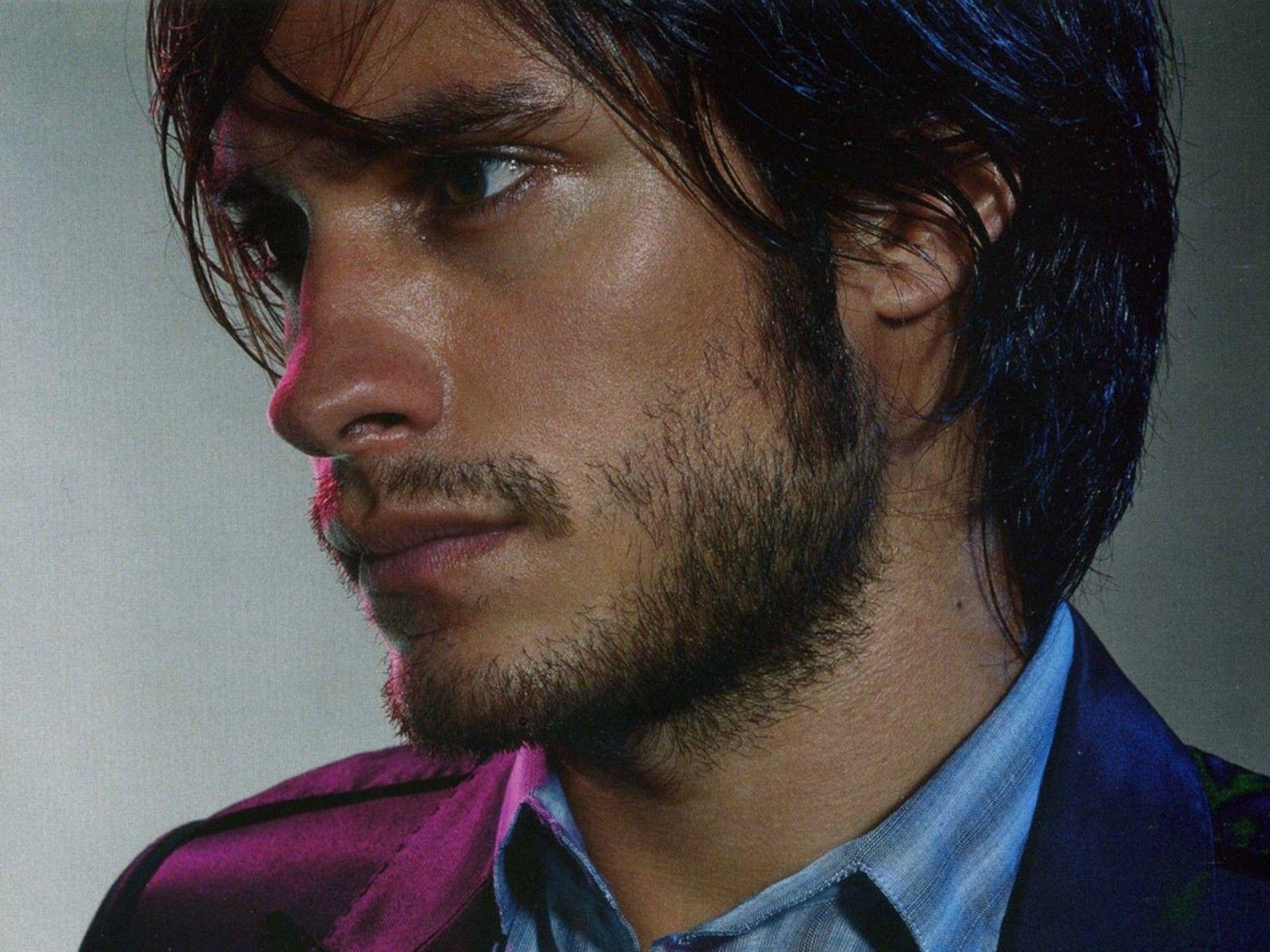
Before he was an international icon or the voice of a skeleton in Coco, Gael García Bernal was just a kid in Mexico City who really, really didn't want to be an actor. Honestly, it’s one of those weird ironies of fame. He grew up in a house where the theater wasn't just a hobby; it was the family business. His parents, Patricia Bernal and José Ángel García, were deep in the scene.
You’d think he would have jumped at the chance to follow them, but he actually described it as a "curse" he wanted to escape. At 14, he was busy teaching indigenous people in Mexico how to read. He was also a skater. Basically, he was a teenager looking for his own thing.
The Soap Opera Years and the London Escape
Most people forget that "young Gael García Bernal" was actually a massive teen heartthrob in the telenovela world. In 1992, he starred in El Abuelo y Yo (Grandpa and I) alongside his lifelong best friend, Diego Luna.
He was the "cute kid with the dog." He hated it.
Okay, maybe "hated" is a strong word, but he definitely felt stifled by the shallow nature of the soap opera world. He wanted something more cerebral. This led him to the National Autonomous University of Mexico (UNAM) to study philosophy. But then, a student strike hit the university.
Instead of waiting around for classes to resume, he bailed. He moved to London at 17, becoming the first-ever Mexican student accepted at the Central School of Speech and Drama.
Imagine being 17, moving to London with no money, knowing the language but feeling like a total outsider. He’s talked about how "miserable and transcendental" those years were. He lived in Shoreditch before it was trendy, playing football between train platforms. It was a period of intense introspection that shaped the "luminous" quality he later brought to the screen.
How a Fake Tropical Disease Launched a Career
The story of how he got his breakout role in Amores Perros sounds like something out of a movie itself. Alejandro González Iñárritu was a first-time director at the time, and he wanted Gael for the role of Octavio.
There was one problem.
The Central School of Speech and Drama was strict. Like, "miss three days and you’re expelled" strict. Gael told Iñárritu he couldn't do it because of school.
Iñárritu, being a resourceful filmmaker, came up with a very "Latin American solution." He told Gael to tell the school he had contracted a rare, horrible tropical disease during a trip back home to Mexico. He even got a doctor friend to write a fake certificate.
Gael shaved his head—ostensibly because of the "illness"—and flew back to Mexico for a week to film his scenes. When he returned to London, his classmates were so worried they sent him get-well cards. He felt terrible about the lie, but that "week" of filming changed the trajectory of Mexican cinema forever.
The Breakthrough of Amores Perros
When Amores Perros dropped in 2000, nobody expected it to do what it did. Mexican cinema at the time didn't travel. Films were barely released in Mexico, let alone the rest of the world.
Gael was so convinced the movie would vanish into obscurity that he actually requested a VHS copy in his contract just so he’d have proof he was in a movie.
Instead, the film became an Oscar-nominated sensation.
Gael’s performance as Octavio—the poor kid entering his Rottweiler into brutal dogfights to fund an escape with his sister-in-law—was electric. He had this "dirty energy," a mix of vulnerability and ferocity that caught everyone's eye.
That "Sexy" Road Trip: Y Tu Mamá También
Hardly a year later, Gael was back on set, this time with Alfonso Cuarón.
If Amores Perros showed his grit, Y Tu Mamá También (2001) showed his range. He played Julio, a middle-class kid on a hormone-fueled road trip with his wealthy best friend (played by Diego Luna) and an older woman.
The movie was scandalous. It was graphic, it was political, and it dealt with "queer desire" in a way that hadn't been seen in mainstream Mexican film.
Cuarón didn't use many close-ups or fancy dollies. He wanted a documentary-realist style. He let Gael and Diego improvise. Because they were real-life best friends, the chemistry was untouchable. They weren't just "acting" like teenagers; they were the energy of that specific moment in Mexican history—messy, hopeful, and slightly lost.
Why Young Gael García Bernal Was Different
What set him apart from other "young stars" of the early 2000s wasn't just his looks. It was his refusal to be a "product."
He could have easily gone to Hollywood and played the "exotic love interest" in five romantic comedies. Instead, he chose roles that were difficult and often controversial.
- The Crime of Father Amaro (2002): He played a priest who gets a 16-year-old girl pregnant. The Catholic Church threatened to excommunicate everyone involved.
- The Motorcycle Diaries (2004): He played a young Ernesto "Che" Guevara. To prepare, he spent months traveling the route Che took, reading everything the man ever wrote.
- Bad Education (2004): He worked with Pedro Almodóvar, playing multiple roles, including a drag queen.
He once said he was "culturally Catholic but spiritually agnostic." That nuance—the ability to hold two conflicting ideas at once—is what made his early performances so compelling. He never played heroes; he played humans who were often making very bad decisions for very understandable reasons.
Actionable Insights for Fans and Aspiring Actors
If you’re looking at the career of young Gael García Bernal, there are some real-world takeaways here that aren't just "be born to famous parents."
- Education over Exposure: He chose to leave a successful TV career to study in London. That technical foundation allowed him to handle the complex, multi-layered roles he took later.
- Collaborative Loyalty: Much of his success came from his "film family"—Iñárritu, Cuarón, and Diego Luna. He didn't just look for work; he looked for people he trusted to experiment with.
- Social Awareness: He never separated his art from his politics. Whether it was teaching literacy or founding the documentary festival Ambulante, his work was always grounded in the reality of the world around him.
If you want to understand why he still matters in 2026, you have to go back to those early films. They weren't just movies; they were a "starting point" for a whole new era of storytelling.
To really see the evolution of his craft, start by watching his "Big Three" in order: Amores Perros, Y Tu Mamá También, and The Motorcycle Diaries. You’ll see a kid turning into an artist who, despite his initial protests, was clearly born to do exactly what he’s doing.
Next Steps for You: If you want to dive deeper into this era of cinema, look up the "Three Amigos" of Mexican film—Guillermo del Toro, Alejandro González Iñárritu, and Alfonso Cuarón. Understanding how their careers intersected with Gael's early work gives you a much clearer picture of why this period was such a "harmonic situation" for global movies.



