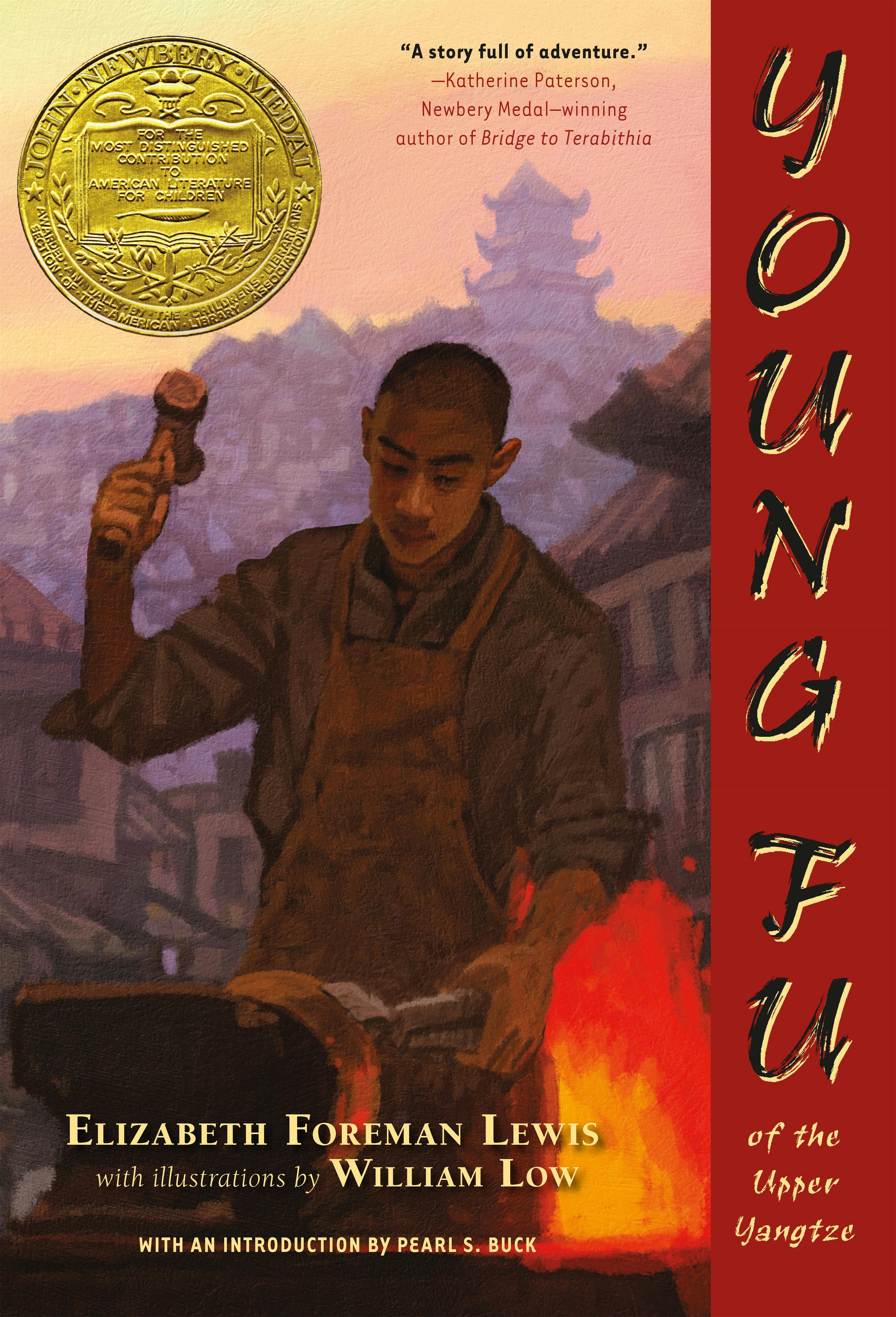
Ever picked up a book from the 1930s and expected a total snooze-fest, only to realize it’s actually kind of a banger? That’s basically the vibe with Young Fu of the Upper Yangtze.
It won the Newbery Medal back in 1933. Usually, that’s a signal for "important but boring." Honestly, though? Elizabeth Foreman Lewis managed to write something that feels surprisingly modern, even if it’s set in a world of warlords, opium dens, and coppersmiths in 1920s China. It’s a coming-of-age story that doesn’t treat the reader like a kid. It’s gritty. It’s sweaty. It’s a bit chaotic.
The Story of a Country Boy in the Big City
Young Fu (actually named Fu Yuin-fah) is thirteen when he and his widowed mother, Fu Be Be, leave their quiet farm. They head for Chungking—what we now call Chongqing.
If you’ve seen photos of modern Chongqing, it’s a vertical cyberpunk dream. Back then? It was a maze of stone stairs, mud, and narrow alleys. Young Fu is there to be an apprentice to Tang, the city’s best coppersmith.
He’s a bit of a brat at first. Let's be real. He’s cocky, he thinks he knows everything, and he’s constantly getting himself into trouble. He gets swindled by a "watch" salesman. He loses money gambling. He almost gets killed by soldiers. It’s not a story about a perfect kid; it’s about a kid who keeps messing up and somehow surviving it.
Why Young Fu of the Upper Yangtze Isn't Just for Kids
The 1920s in China were a mess. The Qing Dynasty had collapsed, and the country was basically a collection of territories run by rival warlords. Lewis lived through this. She was a missionary and a teacher in Nanjing and Chongqing, and she didn't sugarcoat the setting.
You’ve got:
- Banditry: Merchants couldn't travel between cities without being robbed.
- Opium: It was everywhere, destroying families in the background of the story.
- The "Foreign Devil" Tensions: There was a massive divide between the locals and the Westerners living in "treaty ports."
The book handles these things through Young Fu’s eyes. He’s superstitious because his mom is. He’s scared of foreigners because everyone says they eat children or whatever. But then he meets a "foreign lady" at a hospital and realizes everything he was told was kinda... wrong.
The Problem with the "White Savior" Narrative
Look, we have to talk about the elephant in the room. This book was written by an American woman in 1932. It’s got some baggage.
Critics today often point out that the Western characters (like the missionaries) are portrayed as the source of all "modern" wisdom. They have the medicine that saves Young Fu’s friend, Small Li. They are the ones who help during the fires. Meanwhile, the Chinese characters are sometimes shown as being stuck in "superstition."
Is it colonialist? In some ways, yeah. Lewis was writing from her perspective as a Westerner in China. But she also had a deep, genuine respect for Chinese culture. She loved the language and the history. She wasn't just some tourist; she was someone who saw the beauty in the craft of a coppersmith and the wisdom of a local scholar like Wang.
The Coppersmith’s Shop: A Masterclass in Work Ethic
The heart of the book is Tang’s shop. Tang is the father figure Young Fu desperately needs. He’s tough. He doesn’t take any crap. But he’s also incredibly fair.
There’s a great scene where Young Fu makes a mistake on a brass tray. Instead of just yelling, Tang makes him understand that a craftsman’s reputation is his only real currency. In a world where everything else—the government, the money, the safety of the streets—is falling apart, your skill is the only thing you actually own.
That’s a heavy lesson for a thirteen-year-old.
Key Lessons Young Fu Learns (The Hard Way)
- Face is everything. Losing "face" (honor or reputation) is worse than losing money.
- Luck isn't enough. Everyone thinks Young Fu is lucky, but Tang reminds him that "luck" is usually just preparation meeting opportunity.
- Tradition vs. Progress. Young Fu has to navigate his mother’s old-world fears while embracing the new world of electricity and modern medicine.
The Dragon’s Breath Incident
If you remember one thing from this book, it’s probably the "Dragon’s Breath" story. Young Fu owes money. He’s desperate. It’s snowing—a rarity. He hears his aunt call the snow "dragon's breath" and realizes he can sell it to people who want a bit of "heavenly" cooling for their tea.
It’s an entrepreneurial hustle that would make a TikTok "grindset" influencer proud. It’s also one of those moments where you realize Young Fu isn't just a laborer; he’s smart. He’s got that "get it done" energy that helps him survive the literal floods and fires that eventually hit the city.
Does it hold up in 2026?
Honestly? Yes.
If you can read past the 1930s-era "Western perspective," you find a story that is incredibly human. The relationship between Young Fu and his mom, Fu Be Be, is so relatable. She’s stingy, she’s grumpy, and she’s constantly praying to the Kitchen God to keep her son out of trouble. Anyone who has an overprotective parent will feel that.
Also, the writing is just good. Lewis has a way of describing the smells of the street and the sound of hammers on brass that makes you feel like you’re actually there.
Actionable Insights for Readers
- Context Matters: If you’re reading this for school or book club, look up the Warlord Era of China. It makes the "random" soldiers in the book much scarier when you realize they weren't part of an official army.
- Check the Edition: Some modern versions have omitted or edited parts that were deemed too insensitive. Finding an older copy gives you a better sense of how people actually thought in the 1930s—for better or worse.
- Compare with Pearl S. Buck: If you like this, read The Good Earth. It’s a similar era but written for adults, giving a broader look at the same historical period.
Young Fu of the Upper Yangtze isn't just a relic. It’s a snapshot of a world in transition, seen through the eyes of a kid who is just trying to find his footing. Whether he's hiding from bandits or learning to read Chinese characters with the scholar upstairs, his journey from a country boy to a master craftsman is one of those timeless arcs that still works.
Next Steps for Deepening Your Knowledge
To fully appreciate the world Young Fu lived in, you should explore the geography of the Yangtze River. The river wasn't just a background; it was the lifeblood and the primary threat to the people of Chongqing. Understanding the "Three Gorges" before they were dammed provides a much clearer picture of why the boat journey Young Fu took was so incredibly dangerous. You might also look into the history of coppersmithing in Sichuan province to see how much of Tang’s workshop was based on real-world industrial practices of the early 20th century.



