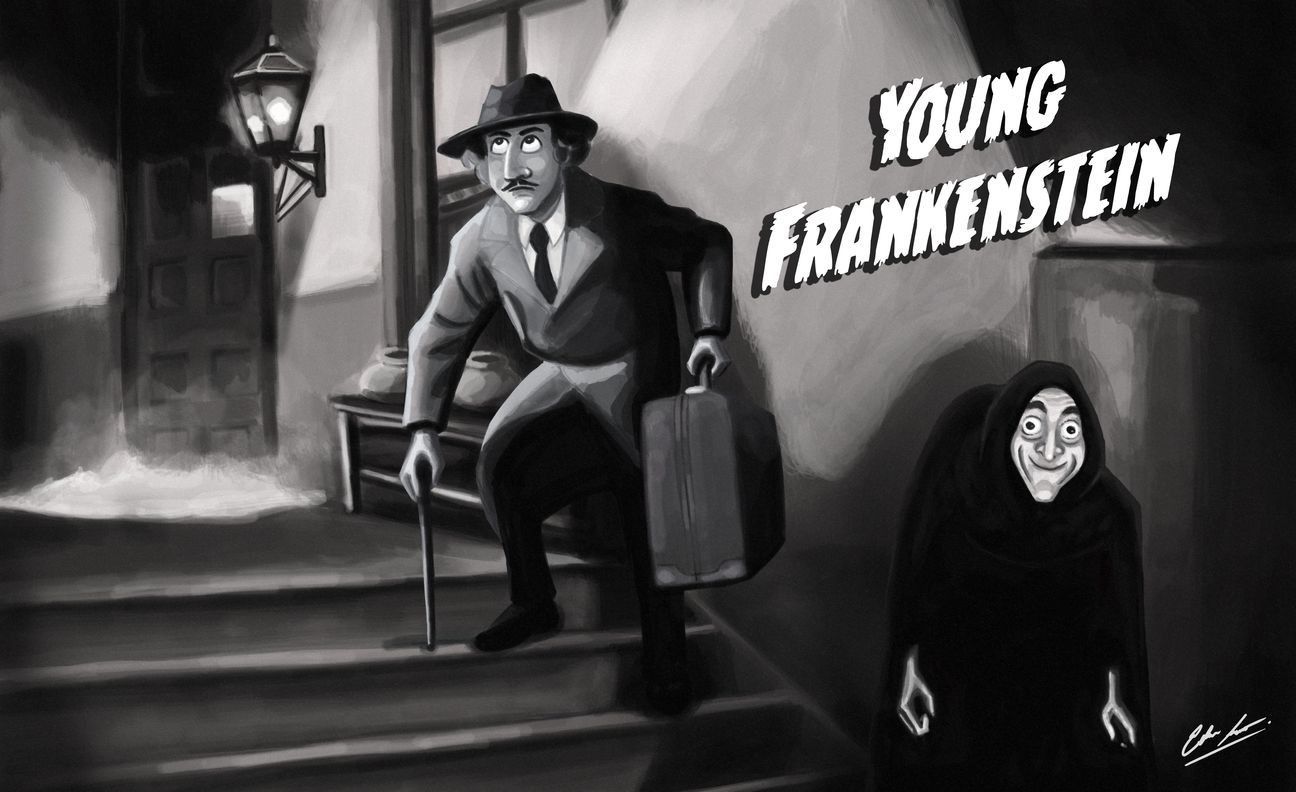
Mel Brooks was worried. It was 1974, and he was deep in the edit of a movie that felt like a massive gamble. It was black and white. It was a parody of a genre that had been dead for decades. Then came the cane. Or rather, the lack of a cane.
Most people remember the "Walk this way" moment in Young Frankenstein as a throwaway gag, but it basically defines the entire vibe of the film. It’s the scene where Igor, played by the incomparable Marty Feldman, greets Dr. Frederick Frankenstein (Gene Wilder) at the train station. Feldman, hunched over and bug-eyed, tells Wilder to "walk this way," leading him with a bizarre, limping gait. Wilder, ever the dedicated scientist, mimics the limp perfectly.
It's stupid. It's brilliant. It's also one of the most influential jokes in the history of American cinema.
Why the Young Frankenstein Walk This Way Gag Almost Didn't Happen
Honestly, the best parts of Mel Brooks movies usually feel like they were improvised on a whim. This one actually was. While the script—co-written by Wilder and Brooks—was tight, the physical comedy was often found on the day. Marty Feldman was a comedy anarchist. He didn't just play a character; he disrupted the reality of the scene.
When Feldman first did the "walk this way" bit, it wasn't a scripted pun. It was a vaudeville-era groan-it-out joke that Brooks decided to keep because it broke the tension of the Gothic atmosphere. You've got this moody, atmospheric lighting—courtesy of cinematographer Gerald Hirschfeld—and then you have a man with a shifting hump (which Feldman also improvised by moving it from side to side each day) asking a serious doctor to mimic his physical deformity.
It worked because it played with the audience’s expectations. We expect a horror movie. We get a clown show.
The Aerosmith Connection: A Weird Twist of Fate
You can't talk about this scene without mentioning Steven Tyler. In 1975, the members of Aerosmith were struggling to find lyrics for a track they’d been working on during a soundcheck. They went to see Young Frankenstein at a theater in New York.
When they got to the "walk this way" scene, they lost it.
They went back to the studio, and Tyler wrote the lyrics around that phrase. Think about that: one of the greatest rock songs of all time exists because Gene Wilder decided to mimic Marty Feldman’s limp. It’s a weirdly beautiful example of how pop culture cross-pollinates. Without the movie, we don’t get the song. Without the song, we don't get the Run-D.M.C. collaboration that arguably saved Aerosmith's career and birthed modern rap-rock.
The DNA of a 1930s-style parody movie is inside a hip-hop revolution. It’s wild.
The Technical Brilliance of the Scene
Let’s get nerdy for a second. Why is it funny? It’s funny because of the timing.
Gene Wilder was a master of the "slow burn." He doesn't immediately mock Igor. He pauses. He looks at the cane. He looks at the gait. Then, with a face full of academic sincerity, he commits to the bit. Comedy experts often point to this as the "Rule of Three" in action, but Brooks skips the third beat and goes straight for the absurdity.
- The setup: "Walk this way."
- The execution: Igor limps.
- The payoff: Frankenstein mimics.
There’s no punchline after that. They just keep walking. That's the secret sauce. If they had acknowledged it was a joke, it would have failed. Because they played it straight, it became legendary.
The Legacy of Marty Feldman’s Physicality
Feldman was a gift to Mel Brooks. His face was a cartoon come to life, largely due to a thyroid condition (Graves' ophthalmopathy) that caused his eyes to protrude. But his comedy wasn't just about his looks; it was about his control.
In the "walk this way" sequence, Feldman uses his cane not as a prop, but as a rhythmic instrument. He sets the tempo. Most actors would try to be "funny" with their faces, but Feldman understood that the humor was in the commitment to the physical struggle of the walk.
People often forget that the movie was shot on the original 1931 Frankenstein sets. Brooks found Kenneth Strickfaden, the man who designed the electrical machinery for the original Boris Karloff film, and used the actual equipment. This wasn't a cheap spoof. It was a love letter. By putting a "walk this way" gag in the middle of a high-production-value Gothic set, Brooks created a friction that made the comedy sharper.
How to Apply the "Brooks Method" to Creative Work
If you're a writer, a filmmaker, or even just someone trying to be funnier at parties, there's a real lesson here.
- Commit to the bit. If Gene Wilder had winked at the camera, the "walk this way" joke would have been a 2/10. He played it like his life depended on it.
- Respect the medium. Young Frankenstein looks better than most actual horror movies from the 70s. When the foundation is high quality, the jokes land harder because they're unexpected.
- Puns are okay if they're physical. A spoken pun is a groan. A physical pun is a masterclass.
Actionable Insights for the Modern Viewer
If you haven't watched the film in a while, or if you've only seen the clips on YouTube, go back and watch the full sequence leading up to the station.
First, pay attention to the sound design. The clacking of the cane is essential to the rhythm of the joke. Second, look at the background. The fog and the shadows are doing the heavy lifting to make the "walk this way" moment feel like a sudden break in reality.
The best way to appreciate this bit of cinema history is to watch it in context. Don't just look for the meme. Look for the way Gene Wilder uses his entire body to mirror Feldman. It is a lesson in ensemble acting that you don't see much anymore.
To really dive into the history, check out Mel Brooks’ memoir, All About Me!, where he details the chaotic energy of the set. He confirms that half the time, the crew was laughing so hard they had to muffle their mouths with handkerchiefs to avoid ruining the takes. That energy is what makes Young Frankenstein—and its most famous walk—immortal.
Identify the "limps" in your own creative projects. Sometimes the thing that feels like a mistake or a silly detour is actually the thing people will be talking about fifty years from now. Don't be afraid to follow the weird idea down the platform.
The next time you hear that Aerosmith riff or see a physical gag in a movie, remember Marty Feldman’s shifting hump and his invitation to "walk this way." It wasn't just a joke; it was a pivot point for 20th-century entertainment.
Find a copy of the 40th-anniversary Blu-ray or stream it on a high-quality platform to see the grain of the film. The contrast between the beautiful 35mm cinematography and the absolute silliness of the "walk this way" gag is where the magic lives. Commit to the absurdity in your own work and stop worrying if it's "too much"—if Mel Brooks had worried about being "too much," we’d have a lot fewer laughs in the world today.



