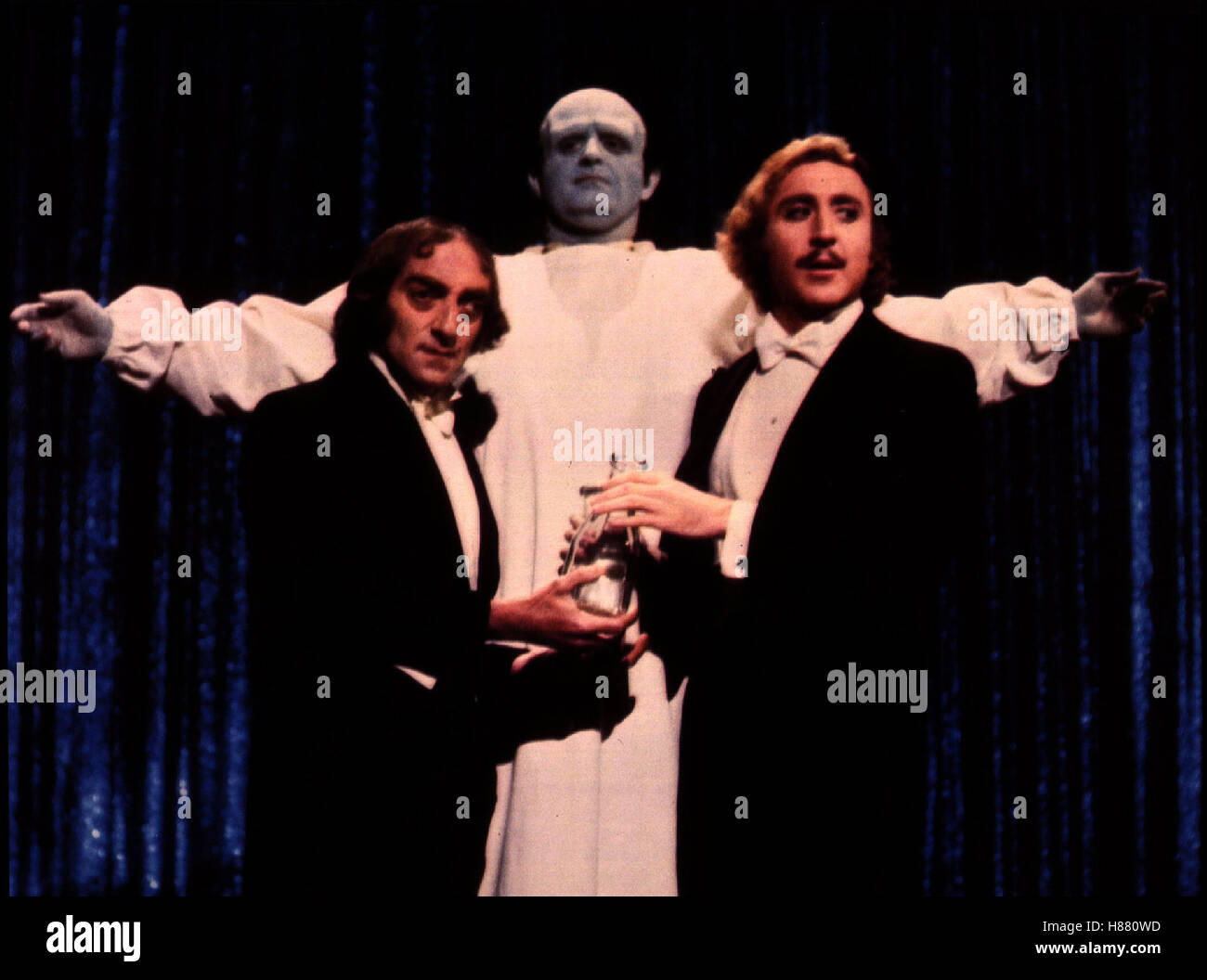
Honestly, if you haven’t seen a grown man in a tuxedo and top hat try to teach a seven-foot-tall reanimated corpse how to tap dance to Irving Berlin, you haven’t lived. I’m talking about Young Frankenstein. This isn't just another spoof. It's basically the gold standard for how to parody something while simultaneously giving it a giant, rhythmic hug. Mel Brooks and Gene Wilder didn't just make a funny movie in 1974; they built a time machine.
Most people think of it as a "Mel Brooks movie," which it is. But it’s really a Gene Wilder movie that Brooks happened to direct.
Wilder actually came up with the idea while they were shooting Blazing Saddles. He was sitting in his bungalow, probably eating a digestive biscuit, and wondered: what if the grandson of Victor Frankenstein wanted absolutely nothing to do with the family business? He pitched it. Brooks initially said, "Not another Frankenstein!" But the hook of the "ashamed grandson" won him over.
Why the "Look" of the Film is Everything
You ever notice how some parodies look cheap? Like they’re filmed on a high school stage? Young Frankenstein is the opposite. It’s gorgeous.
Brooks was obsessed with authenticity. He didn't just want to mock the 1931 James Whale classic; he wanted to inhabit it. To do that, he made two massive, risky decisions that almost killed the project before it started.
- The Black and White Mandate: Columbia Pictures was ready to make the movie but they balked at the black-and-white requirement. They wanted color for the international market. Brooks refused to budge. He walked away from Columbia and took the deal to 20th Century Fox because they let him keep the monochrome look.
- The Original Props: This is the part that blows my mind. Brooks tracked down Kenneth Strickfaden, the guy who designed the electrical lab equipment for the original 1931 Frankenstein. Strickfaden still had the stuff in his garage. He rented it to Brooks. That buzzing, sparking, "it’s alive!" machinery you see? That’s the real deal.
Because of this, the movie doesn't just feel like a joke. It feels like a lost film from 1939. The high-contrast lighting—cinematographer Gerald Hirschfeld used a specific "forced development" process—gives it those deep, inky blacks and glowing whites that make the atmosphere thick enough to chew on.
The "No Brooks" Rule
Here’s a fun fact: Mel Brooks is barely in this movie. Usually, he’s front and center, like the Governor in Blazing Saddles or Yogurt in Spaceballs. But Wilder made him promise to stay behind the camera.
Wilder was worried that if Mel showed up on screen, he’d "wink" at the audience and break the fourth wall. He wanted the world of Transylvania to feel "real" to the characters, even when things got ridiculous. Brooks kept his word, mostly. He only provided some voice work—like the howling wolf and the off-screen cat—and a tiny, blink-and-you'll-miss-it cameo as a German villager.
Behind the Scenes of the Best Gags
The script was tight, but the set was a madhouse of improvisation.
Marty Feldman, who played Igor (or "Eye-gor"), was a loose cannon in the best way. You know that shifting hump? That wasn't in the script. Feldman just started moving it from side to side between takes to see if anyone would notice. When Wilder finally called him out on it, they realized it was hilarious and wrote it in.
And then there’s the "Puttin' on the Ritz" scene.
Mel Brooks actually fought Wilder on this. He thought it was too silly, even for them. He was worried it would "break the movie." They had a screaming match in Wilder's apartment about it. Finally, Brooks said, "Okay, let's try it." After they filmed Peter Boyle’s muffled, guttural yelling of "Puiin on da reez!" Brooks realized he was dead wrong. It became the most iconic moment in the film.
The Gene Hackman Cameo
Gene Hackman wanted to do comedy. He was a huge star at the time, coming off The French Connection, and he literally begged Wilder for a part. He even offered to do it for free.
He ended up as the blind hermit.
That whole scene is a masterclass in comic timing. When he pours the boiling soup into the Monster's lap? That was actually Mel Brooks' hand doing the pouring because they had some makeup continuity issues with the timing. Hackman’s ad-lib at the end—"I was gonna make espresso!"—was so funny the crew started laughing immediately, which is why the scene fades to black so fast.
The Cast That Caught Lightning in a Bottle
You can't talk about Young Frankenstein without the women.
- Madeline Kahn: Her Elizabeth is a force of nature. When she sings "Ah! Sweet Mystery of Life" after her encounter with the Monster, it’s one of the few times a "sex joke" in a movie feels genuinely operatic.
- Teri Garr: She nailed the German accent so well that Brooks hired her on the spot. Her "roll in ze hay" line is legendary.
- Cloris Leachman: Frau Blücher. (Cue the horse whinnies). Leachman played it so straight and severe that it made the absurdity of her "he vass my boyfriend!" reveal hit ten times harder.
What Most People Get Wrong About the Parody
People call this a spoof, but it’s actually a sequel.
If you look closely at the villagers' meeting, one of the officials mentions they’ve had "five previous experiences" with the Frankenstein family. That’s a direct reference to the first five Universal Frankenstein movies. Brooks wasn't just poking fun; he was expanding the lore.
It’s a "comfort movie" because the stakes feel real. You actually care if Frederick (it’s pronounced Fronkensteen) succeeds. You feel bad for the Monster when he’s being burned by the blind man. That emotional core is what keeps it from being a dated sketch-show movie.
Actionable Takeaways for Your Next Rewatch
If you're planning to dive back into the Transylvanian mist, keep an eye out for these specifics:
- The Sound Design: Listen for the subtle sound effects. Brooks used many of the original sound files from the 30s to ground the parody in the correct era.
- The "Walk This Way" Origins: That gag where Igor tells Frederick to "walk this way" and they both hobble along? Steven Tyler from Aerosmith saw this in a theater, and that’s where the title for their hit song came from.
- The Scars: Look at Peter Boyle's neck. There are no bolts. Why? Copyright. Universal still owned the rights to the specific "bolt-neck" look, so the makeup team used zippers and stitches instead. It ended up looking even weirder and more "Brooksian."
The film was a massive hit, making about $86 million on a $2.8 million budget back in '74. But its real value isn't the box office. It's the fact that fifty years later, people are still correcting each other’s pronunciation of "Frankenstein" with a smug, "Actually, it’s Fronkensteen."
To get the most out of the experience, try watching the original 1931 Frankenstein and 1935 Bride of Frankenstein immediately before putting this on. You’ll catch about 40% more of the visual jokes, especially the framing of the laboratory scenes and the specific way the Monster moves through the woods. Check your local streaming services or boutique Blu-ray collections, as 4K restorations have recently made those deep shadows look better than they did in the seventies.



