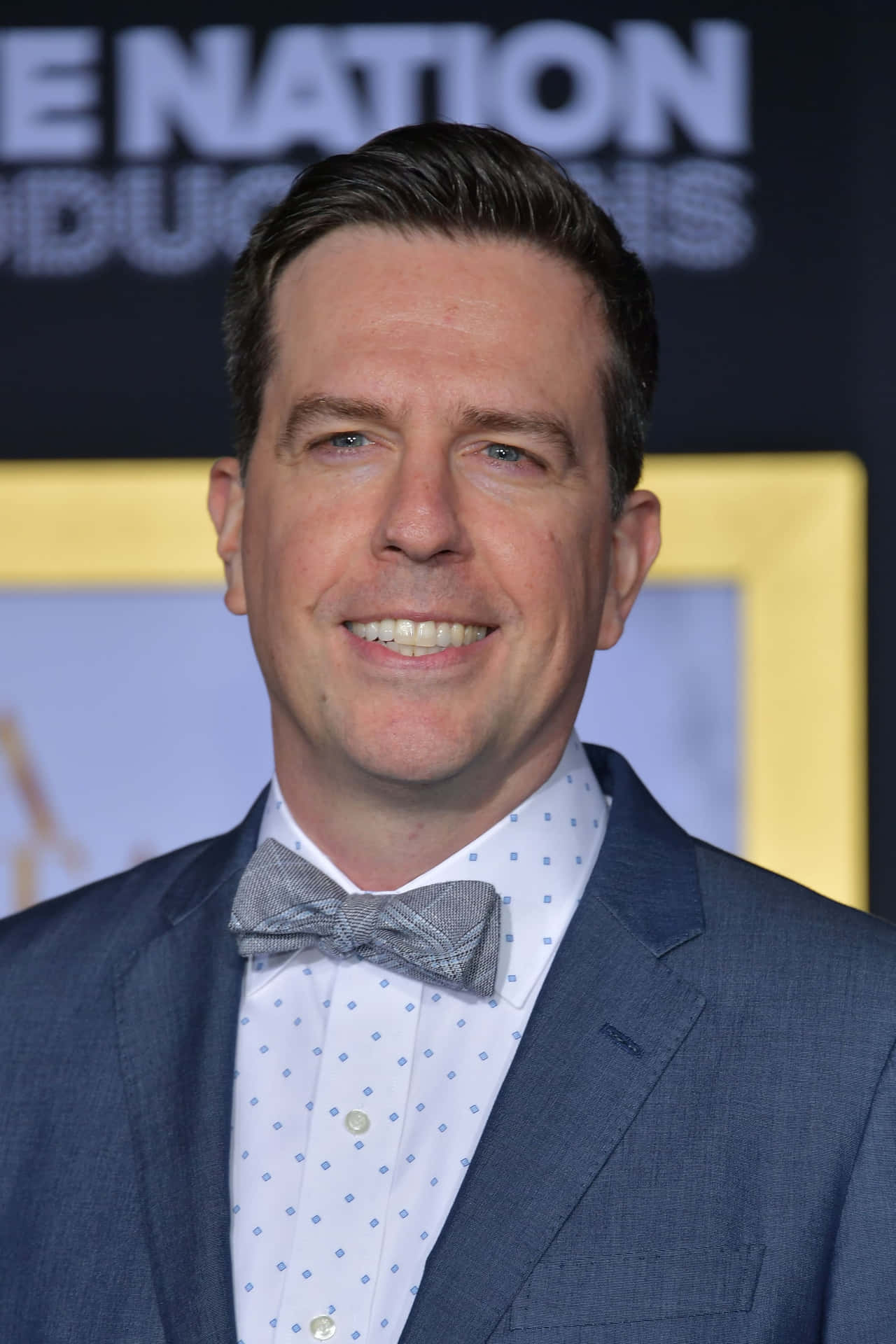
Before he was the "Nard Dog" or the guy waking up without a tooth in a Vegas hotel room, Ed Helms was just a kid from Atlanta with a serious bluegrass obsession. Most people think he popped out of the womb wearing a sweater vest and a Cornell lanyard. Honestly, the reality is much more interesting. Young Ed Helms wasn't the "cool kid," but he also wasn't exactly the quintessential loser you’d expect from his Office persona.
He was a middle child. That explains a lot.
Growing up in Georgia, Helms wasn't dreaming of the Bright Lights. He was dreaming of rocks. Seriously. He went to Oberlin College originally intending to study geology. Imagine a world where Andy Bernard is just a guy in a field with a magnifying glass and a hammer. It’s a weird thought. But the lure of the stage—and a very specific, twangy instrument—changed everything.
The Atlanta Roots and the Oberlin Pivot
Helms grew up in a fairly traditional suburban environment. His father was a lawyer, his mother an administrator. It was the kind of upbringing that breeds a certain type of polished, neurotic energy that would eventually make him millions.
At the Westminster Schools in Atlanta, he was already dipping his toes into performance. But he wasn't the class clown in the way we usually think of them. He was more of a "theatrical" kid. If you look at old photos of young Ed Helms, you see the signature grin, but there’s a focused intensity there. He wasn't just goofing off; he was learning how to hold a room.
Then came Oberlin.
If you aren't familiar with Oberlin College in Ohio, it’s basically a magnet for incredibly talented, slightly quirky overachievers. Helms showed up for the geology. He stayed for the "The Other Guys," an a cappella group. Yes, the a cappella thing wasn't just a bit written for The Office. It was his life.
He eventually switched his major from Geology to Film Theory and Technology. It was a massive pivot. It was the moment he decided that looking at tectonic plates wasn't nearly as fun as making people laugh. He spent his college years deep in the weeds of film history, but he was also obsessed with the banjo.
The banjo is a difficult instrument. It’s loud, it’s percussive, and it’s inherently a little bit dorky. Helms loved it. He practiced constantly. This wasn't a hobby he picked up to look "indie." He genuinely respected the craft of bluegrass. When you see him play now, that’s twenty-plus years of callouses on his fingers.
New York City: The Gritty "Daily Show" Years
After graduating in 1996, Helms did what every aspiring creative does: he moved to New York City.
The late 90s in NYC weren't like the shiny, gentrified version we see today. It was expensive, loud, and competitive. Young Ed Helms wasn't an immediate success. He spent years doing voiceover work. He did commercial casting. He worked as a film editor at a post-production house called Crew Cuts.
He was the guy behind the scenes.
While he was editing other people’s footage, he was performing improv at the Upright Citizens Brigade (UCB). This is where the "Expert" persona started to bake. UCB in the late 90s and early 2000s was a legendary breeding ground. You had Amy Poehler, Matt Walsh, and Ian Roberts running around. Helms was part of that ecosystem.
His big break didn't come from a movie. It came from The Daily Show with Jon Stewart.
He joined the show in 2002. At the time, The Daily Show was becoming a cultural powerhouse, and Helms was the "Senior Correspondent" who specialized in being confidently wrong. He played a character who was incredibly smug but clearly had no idea what he was talking about. This was the prototype for almost every character he played later.
He stayed there for nearly five years. It was grueling. You’re traveling to random towns, interviewing people who don't know the joke is on them, and trying to keep a straight face. He often talks about how terrifying those early field segments were. You have to be quick. You have to be fearless. Young Ed Helms learned how to be a "straight man" who was actually the funniest person in the room.
The Office and the Accidental Icon
In 2006, Helms left The Daily Show for a "small" recurring role on the American version of The Office.
He was supposed to be a temporary antagonist. Andy Bernard was the "Stamford version" of Dwight Schrute—aggressive, brown-nosing, and prone to punching holes in drywall. But the writers saw something in Helms. They saw that he wasn't just a jerk; he was a guy who desperately wanted to be liked.
They started weaving in his real-life traits. The banjo? That was Ed. The a cappella? That was Ed. The Cornell obsession? Okay, that was the writers, but Helms leaned into it with such sincerity that people still think he actually went there (he didn't, he's Oberlin through and through).
By the time The Hangover rolled around in 2009, he was a household name. But the journey from a geology student in Ohio to a movie star in Vegas took over a decade of grinding in the New York comedy scene.
Why the "Young Ed Helms" Era Matters
Most people look at celebrities as finished products. We see the red carpets and the polished late-night interviews. But the "young" years are where the interesting stuff happens. For Helms, those years were defined by:
- Pivoting: He wasn't afraid to ditch geology when he found something he loved more.
- Technical Skill: He didn't just want to be funny; he wanted to be an editor and a musician. He learned the "how" of the industry.
- Resilience: He spent a long time doing commercial voiceovers for products nobody remembers before anyone knew his face.
Real Talk on the "Cornell" Misconception
We have to address the Cornell thing because it's the most common search query related to his early life. Because Andy Bernard’s entire personality is built on being a Cornell alum, many fans assume Helms is, too. He’s actually given commencement speeches at Cornell because of the character.
In reality, his education at Oberlin was much more "artsy" and less "Ivy League frat." This distinction matters because it shows his range as an actor. He was playing a character that was essentially the antithesis of his own college experience.
Actionable Takeaways from Ed's Early Career
If you're looking at the career trajectory of young Ed Helms and wondering how to apply it to your own life or creative pursuits, here are the actual patterns that worked for him:
1. Mastery of a "Niche" Skill Helms didn't just do stand-up. He played the banjo. In a sea of comedians, he was the "Banjo Guy." Whether you’re a coder who also knows Japanese or a marketer who can edit professional-grade video, having a secondary, high-level skill makes you irreplaceable. It gives writers (or bosses) "hooks" to use you in ways they hadn't planned.
2. The Power of the "Pivot" Don't be the person who stays in a major or a career path just because you started it. Helms could have been a mediocre geologist. Instead, he became a world-class comedian because he was honest with himself about where his talent actually lay.
3. Working the "B" Sides Helms worked as a film editor for years. This gave him an "editor's brain" for comedy. He knew how to pace a joke because he literally knew how to cut film. Whatever your primary goal is, learn the technical side of the industry. It makes you a better collaborator.
4. Embrace the "Specific" The reason Andy Bernard worked is that Helms leaned into specific, weird details—the high-pitched singing, the specific brand of insecurity. When you’re building a personal brand or a career, don't try to be "generally" good. Be specifically weird.
The story of young Ed Helms is basically a masterclass in being a "late bloomer" who was actually blooming the whole time in private. He didn't get his big break until his late 20s and didn't become a "star" until his mid-30s. In a world that prizes 19-year-old TikTok stars, his slow-burn success is a reminder that actually learning a craft—whether it's editing, banjo, or improv—usually pays off better in the long run.
He’s still playing the banjo, by the way. He co-founded the L.A. Bluegrass Situation, a festival and brand dedicated to the music he loved as a kid in Atlanta. He never really left that version of himself behind; he just figured out how to make the rest of us love it too.