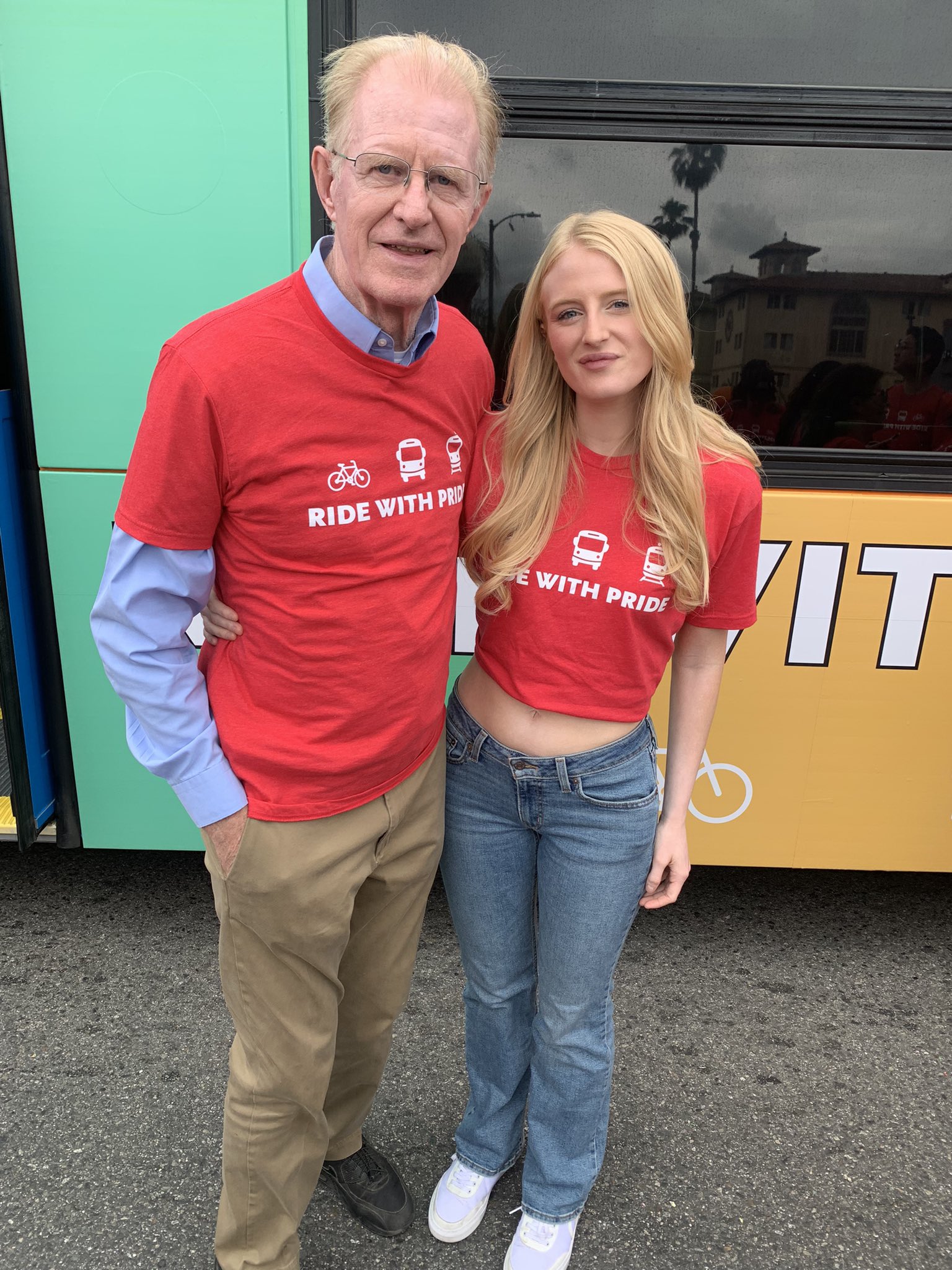
If you saw a guy pedaling a bike through the smog-choked streets of 1970s Los Angeles wearing a tuxedo, you probably just saw young Ed Begley Jr. on his way to an industry party. Today, we know him as the quintessential "eco-warrior" of Hollywood, the man who lives in a LEED Platinum house and once famously powered a toaster with a stationary bike. But before he was the elder statesman of sustainability, he was just a "nepo baby" before the term existed, struggling to find his footing in the shadow of a massive legacy.
His father, Ed Begley Sr., was a powerhouse. We’re talking about an Oscar winner for Sweet Bird of Youth and a legend from 12 Angry Men. Living up to that is heavy. Honestly, Ed Jr. didn't even realize how good his dad was until he was much older. He just saw a guy who "made it look easy."
The Secret He Didn't Know Until 16
The childhood of young Ed Begley Jr. sounds like a plot from a 1950s melodrama. For the first sixteen years of his life, he thought his stepmother, Amanda Huff, was his biological mother. Imagine getting your driver's license, looking at your birth certificate, and realizing the woman who raised you—who had passed away when you were seven—wasn't your birth mom.
It turns out his biological mother was a woman named Allene Jeanne Sanders. Ed has been very open about how this revelation rocked his world. He didn't hold a grudge, but the confusion contributed to a messy period. He started chasing the lifestyle of "manly" actors like Richard Burton and Peter O’Toole. Basically, he thought being a great actor meant being a great drinker. He was hitting the bottle hard by fifteen and a half.
He grew up in Merrick, New York, for a chunk of his childhood while his dad did Broadway, but the family eventually migrated back to the San Fernando Valley. He graduated from Van Nuys High School in 1967. Back then, he wasn't the "green" icon we know; he was a kid with a paper route who sometimes left his acting makeup on while delivering papers, hoping someone would recognize him. Tragic? Maybe. Relatable? Absolutely.
Standing Up with Michael Richards
Before he was a TV doctor, Ed was a stand-up comic. He didn't just do sets; he had a comedy partner you might recognize: Michael Richards. Long before Richards became Kramer on Seinfeld, he and young Ed Begley Jr. were a duo. They performed at the legendary Troubadour and The Comedy Store during its very first week in business.
Richards was the one with the "it" factor, according to Ed. They jammed together, improvised, and hit the clubs until Richards got drafted. When his partner left for the military, Ed had to pivot. He started doing more camera work and technical training because, frankly, the acting jobs weren't exactly pouring in.
- 1967: First gig on My Three Sons (played a tall classmate).
- The 70s Grind: Guest spots on Mary Hartman, Mary Hartman, Happy Days, and Starsky & Hutch.
- The Big Screen: Small but memorable roles in movies like Blue Collar (1978) and The In-Laws (1979).
He also famously played the drummer John "Stumpy" Pepys in This Is Spinal Tap. You know, the one who died in a "bizarre gardening accident." That's the kind of cult-classic DNA Ed has.
The 1970 Epiphany
The year 1970 was the turning point. It was the birth of the modern environmental movement with the very first Earth Day. For young Ed Begley Jr., it wasn't just a political trend; it was a physical necessity. He grew up in LA when the smog was so thick it literally seared his lungs. He’s talked about how it would hurt just to sit on a playground and breathe.
When Earth Day happened, he was all in. But he was also a broke, struggling actor. He couldn't afford solar panels or a Tesla (they didn't exist anyway). So, he did what he could with what he had.
He bought a $950 Taylor-Dunn electric vehicle. He describes it as basically a "golf cart with a windshield wiper and a horn." It topped out at maybe 20 miles per hour. When that proved too slow for the California flow, he switched to a bicycle. He started composting in a diaper pail. He used vinegar and water instead of toxic cleaners. His father, a conservative who "liked to conserve," challenged him: "I know what you're against, Eddy. What are you for?"
That question defined the rest of his life.
St. Elsewhere and the Path to Fame
The real "breakout" happened in 1982 when he landed the role of Dr. Victor Ehrlich on St. Elsewhere. This wasn't your typical polished medical drama. It was gritty, weird, and groundbreaking. Ed played the tall, slightly bumbling protégé of the cranky Dr. Mark Craig (played by the legendary William Daniels).
The chemistry between Begley and Daniels was the heart of the show. Ed has often said he "studied at the knee" of Daniels. That role earned him six consecutive Emmy nominations. More importantly, it gave him the "fame capital" to start talking about the planet on a national stage. While other stars were buying Ferraris, Ed was installing a solar hot water system in 1985.
People thought he was nuts. In the excess-heavy 80s, being a guy who recycled and rode the bus was seen as eccentric, at best. But he didn't care. He was playing the long game.
Making Sense of the Legacy
Looking back at young Ed Begley Jr., you see a guy who didn't wait for "the right time" to start living his values. He started when it was inconvenient and uncool.
He eventually realized that "going green" wasn't just about saving the trees; it was about saving money. By living simply, he could afford to be picky about his roles. He could afford to be the guy who shows up in every Christopher Guest mockumentary (like Best in Show) because he wasn't chasing a massive mortgage.
How to Apply the "Begley Method" Today
You don't need a Hollywood salary or a custom eco-mansion to follow his lead. If you want to channel that early Ed Begley energy, focus on these shifts:
- Lighten the Load First: Don't buy expensive gadgets yet. Ed's rule is "Conservation, Production, Management" in that specific order. Insulation and LED bulbs come before solar panels.
- The Vinegar Pivot: Stop buying ten different chemical cleaners. Basic white vinegar and baking soda handle 90% of household messes. It's what Ed used when he was broke in the 70s.
- Transport Experiments: You don't have to sell your car, but try one trip a week via bike or bus. See how the world looks at a different speed.
- Compost Small: Even if you're in an apartment, a small worm bin or a counter-top scrap collector makes a dent.
Ed Begley Jr. proved that you can be a "nepo baby," a struggling comic, and a TV star without losing your soul—or your commitment to the dirt under your feet. He turned a "clumsy" TV persona into a lifetime of very serious, very effective activism.
To start your own transition, begin with a home energy audit to see where you're leaking power (and money). Then, look for one "single-use" item in your kitchen you can replace with a permanent alternative this week.



