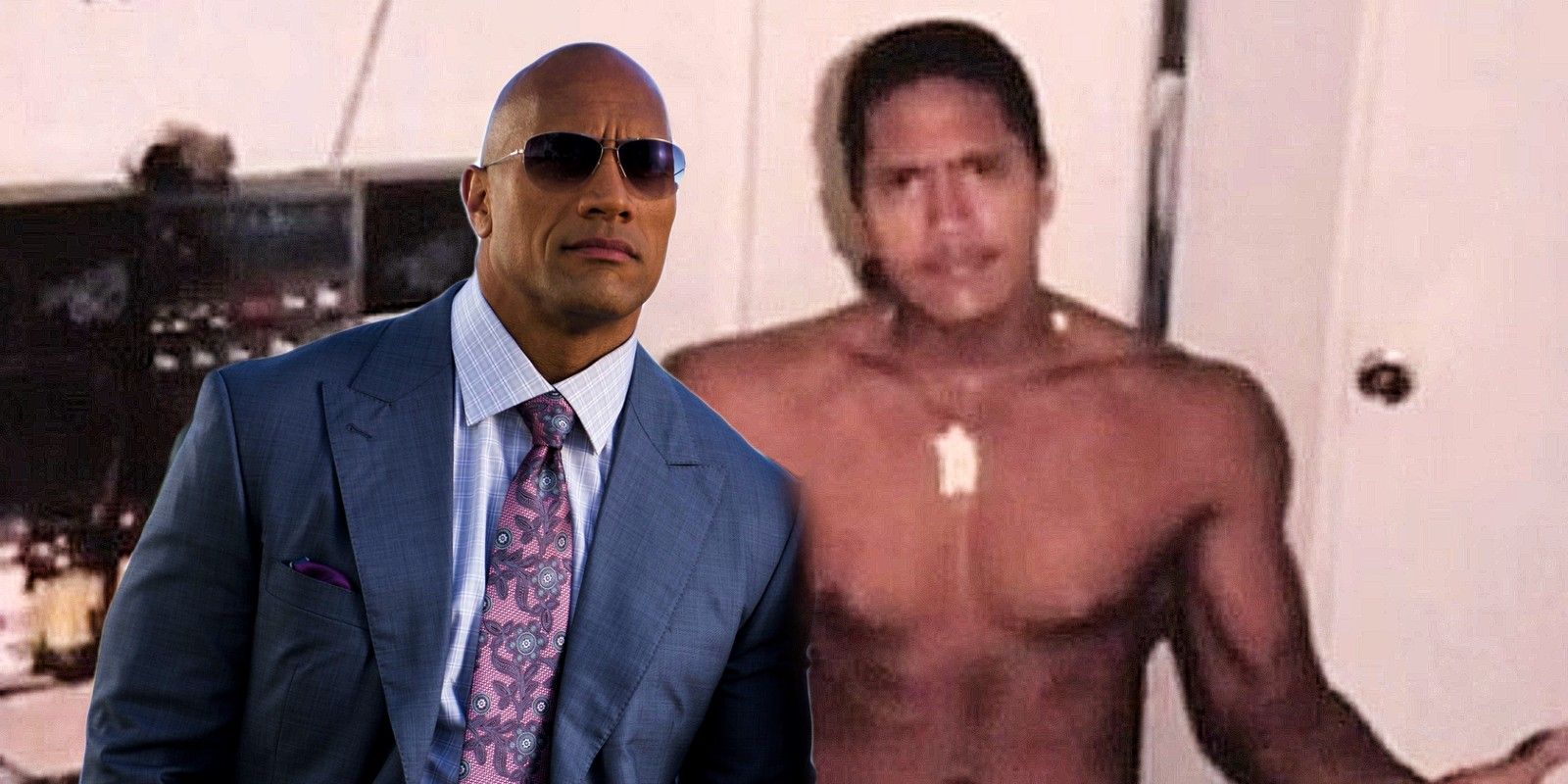
Dwayne Johnson wasn't always the guy who could buy a fleet of exotic cars on a whim. Far from it. Before he was the world’s biggest movie star, and way before he was the "Brahma Bull," he was just a kid in a cramped apartment with $7 in his pocket. It’s a story people think they know because he mentions it on Instagram. But the actual timeline of young Dwayne The Rock Johnson is a chaotic, sometimes desperate scramble for survival that almost ended in a very different place.
Life was messy.
He didn't grow up in a mansion in Beverly Hills. He grew up in cheap motels and cramped apartments, often on the move because his father, Rocky Johnson, was a journeyman wrestler. One week they were in Hawaii, the next they were in Nashville or Pennsylvania. This wasn't some glamorized "road life." It was a life of eviction notices and uncertainty. When he was 14, he and his mother, Ata Johnson, came home to a padlock on their door and an eviction notice. That moment changed everything. It’s the specific trauma that birthed the "hardest worker in the room" persona we see today. He realized he never wanted to feel that helpless again.
The Misunderstood Football Years
Most people know he played at the University of Miami. They see the photos of him in the orange and green jersey and assume he was a locked-in NFL prospect.
He wasn't.
Actually, he was a defensive tackle with a ton of potential who got sidelined by a devastating shoulder injury. That’s the nuance people miss. He wasn't just "not good enough" for the NFL; his body betrayed him at the worst possible time. He sat on the bench while Warren Sapp—a future Hall of Famer—took his spot. Imagine that for a second. You’re 22 years old, your entire identity is built on being an elite athlete, and you’re watching someone else do your job better than you ever could.
The depression that followed was real.
He ended up in the Canadian Football League (CFL) playing for the Calgary Stampeders. He was making roughly $250 a week. He lived in a "shithole" apartment with three other guys, sleeping on a mattress he found by a dumpster. When he was cut from the team in 1995, he had to call his father to come pick him up. During that drive from Canada back to Florida, he pulled out his wallet.
Five. One. Change.
Seven bucks.
That wasn't just a catchy name for his future production company; it was his entire net worth at 23 years old. He went home to live in his parents' tiny apartment. This is the period of young Dwayne The Rock Johnson that shaped the modern mogul. He had failed at his primary dream. He was broke. He was depressed. He had to pivot, and the only path left was the one he had tried to avoid: the family business.
Wrestling Wasn't the Original Plan
Dwayne initially didn't want to wrestle. His dad, Rocky, didn't really want him to either. Rocky knew how hard the life was—the broken bones, the low pay, the constant travel. But with the CFL dream dead, Dwayne begged his father to train him.
The early days were brutal.
He trained in old barns and dusty gyms. His first matches weren't in sold-out arenas; they were in front of 20 people at flea markets and high school gyms for $40 a night. He wrestled under the name Flex Kavana. Honestly, it was a terrible name. He wore mismatched gear and had to learn the "psychology" of the ring from veterans who didn't necessarily want to see a rookie succeed.
The Rocky Maivia Disaster
When he finally got the call to the WWE (then WWF) in 1996, they didn't let him be himself. They saddled him with the name "Rocky Maivia"—a tribute to his father and grandfather. They gave him a ridiculous pineapple haircut and colorful tassels. They pushed him as a "pure" babyface (a good guy).
The fans hated it.
They didn't just dislike him; they were visceral. By 1997, arenas were filled with chants of "Rocky Sucks!" and even "Die, Rocky, Die!" It’s hard to overstate how devastating that is for a young performer. He was doing everything the office told him to do, and the audience wanted him gone. It was a second failure, mirroring his football exit. He realized that being "nice" was getting him nowhere.
The Birth of the Persona
While he was out with a knee injury, he made a decision. He asked Vince McMahon for two minutes on the microphone. He decided he was done being the happy-go-lucky kid.
He joined the Nation of Domination. He started referring to himself in the third person. He became arrogant, sharp-tongued, and incredibly funny. This was the moment young Dwayne The Rock Johnson died and "The Rock" was born. He didn't just change his name; he changed his entire frequency. He tapped into a legitimate frustration and turned it into charisma.
By 1998, he was the most electric performer in the industry. He wasn't the best technical wrestler—guys like Bret Hart or Shawn Michaels had him beat there—but nobody could talk like him. He understood that pro wrestling is about emotional connection. He used catchphrases like "Know your role" and "Lay the smackdown" to create a brand before people even used the word "brand" in that context.
- He won his first WWF Championship at Survivor Series 1998.
- He was only 26 years old.
- He became the youngest champion in the company's history at that time.
Transitioning to Hollywood: The Scariest Leap
By 2000, he was a superstar. He hosted Saturday Night Live, which was the "aha!" moment for Hollywood agents. They saw a guy who was 260 pounds of muscle but had the comedic timing of a seasoned pro.
His first major role was the Scorpion King in The Mummy Returns. He was on screen for maybe ten minutes, most of it bad CGI, but he got paid $5.5 million for the spin-off movie The Scorpion King. This set a Guinness World Record for the highest salary for a first-time leading man.
But it wasn't a smooth ride.
In the early 2000s, agents told him he had to change. They told him he was "too big." They wanted him to lose weight, stop going to the gym, and drop the "The Rock" name. For a few years, he tried it. He did movies like Tooth Fairy and Be Cool. He looked smaller. He looked... uncomfortable. He was trying to fit into a mold that didn't fit him.
He eventually fired his entire team.
He went back to his roots. He started working out the way he wanted to. He embraced the "Rock" moniker again. He joined the Fast & Furious franchise as Luke Hobbs in Fast Five, and that’s when his career went into the stratosphere. He stopped trying to be a "traditional" actor and started being a "movie star."
Realities of the Grind
If you look at the trajectory of young Dwayne The Rock Johnson, the common thread is rejection.
- Rejected by the NFL.
- Cut by the CFL.
- Rejected by the wrestling fans.
- Initially pigeonholed by Hollywood.
He didn't succeed because he was the most talented; he succeeded because he was the most adaptable. He treated his career like a business long before he was actually a billionaire.
Actionable Insights from the Early Years
Studying the rise of Dwayne Johnson isn't just about celebrity worship. There are practical takeaways from how he handled the "7 bucks" era of his life.
Pivot, Don't Panic. When the football dream died, he didn't sit in his parents' house for years. He gave himself a short window to mourn and then jumped into a new industry. If your current career path is hitting a wall, look at your "secondary" skills. What is the thing you’ve been avoiding because it’s "the family business" or "too hard"?
Audit Your Circle. Johnson eventually realized his Hollywood agents were trying to erase what made him special. You have to know when the "expert" advice you’re receiving is actually diluting your value. If people are telling you to "tone it down," make sure they aren't just trying to make you easier for them to manage.
Own Your Narrative. He went from being hated to being loved by leaning into the "villain" role first. He didn't try to win the fans back by being nicer; he won them back by being more authentic. If you’re being misunderstood in your workspace, stop trying to please everyone and start being undeniable.
The Power of the Morning. The "4 AM" workouts started when he was broke. It wasn't about the fitness; it was about having a "win" before the rest of the world woke up to tell him no. Establishing a ritual that you control—completely independent of your job or status—is a psychological necessity when you're struggling.
Track Your "Seven Bucks." Keep a literal or metaphorical reminder of your lowest point. Johnson named his company Seven Bucks Productions because he never wanted to forget the feeling of that drive home from Calgary. Use your past failures as the fuel for your current discipline.
The story of the young Rock proves that the "overnight success" usually takes about fifteen years of getting kicked in the teeth. He wasn't born a legend; he was forged in a series of very public, very painful failures. He just refused to stay down.