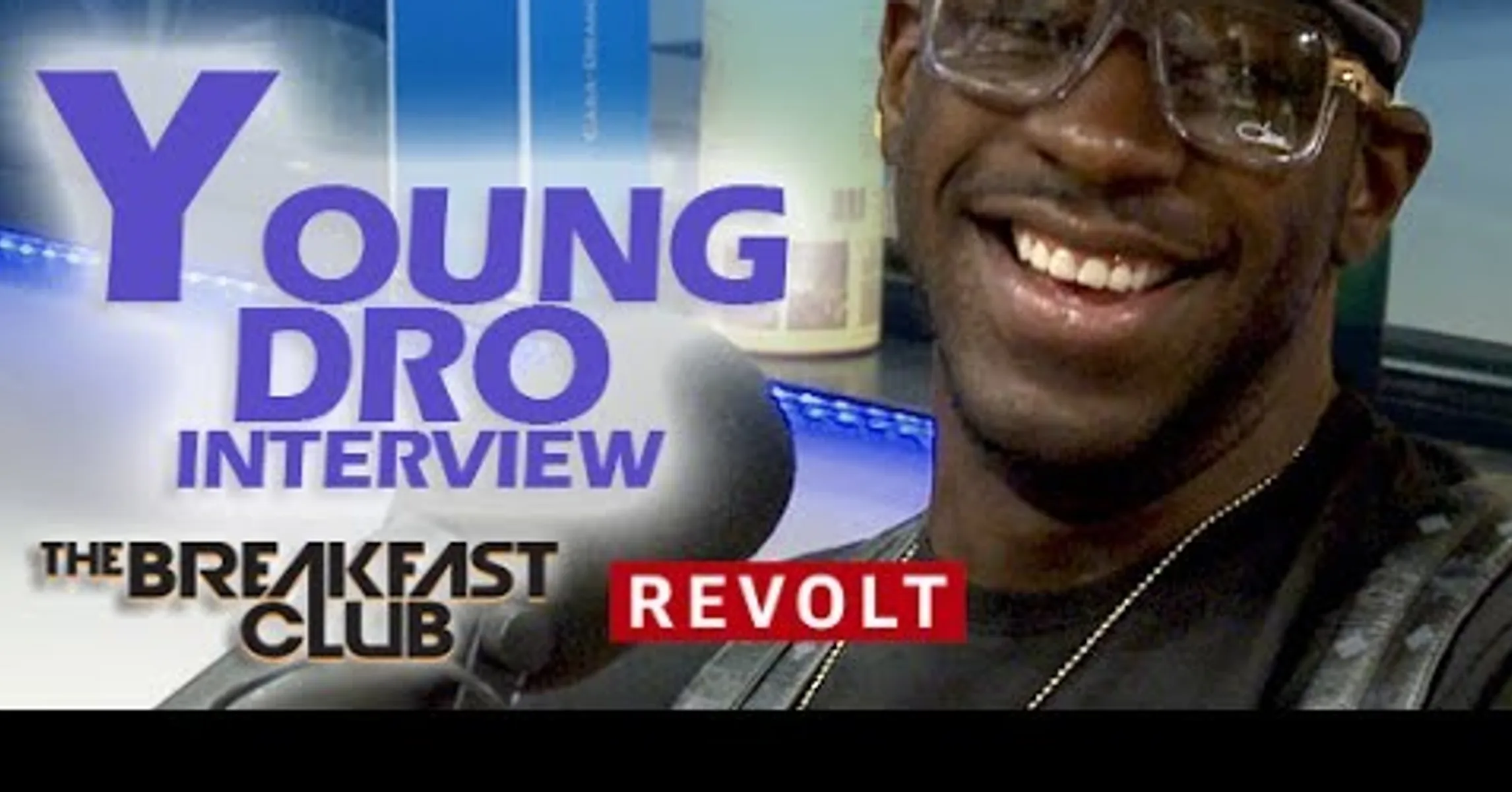
Young Dro is a legend. If you grew up in the 2000s, you know "Shoulder Lean" was basically the national anthem for about eighteen months straight. But for a certain subset of hip-hop fans, Dro’s real legacy isn't just the double platinum hits or the "Grand Hustle" era dominance alongside T.I. It’s the way he talks. Specifically, it’s the way he shows up on The Breakfast Club.
Dro is one of the few guests who can walk into that studio and completely hijack the energy from DJ Envy, Angela Yee, and Charlamagne Tha God. He doesn't do it by being loud or aggressive. He does it by being the most eccentric, linguistically gifted person in the room. Most people go on the show to clear up a rumor or promote a project. Dro goes on there to perform a sort of high-level street philosophy wrapped in high-fashion references that most people—including the hosts—can barely keep up with.
Why the Young Dro Breakfast Club Interviews Go Viral Years Later
There is a specific kind of magic that happens when Young Dro sits in those chairs. You’ve probably seen the clips on TikTok or Instagram Reels. It’s usually Dro describing an outfit in a way that sounds like a poem, or explaining his "Polo" obsession with the intensity of a religious scholar.
He isn't just a rapper. He’s a character.
Honestly, the reason these interviews stick is that Dro is genuinely himself. In a world of PR-trained artists who give the same dry answers, Dro is out here talking about wearing "ostrich" and "alligator" like it's a casual Tuesday at the grocery store. His 2015 appearance is a masterclass in this. He came in promoting Da Reality Show, but the conversation quickly veered into his lifestyle, his sobriety, and his legendary status in Atlanta.
Dro’s vocabulary is wild. He invents words. He repurposes old ones. He makes "Ralph Lauren" sound like a luxury that he personally discovered. When Charlamagne tries to roast him, Dro usually has a comeback that is so layered and culturally specific that the room just has to stop and laugh. It’s rarely about beef. It’s about the "aura," a word we use a lot now, but Dro has had it since 2006.
The Evolution of the Hustle
It’s not all jokes and fashion, though. If you actually sit through the full forty-minute runs of these interviews, you see the arc of a man who has survived a lot. The Young Dro Breakfast Club appearances track his journey from the heights of the T.I. era to his struggles with substance abuse and his eventual road to recovery.
Dro has been remarkably transparent about his past. He’s talked about the "lean" era and how it affected his music and his money. He told the hosts once that he was basically a "functional" addict for years, which is a heavy thing to drop in the middle of an interview known for its jokes.
That’s the nuance of Dro. One minute he’s telling you about a $5,000 sweater, and the next he’s giving a sobering account of how the industry can chew you up and spit you out. He’s a survivor. He’s been in the game for two decades. That kind of longevity in hip-hop is rare, especially for an artist who didn't necessarily transition into a "mogul" role like Jay-Z or Snoop Dogg. Dro stayed Dro.
The Fashion and the "Polo" Obsession
You can’t talk about Dro on The Breakfast Club without talking about the clothes. He is perhaps the greatest brand ambassador Ralph Lauren never officially hired.
During his visits, he often breaks down his "Polo" collection. He doesn't just buy what's in the store; he hunts for the "vintage" pieces, the "Snow Beach" jackets, the stuff that collectors fight over. It’s a subculture within a subculture.
- He sees fashion as armor.
- The specific colors he chooses—he calls them "flavors"—are part of his artistic identity.
- He views the "Polo" brand as a status symbol that he conquered from the "inside out."
Dro once described an outfit so vividly on the show that Envy just sat there shaking his head. It’s because Dro uses the language of the "D-boy" mixed with the language of a Paris runway. It’s "high-low" styling before that was a buzzword in fashion magazines. He was doing it when everyone else was still wearing oversized white tees.
Does the "Grand Hustle" Drama Still Matter?
Naturally, because it’s The Breakfast Club, they always ask about T.I. and the Grand Hustle family. There’s been a lot of speculation over the years about whether Dro was "underrated" or "overlooked" within his own label.
Dro’s take is usually pretty consistent: he’s loyal.
He acknowledges that Tip is his brother, but he also acknowledges that being in the shadow of a giant can be tricky. He’s never been one to start a public feud for clout. Even when things were quiet on the music front, he kept his dignity. He tells the hosts that his relationship with T.I. is deeper than music—it’s about the Westside of Atlanta. It’s about a history that predates the cameras.
The "Day Clean" Era and Sobriety
In more recent years, the tone of his interviews has shifted. He’s more focused. He’s "day clean," a term he uses to describe his sobriety. This is where he provides the most value to the listeners.
When he speaks about being sober on The Breakfast Club, it’s not preachy. It’s practical. He talks about how much money he was wasting. He talks about the clarity he has now when he’s in the booth. It’s a side of Dro that the "Shoulder Lean" fans might not expect, but it’s the version of him that is going to ensure he’s around for another twenty years.
He’s admitted to the hosts that he used to "hide" behind the persona. The clothes, the jewelry, the slang—it was all a mask. Now, he seems more comfortable in his own skin, even if he’s still wearing the most expensive leather you’ve ever seen.
Why You Should Re-watch the 2015 and 2023 Interviews
If you want the full Young Dro experience, you have to watch the 2015 interview for the peak "Dro-isms" and then skip to his more recent appearances to see the growth.
The 2015 one is chaotic in the best way. He’s talking about "pursuing" things that don't exist and making the hosts lose their minds. But the later ones show a man who has found peace. He’s still funny. He’s still got the best slang in the A. But there’s a weight to his words now. He’s a veteran.
He knows he’s a cult hero. He knows that his influence is all over the new generation of Atlanta rappers, from Young Thug to Gunna. Even if he doesn't get the "Greatest of All Time" nods from the mainstream media, he gets it from the streets and from the people who actually understand the art of the "hustle."
Navigating the Legacy of a Southern Icon
The "Young Dro Breakfast Club" search term keeps popping up because Dro is a "comfort" guest. You know when he sits down, you’re going to get something memorable. You’re going to get a new word for your vocabulary. You’re going to get a story about a car that sounds like it belongs in a sci-fi movie.
But beneath the entertainment is a lesson in resilience. Dro has seen the peak of the mountain and the bottom of the valley. He’s been the hottest out, and he’s been the guy people forgot about. And yet, every time he walks into that Power 105.1 studio, he carries himself like he’s the President of Atlanta.
That confidence isn't fake. It’s earned.
Actionable Insights for Fans and Creators
If you’re a fan of Dro or just a student of hip-hop culture, there are a few things to take away from his legendary run of interviews:
- Study the Vernacular: Dro is a genius with language. If you're a writer or a lyricist, listen to how he uses metaphors. He doesn't say "I'm rich." He says something like "I'm standing in the middle of a check."
- Embrace the Pivot: Watch how he handled his transition into sobriety. He didn't lose his "cool" factor; he just redirected his energy. It’s a blueprint for anyone trying to change their life without losing their identity.
- Authenticity Wins: The reason people still watch these interviews years later is that Dro never tried to be anyone else. He was a "Polo" nerd when it wasn't trendy, and he’s still that guy today.
- Value of Longevity: Don't chase the 15 minutes of fame. Dro shows that if you have a distinct voice and a genuine personality, you can stay relevant long after your biggest hit has left the charts.
Young Dro remains one of the most charismatic figures in the history of Southern rap. His time on The Breakfast Club isn't just about "content"—it's a recorded history of a man who survived the trap, conquered the charts, and came out the other side with his sense of humor and his style intact. Next time you see a clip of him talking about "ketchup and mustard" colored cars, remember that you're looking at a survivor who helped build the modern Atlanta sound.
Go back and watch the full 2015 interview first. Then watch the 2023 update. The contrast is where the real story lives. Dro is still the "Best Thang Smokin'," but now, he’s also one of the wisest voices in the room.



