If you walked through South Memphis on a Tuesday afternoon back in 2020, you might have caught a glimpse of a lime-green Lamborghini or a camouflage-wrapped SUV. It wasn't just flash. It was a signal. Adolph Thornton Jr., known to the world as Young Dolph, didn’t just make music for the sake of rhythm and rhyme; he made it to show a very specific way out. Young Dolph to be honest was more than a song title—it was a personal manifesto that explained exactly how he stayed afloat while the rest of the industry tried to sink him.
People often get caught up in the tragedy of his passing in November 2021. It’s easy to focus on the yellow tape outside Makeda’s Homemade Cookies. But if you really want to understand the man, you have to look at the math. Dolph was an anomaly. He turned down a $22 million record deal just to stay independent. Who does that? Honestly, someone who knows their worth is much higher than a payout.
The Reality of Paper Route Empire
Most rappers sign a deal, get a chain, and then realize they owe the label every cent back. Dolph saw that trap coming a mile away. He founded Paper Route Empire (PRE) in 2010 because he wanted to be the one signing the checks, not the one waiting for them.
It started with the Paper Route Campaign mixtape in 2008. By the time he dropped King of Memphis in 2016, he had already built a fortress. He didn't need a major label's marketing budget because he had the streets. He had the gas stations playing his music. He had the neighborhood kids looking up to him.
His business model was simple:
- Own everything (the masters, the publishing, the vision).
- Keep the circle small (family first).
- Invest in tangible assets (he famously bought his kids properties instead of just toys).
Young Dolph to Be Honest: The Track That Defined an Era
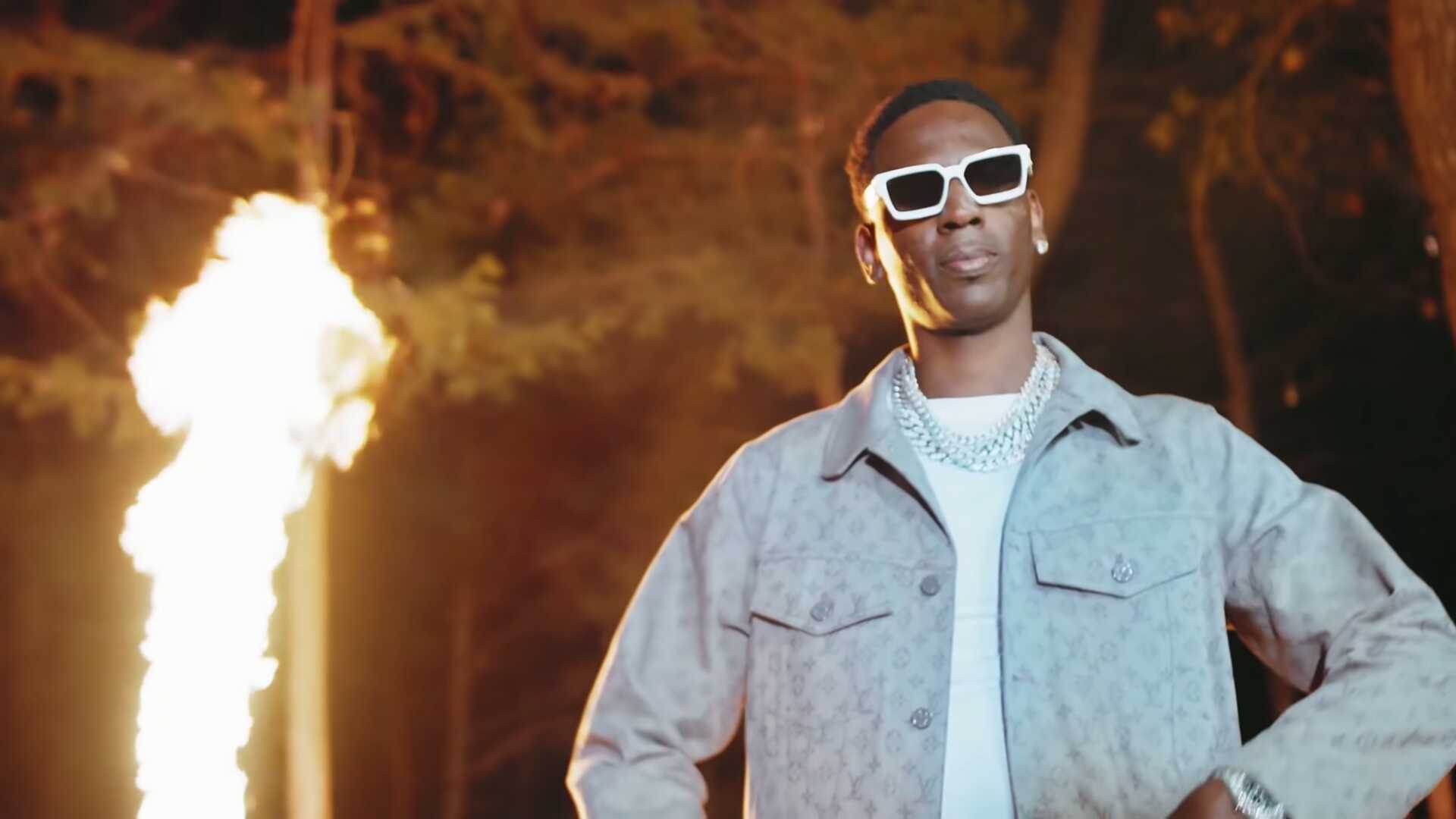
When "To Be Honest" dropped on the Rich Slave album, it felt different. Produced by Juicy J, the track is a masterclass in "unbothered" energy. In the video, Dolph is hanging out in a cabin with Deion Sanders and his son Shedeur. It’s a literal flex of proximity to greatness.
The lyrics weren't just about jewelry. He was talking about coming from nothing and refusing to go back. "You know how I came in, so you know how I’m coming," he raps. It’s a warning and a promise. He was authentic to a fault.
The track captures a specific moment in 2021 when Dolph was at his peak. He was the "independent king." He was showing that you could be a top 10 Billboard artist (Rich Slave hit #4) without bending the knee to corporate executives. That’s why that song resonates. It’s the sound of a man who won on his own terms.
The Trial and the Search for Justice
It is now 2026, and the legal fallout from that day in Memphis is still a heavy cloud over the city. The trials have been a messy, public unraveling of what prosecutors call a "contract killing."
- Justin Johnson: Convicted in September 2024 of first-degree murder. He’s currently serving life.
- Cornelius Smith: The second shooter who testified against the others, claiming a $100,000 hit was put out on Dolph.
- Hernandez Govan: The alleged mastermind who, in a shocking twist in August 2025, was found not guilty by a Memphis jury.
The courtroom drama revealed a dark side of the music business—rivalries that moved past "diss tracks" and into real-world violence. Prosecutors argued the hit was fueled by a feud with a rival label, specifically targeting PRE artists. It’s a grim reminder that the independence Dolph fought for made him a target for those who couldn't replicate his success.
Beyond the Booth: The IdaMae Legacy
If you only know Dolph for the rap, you’re missing half the story. The guy was a philanthropist who hated the word "philanthropist." He just called it "taking care of home."
He started the IdaMae Family Foundation, named after his grandmother. This wasn't some tax-haven charity. They were on the ground. Every Thanksgiving, Dolph was at the St. James Missionary Baptist Church or the neighborhood community centers. He wasn't just sending a check; he was the one handing out the turkeys.
He donated $25,000 to his alma mater, Hamilton High School. He paid for funerals. He gave cars away. He did it because he remembered what it was like to have parents struggling with addiction and being raised by a grandmother who was "the meanest motherfucker in the world" until he realized she was just trying to keep him alive.
Why We Still Talk About Him
The influence of Young Dolph is still visible in rappers like Key Glock. Glock, who was Dolph's cousin-in-law, has carried the PRE torch with a similar "no-label" defiance. You see it in the way they handle their business—staying consistent, staying "street," and staying independent.
Dolph’s voice was deep, his delivery was slow, and his confidence was through the roof. He once said that confidence was more important than sound. If you believe you’re the best, eventually, everyone else will too.
To be honest, the industry misses that. We have a lot of manufactured stars now. We have people who are famous for being famous. Dolph was famous for being Dolph. He didn't have a character. He didn't have a costume. He just had the work ethic.
How to Apply the Dolph Blueprint Today
If you’re an artist or an entrepreneur looking at Dolph’s life, there are actual steps you can take to emulate that success. It's not about the cars; it's about the control.
- Diversify your income early. Dolph was buying real estate while other rappers were still renting mansions for videos.
- Focus on ownership. Whether it’s your code, your art, or your business, the person who owns the "master" wins in the long run.
- Build a community, not just a following. Dolph’s fans felt like they were part of the Paper Route Empire. That loyalty is why his posthumous releases still chart.
- Keep your word. In an industry built on lies, being the person who actually does what they say is a competitive advantage.
Start by auditing your own "independence." Are you relying too much on a single platform or a single "gatekeeper"? If so, it might be time to take a page out of the PRE playbook and start building your own empire from the ground up. Stop waiting for a "deal" to save you and start making moves that make a deal unnecessary.
Adolph Thornton Jr. lived a short life, but he lived it at full volume. His legacy isn't just the music—it's the proof that you don't have to sell your soul to buy the world. That is the truth of Young Dolph to be honest, and it’s a lesson that won’t expire.



