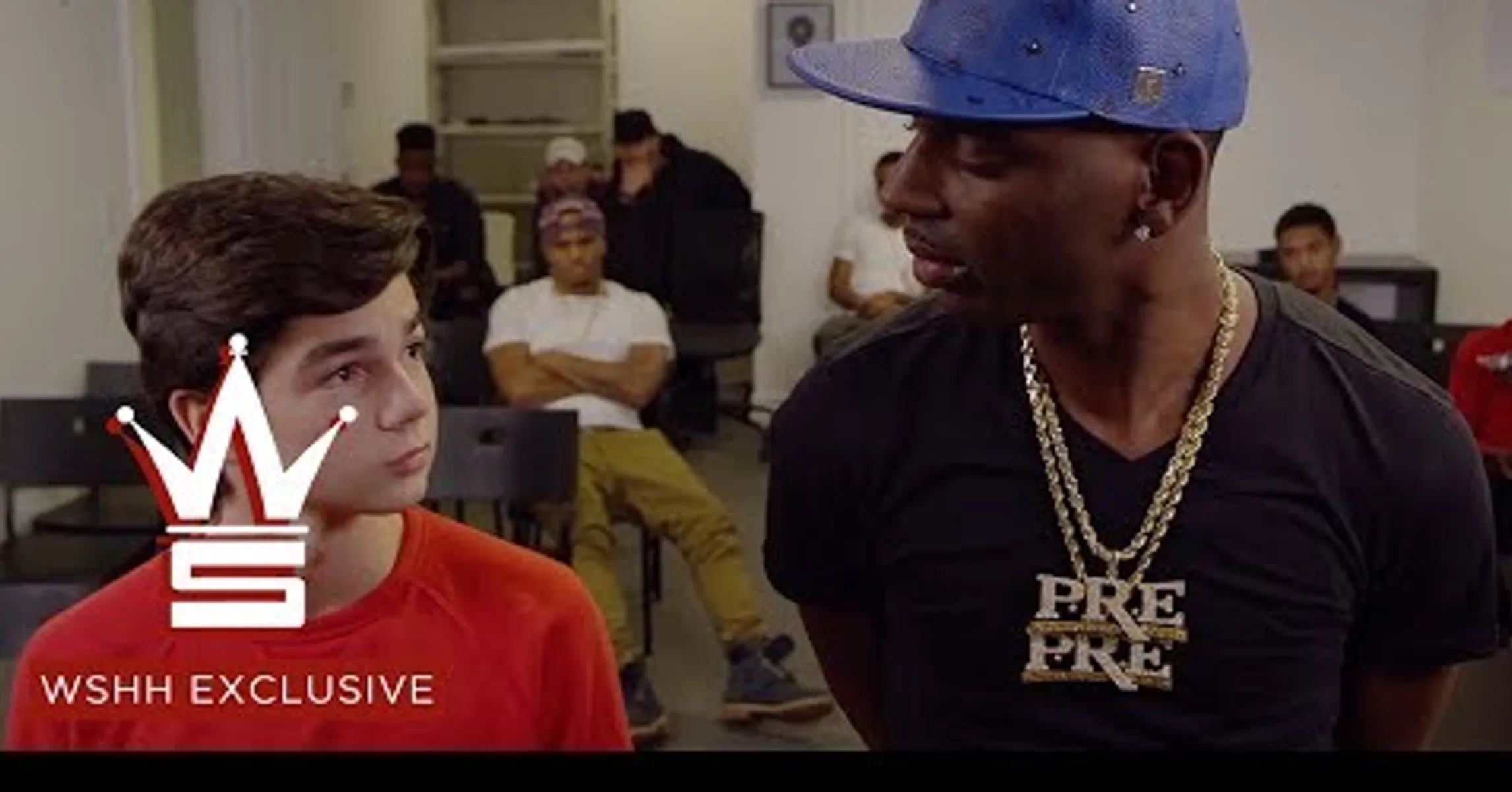
If you walked into a South Memphis corner store in early 2016, you weren't just hearing a song; you were hearing a manifesto. When Young Dolph released "Get Paid," it wasn't some deep, metaphorical exploration of the human condition. It was a blunt-force trauma of a hook that repeated the same four words until they were burned into your cerebral cortex.
Get paid, young nigga, get paid.
It sounds simple. Maybe even a little too simple for the "lyrical miracle" crowd. But for anyone who actually follows the business of hip-hop, that track was the opening salvo of a decade-long war against the major label machine. Dolph wasn't just rapping about money; he was rapping about the autonomy that money buys you.
The Strategy Behind the Young Dolph Get Paid Philosophy
Most rappers sign a deal the second they see a six-figure check. Dolph didn't. He famously turned down a $22 million offer because he knew the math didn't add up in the long run. When he dropped "Get Paid" as the lead single for his debut studio album, King of Memphis, he was already a wealthy man from the streets and the mixtape circuit.
The song served as a "Rule 101" guide for his Paper Route Empire (PRE) collective.
Rule number one? Get the money first. Rule number two? Don’t forget to get the money.
It’s hilarious but also dead serious. Dolph understood that in an industry designed to chew up young Black artists and spit them out broke, the only real shield is liquidity. By owning his masters and his distribution through EMPIRE, he was actually "getting paid" in a way his peers weren't. When you're independent, a million streams hits your bank account differently than when you're recouping a massive advance from a label that owns your name.
Why the "Get Paid" Music Video Actually Mattered
Honestly, the video for "Get Paid" is where the message really clicks. Directed by Gabriel Hart, it features Dolph playing a sort of big-brother-mentor role to a young kid who is clearly headed for trouble.
Instead of just flexing—though there is plenty of that, including the mandatory "Double-R" Rolls Royce—Dolph is teaching. He's telling the kid that the goal isn't just to be "tough" or "street." The goal is to be a provider. The goal is to be a businessman.
There's a specific vulnerability in his music that people often miss. In "Get Paid," he mentions his crib being so big it came with a maid, but he also touches on the grind of "still in my trap flipping my Frito-Lays." He never forgot the starting line.
Breaking Down the Impact of King of Memphis
When King of Memphis dropped on February 19, 2016, it was a polarizing moment. He didn't have any features on the album. None.
- Production: He leaned on heavy hitters like Zaytoven, Mike WiLL Made-It, and Reazy Renegade (who produced "Get Paid").
- The "King" Title: Calling himself the King of Memphis sparked immediate friction with Yo Gotti, leading to one of the most documented tensions in modern rap history.
- The Results: The album debuted at number 49 on the Billboard 200. For a completely independent artist in 2016, that was an astronomical achievement.
The $40,000 Barista Incident
You can't talk about the legacy of this song without mentioning the Starbucks incident. Back in 2018, two baristas at a Duke University Starbucks were fired because they were playing "Get Paid" behind the counter. A VP at the university apparently found the lyrics "offensive" and complained.
When Dolph found out, he didn't just tweet about it. He flew both baristas out to his performance at the Rolling Loud festival in Miami.
He brought them out on stage, handed them each $20,000 in cash, and told them to keep their heads up. That is the "Get Paid" ethos in a nutshell. It wasn't just about him getting rich; it was about the power to change the lives of people who were being messed over by "the man."
How to Apply the Dolph Mindset Today
If you're looking for the "actionable" part of the Young Dolph Get Paid mantra, it’s not about selling drugs or even being a rapper. It’s about the diversification of income and self-ownership.
Dolph wasn't just a rapper. He was a real estate investor. He was a label head. He was a philanthropist who gave away turkeys every Thanksgiving in Castalia Heights.
- Own Your Output: Whether you're a designer, a writer, or a plumber, try to own as much of your "masters" as possible. Don't trade long-term wealth for a short-term "look."
- Keep the Circle Small: Dolph’s Paper Route Empire succeeded because it was a family. He brought up Key Glock, Jay Fizzle, and Big Moochie Grape by teaching them the business, not just giving them a handout.
- Ignore the Gatekeepers: The industry told Dolph he needed a major label to be a star. He proved them wrong by out-earning most "superstars" while staying in his own lane.
Young Dolph’s life was tragically cut short in 2021, but the blueprint he left behind in songs like "Get Paid" is still being followed by every independent artist trying to make it out of the mud. He proved that you don't have to change your sound or your soul to get the bag; you just have to be the smartest person in the room.
To really understand the financial mechanics of what Dolph was doing, you should look into how independent distribution deals with companies like EMPIRE differ from traditional 360 deals. It's the difference between being an employee and being the CEO.



