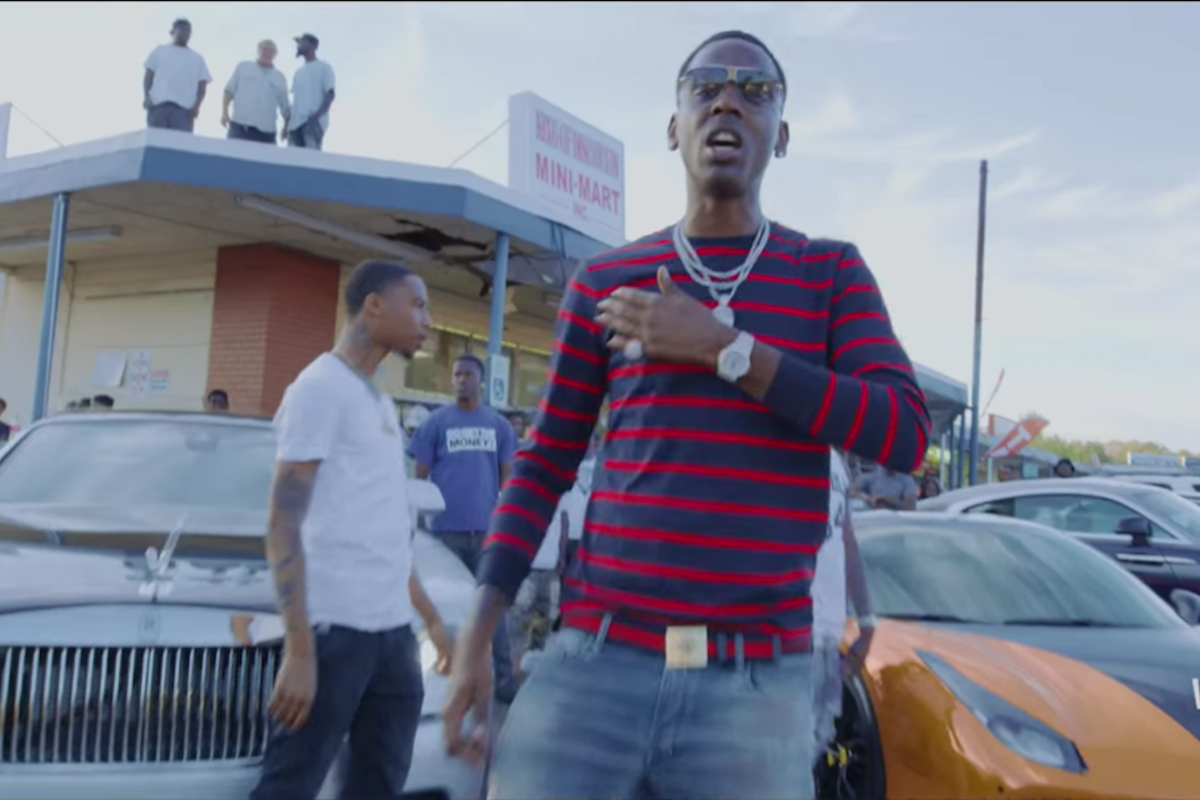
Memphis legend Young Dolph didn't just survive an ambush; he turned it into a marketing masterclass. If you were following hip-hop back in early 2017, the news felt like a movie script. Someone tried to take him out in broad daylight during CIAA Weekend in Charlotte, North Carolina. We're talking a literal hail of bullets.
People were stunned.
When the dust settled, the story wasn't about a tragedy. It was about a $600,000 investment that saved a man’s life. Young Dolph 100 Shots became more than just a headline; it became the title of a defiant anthem that defined the "King of Memphis" and his untouchable persona.
The Afternoon Everything Changed
It was February 25, 2017. Around 6:30 PM.
Charlotte was packed for the CIAA tournament. Dolph was riding in a black SUV near North Caldwell Street. Suddenly, another vehicle pulled up and unleashed. It wasn’t a couple of potshots. It was a sustained, military-style assault. According to police reports at the time, roughly 100 rounds were fired into the vehicle and the surrounding area.
Think about that number for a second. One hundred.
Most people would be terrified. Dolph? He got out of the car, reportedly grabbed some food, and performed at a club later that same night with Migos and 21 Savage. No scratches. No hospital visits. Just a legendary story starting to brew.
Why the Bullets Didn't Hit
The secret wasn't luck. It was math.
Dolph had spent a fortune—roughly $600,000—on custom-armoring two of his vehicles. He knew he had targets on his back. In an interview with TMZ shortly after the incident, he basically said he expected threats the richer he got. That SUV was reinforced with bulletproof metal and glass that turned a potential assassination attempt into a very expensive light show.
He didn't hide after the shooting. Honestly, he did the opposite.
He leaned into it. By April 1, 2017—just weeks after the attempt—he dropped the album Bulletproof. The tracklist itself was a giant middle finger to his enemies. When you read the song titles in order, they form a sentence:
- 100 Shots
- In Charlotte
- But I’m Bulletproof
- So Fuk’em
- That’s How I Feel
- All of Them
- I’m So Real
- I Pray for My Enemies
- I’m Everything You Wanna Be
- SMH
That’s how you handle a beef in the streaming era.
Breaking Down the Song: Young Dolph 100 Shots
The intro to "100 Shots" is legendary. It’s a slow build. You hear him talking to someone, asking for Backwoods and a cup of ice. It’s casual. Then the beat—produced by DJ Squeeky—drops. It’s heavy, ominous, and perfectly fits that dark, Memphis trap aesthetic.
"How the f*** you miss a whole hundred shots?"
That line is the soul of the record. It’s not just a question; it’s a taunt. He wasn't just surviving; he was clowning the shooters for their lack of aim. Throughout the song, he moves between talking about his wealth and his upbringing, reminding everyone that he came from nothing and wasn't about to let anyone take what he built.
The song resonates because it feels authentic. A lot of rappers talk about "the struggle" or "the streets," but Dolph lived through a literal war zone in the middle of a city and didn't blink. That kind of confidence is infectious. It’s why fans still blast this track today, years after his tragic passing in 2021.
The Cultural Impact of the Incident
Before this, Dolph was a huge regional star. After the Charlotte shooting and the release of Bulletproof, he became a folk hero of sorts. He represented the "independent mogul" who couldn't be bought and couldn't be broken.
He famously turned down a $22 million contract to stay independent with his label, Paper Route Empire (PRE). He wanted the masters. He wanted the control. The Young Dolph 100 Shots moment proved to the world that he was playing for keeps.
It also sparked a massive wave of conversation about bulletproof vehicles in the rap industry. Suddenly, armoring your ride wasn't just for politicians or overseas diplomats; it was a standard business expense for any rapper moving through high-tension environments.
What Most People Get Wrong
Some people think the "100 shots" was an exaggeration for the song. It wasn't. While the exact count varies slightly depending on which police report or witness you talk to, the sheer volume of shell casings recovered at the scene was staggering. Nearby apartments were hit. Multiple cars were riddled with holes. The fact that nobody was killed or even seriously injured is, quite frankly, a miracle.
Others think this was a PR stunt. That’s a wild theory when you look at the actual danger involved. You don't stage a 100-round shootout in a crowded city street for "clout." This was real-world violence met with real-world preparation.
How to Apply the "Dolph Mindset" Today
You might not be dodging literal bullets, but the way Dolph handled the situation offers some pretty solid life lessons:
- Invest in Yourself: Dolph spent $600k on protection because he knew his value. Don't be afraid to put money into your own safety, education, or infrastructure.
- Flip the Script: Instead of letting a "loss" or a scary situation defeat him, he used it as the foundation for his most successful era.
- Stay Independent: Ownership was everything to him. Whether it’s your art or your business, try to keep the keys to your own house.
- Keep Moving: He performed that same night. Don't let a setback stop your momentum.
Young Dolph’s legacy is complicated, but his resilience is undeniable. "100 Shots" isn't just a song about a shooting; it's a song about being unbreakable.
To truly understand the weight of this moment, go back and listen to the Bulletproof album from start to finish. Notice how the production stays minimalist to let his voice—and his message—take center stage. Look at the way he mentored artists like Key Glock, teaching them the same business acumen that kept him afloat when the industry tried to sink him.
The story of the Charlotte shooting is a reminder that in the face of chaos, preparation and poise win every time. Dolph didn't just survive; he thrived, and he left us with a blueprint for how to handle pressure with a grin and a blunt in hand.



