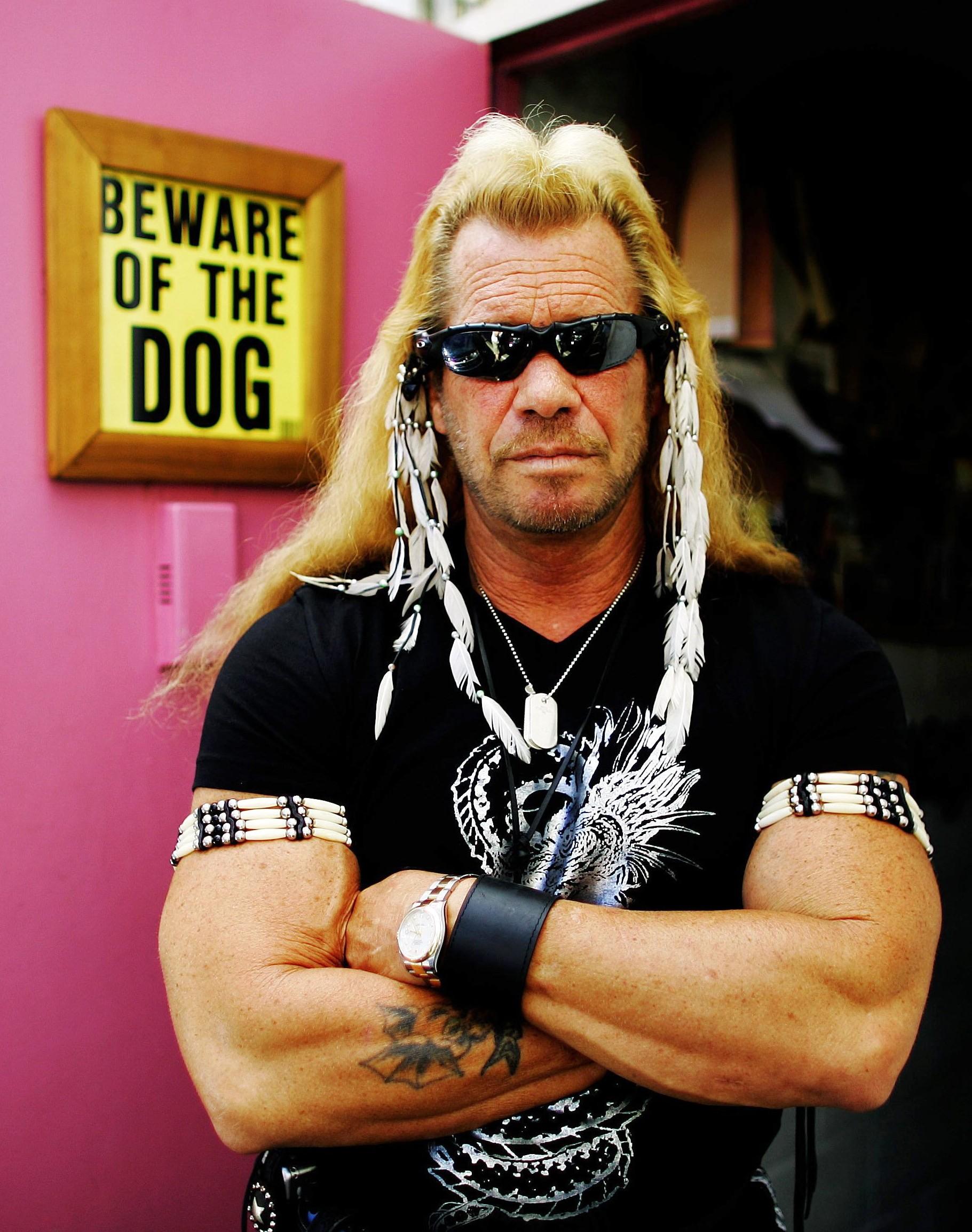
Before the bleach-blonde mullet, the Oakley sunglasses, and the gravelly prayers over handcuffed fugitives, Duane Chapman was just a kid from Denver with a chip on his shoulder. Most people see the TV star and think they know him. They don't. The real story of young Dog the Bounty Hunter isn't a Hollywood script. It is a messy, violent, and surprisingly religious journey through the American penal system and outlaw motorcycle clubs.
He wasn't born a hero. He was born into a house where "discipline" meant a homemade paddle. His father, Wesley, was a welder who didn't pull punches. Dog has been open about this—he spent his childhood desperate for a father’s love he only received through bruises. It’s the kind of environment that makes a teenager look for family in all the wrong places.
The Devil's Disciple and the Birth of "Dog"
By 15, Duane was gone. He ran away and found a new tribe: The Devils Diciples. (Yes, they spelled it "Diciples").
This wasn't some weekend riding club. These guys were an outlaw motorcycle gang, and Duane wanted to be the baddest of the bunch. He used a fake ID to pretend he was 19 and eventually became the Sergeant at Arms for the national chapter. He was drinking, smoking, and fighting his way across the country.
The name "Dog" didn't come from a marketing team. It came from the gang. Despite the drugs and the chaos, Duane had this weird, stubborn streak of faith inherited from his mother, Barbara, a Sunday school teacher. When a fellow biker insulted Jesus, Duane fought him. He wouldn't let anyone "diss the Big Guy." A biker supposedly told him, "I'm gonna call you Dog, 'cause that's God spelled backward."
It stuck.
The Night Everything Broke in Pampa, Texas
If you want to understand why Dog doesn't carry a gun today, you have to look at September 15, 1976.
Duane was 23. He was hanging out with a group of friends in Pampa, Texas, including a guy named Donald Kuykendall. They went to the home of Jerry Oliver, a 34-year-old man, reportedly to buy marijuana—though court records suggest there was an intent to rob him.
Duane didn't pull the trigger. He wasn't even in the house. He was sitting in the car, the getaway driver, while Kuykendall went inside. A shotgun blast rang out. Jerry Oliver was hit in the armpit and later died.
In Texas, in the '70s, the "Law of Parties" was absolute. If you're part of the plan, you're part of the murder. Duane was convicted of first-degree murder and sentenced to five years in the Texas State Penitentiary.
He was devastated. He felt he’d been locked up for a crime he didn't commit, but he later wrote that he felt God told him, "Every brick in this prison is built on a crime you did commit." It was a reckoning.
From Inmate to "Bounty Hunter"
Prison is where the "Bounty Hunter" persona actually formed. It wasn't a choice; it was a fluke.
Duane was serving as the warden's barber. One day, an inmate named "Bigfoot" tried to bolt. The guards were ready to shoot. Duane, not wanting to see his friend killed, chased him down and tackled him. As the guards swarmed, a lieutenant supposedly shouted, "Hook him up, bounty hunter!"
That moment changed his internal wiring. He realized he had a talent for catching people without killing them.
He served 18 months of that five-year sentence. While he was inside, his first wife, LaFonda, divorced him and married his best friend. He walked out of those gates with nothing but a parole officer and a very specific set of skills.
How He Actually Started the Business
Honestly, the transition wasn't smooth. He didn't just walk out and get a TV show. He went to the post office, grabbed wanted posters, and started hunting.
He eventually moved to Hawaii, but things got dark. At one point, he was heavily addicted to "ice" (methamphetamine). It was Beth Smith—his future wife and the iron backbone of his empire—who helped pull him out of that spiral. Her father was a bondsman, and she saw the potential in Duane’s intensity.
He became a legend because he understood the people he was chasing. He had sat in their cells. He had tasted their desperation.
What most people get wrong about Dog is the idea that he’s just a "tough guy" for the cameras. The reality is that his legal status as a convicted felon prevents him from ever owning a firearm. That’s why he uses tasers, pepper spray, and "the talk." He has to use his words and his hands because the law won't let him use anything else.
Actionable Insights from Dog’s Early Years
If you’re looking at the life of young Dog the Bounty Hunter for inspiration or just out of curiosity, here are the real-world takeaways:
- Own your past: Dog never hid his conviction. He used it as his "testimony." In business and life, your biggest failure can become your unique selling proposition if you’re honest about it.
- The "Non-Weapon" Strategy: By necessity, Dog became a master of de-escalation. Learning to handle conflict without "heavy artillery"—whether in the streets or a boardroom—is a superior skill.
- Redemption is a Daily Job: His career wasn't a straight line. It involved relapses, bad marriages, and massive legal hurdles. Success isn't the absence of mistakes; it's the refusal to let them be the final chapter.
Whether you like his style or not, the man built a multi-million dollar empire out of a prison cell and a motorcycle gang vest. That doesn't happen by accident.
If you want to dig deeper into the legalities of bounty hunting today, research the specific "Bail Enforcement" laws in your state, as they vary wildly from the "wild west" style Dog practiced in his early years. You can also read his autobiography, You Can Run But You Can't Hide, for his own unvarnished take on the Pampa shooting.



