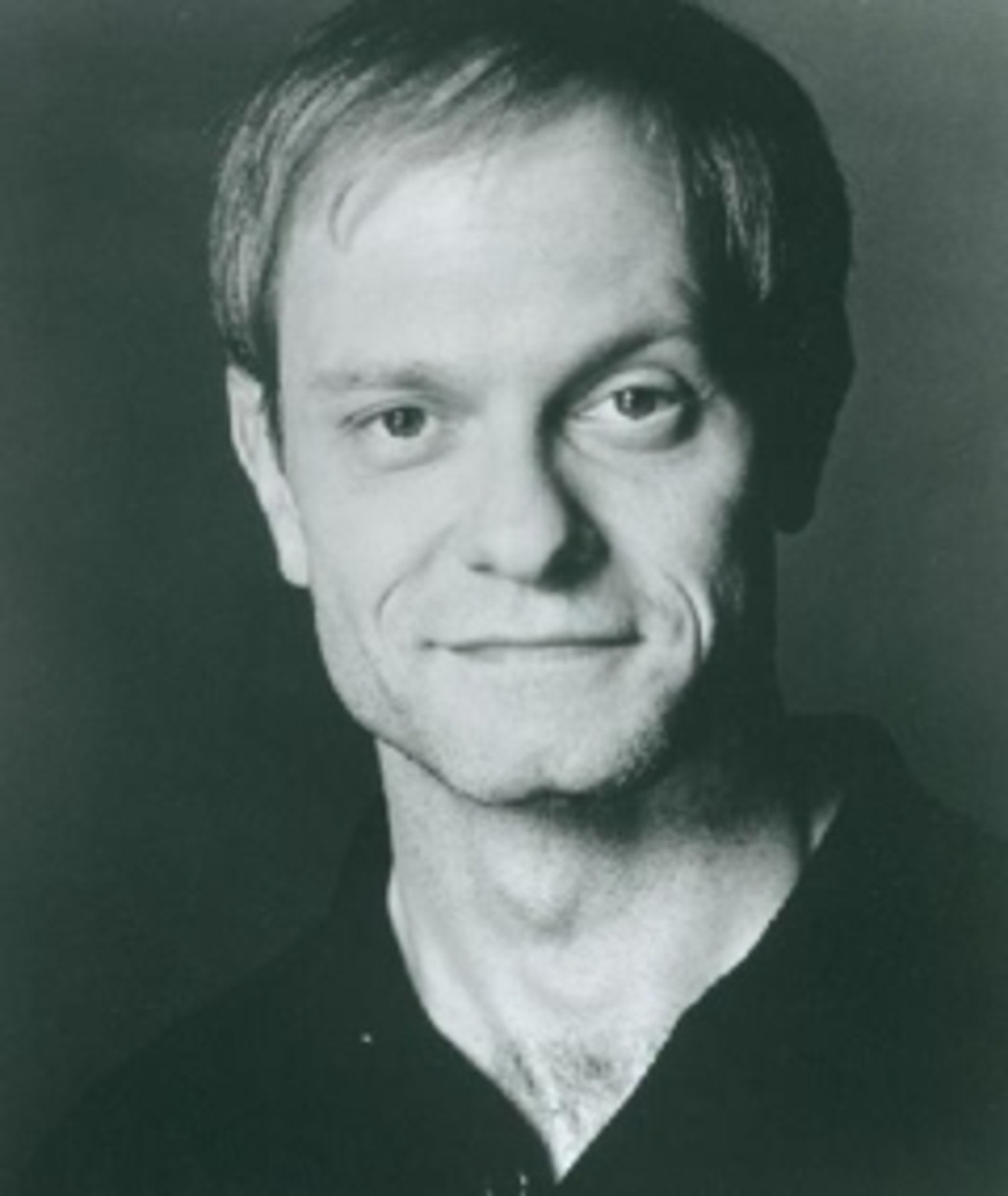
Before he was the high-society psychiatrist with the perfectly creased trousers, young David Hyde Pierce was just a kid in Saratoga Springs, New York, who really liked falling down the stairs. Honestly, it was his first "act." He was the youngest of four, and he’d wait until his family was gathered for breakfast to "get shot" at the top of the staircase and tumble all the way to the bottom.
That’s basically the origin story of the physical comedy that eventually won him four Emmys.
People think he just appeared out of thin air in 1993 when Frasier started, but the road there was a lot weirder—and much more "starving artist"—than most fans realize. He didn’t even start out wanting to act. He was a piano prodigy. He spent his childhood as a church organist and went to Yale originally intending to be a concert pianist.
But then, he realized something kinda brutal: he didn't have the "drive or the talent" (his words, not mine) to make it as a professional musician. So, he switched to a double major in English and Theater Arts.
The Bloomingdale’s Tie Salesman Phase
After graduating from Yale in 1981, Pierce did what every aspiring actor does: he moved to New York City and got a day job. He wasn't exactly living the high life. He sold ties at Bloomingdale’s. He worked as a security guard. He was basically just another face in the crowd at Michael Howard Studios, trying to figure out if this acting thing was actually going to pay the bills.
Then came 1982. He landed his Broadway debut in Christopher Durang’s Beyond Therapy.
Here’s the thing about that show—it was a bit of a disaster. It had big names like John Lithgow and Dianne Wiest, but the New York Times review was basically "toxic." Pierce played Andrew, a waiter. He didn't even show up until the end of the second act. He spent two weeks in rehearsals just sitting in a chair, watching everyone else work.
When he finally got to say his one big line, the other actors literally fell out of their chairs laughing. He had that timing even then. But because the reviews were so bad, the show closed after just 30 performances. Back to the drawing board.
Young David Hyde Pierce and the "Suicidal Congressman" Breakthrough
Most people think Frasier was his big break. It wasn’t.
The real turning point was a weird, dark, ahead-of-its-time sitcom called The Powers That Be (1992-1993). It was created by David Crane and Marta Kauffman—the same people who would later create Friends. Pierce played Theodore Van Horne, a chronically depressed, suicidal United States Congressman.
It sounds grim. It was grim. But Pierce played it with this manic, physical energy that was pure Buster Keaton.
- He would try to kill himself in these increasingly absurd, farcical ways.
- The show was a political satire that was way too biting for the early '90s.
- It only lasted 21 episodes before getting the axe.
But those 21 episodes were enough. The producers of a new Cheers spin-off saw him and were floored by how much he looked like Kelsey Grammer. They hadn't even planned for Frasier Crane to have a brother. They literally created the character of Niles Crane because young David Hyde Pierce existed and was too good to ignore.
Learning the "Art of Nothing"
If you watch early clips of him, you can see the influences. He wasn't into the "big and loud" comedy of the Three Stooges. He was obsessed with Bob Newhart and Dick Van Dyke.
He once talked about a moment in elementary school where he told a joke and realized that if he didn't laugh, his friends laughed harder. He called it "biting my cheeks." That deadpan, reserved style became his signature. He learned that doing less was often ten times funnier than doing more.
When he finally got to the Frasier set, the legendary director James Burrows gave him one piece of advice during his first scene in the coffee shop: "Why don't you take out your handkerchief and wipe off the chair before you sit down?"
That tiny, fussy movement defined the character for eleven years.
Beyond the Screen: The Russian Tour and Hamlet
Before the fame, Pierce was a total theater nerd. He toured the Soviet Union with a theater troupe. He played Laertes in Hamlet alongside Kevin Kline at the New York Shakespeare Festival in 1986. He was a regular at the Guthrie Theater in Minneapolis, doing heavy-duty Chekhov like The Seagull and The Cherry Orchard.
He even changed his name. He was born David Pierce, but he added "Hyde" (his middle name) because there was already another David Pierce in the actor's union.
Honestly, the "young" version of him was much more of a high-brow stage actor than a sitcom star. He only went to Los Angeles in 1991 to do a play (It’s Only a Play at the Doolittle Theatre), and that's when TV finally caught up with him.
Why His Early Years Matter Today
Looking back at young David Hyde Pierce, you see a guy who was classically trained but had the soul of a vaudevillian. He wasn't just "lucky" to get Frasier. He had spent a decade in the trenches of New York theater, selling ties and playing Shakespearean tragedy, all while perfecting the "slow, damp, smoky fizzle" of a great comedic beat.
If you want to really appreciate his work, don't just watch the Frasier reruns. Track down clips of The Powers That Be or his early Broadway work.
Next Steps for the Fan:
- Watch: Look for The Powers That Be on YouTube; it's a "missing link" in sitcom history.
- Listen: Check out his voice work in A Bug's Life (as Slim) to hear how he uses that same precise, "young" energy in animation.
- Observe: Next time you watch Niles, look for the "Buster Keaton" in his movements—that's the kid from Saratoga Springs still falling down the stairs.



