Hank Williams Jr. was never supposed to be the guy who sang "Young Country." Honestly, the industry didn’t want him to be. For the first decade of his career, Randall Hank Williams was a ghost. He was a teenager dressed in his father’s oversized suits, singing his father’s songs, and mimicking a ghost's nasal twang to satisfy crowds who weren't actually there to see him. They were there to mourn a legend who died in the back of a Cadillac on New Year's Day. If you look at the early footage, it’s eerie. He’s a kid performing a seance every night.
But then he fell off a mountain.
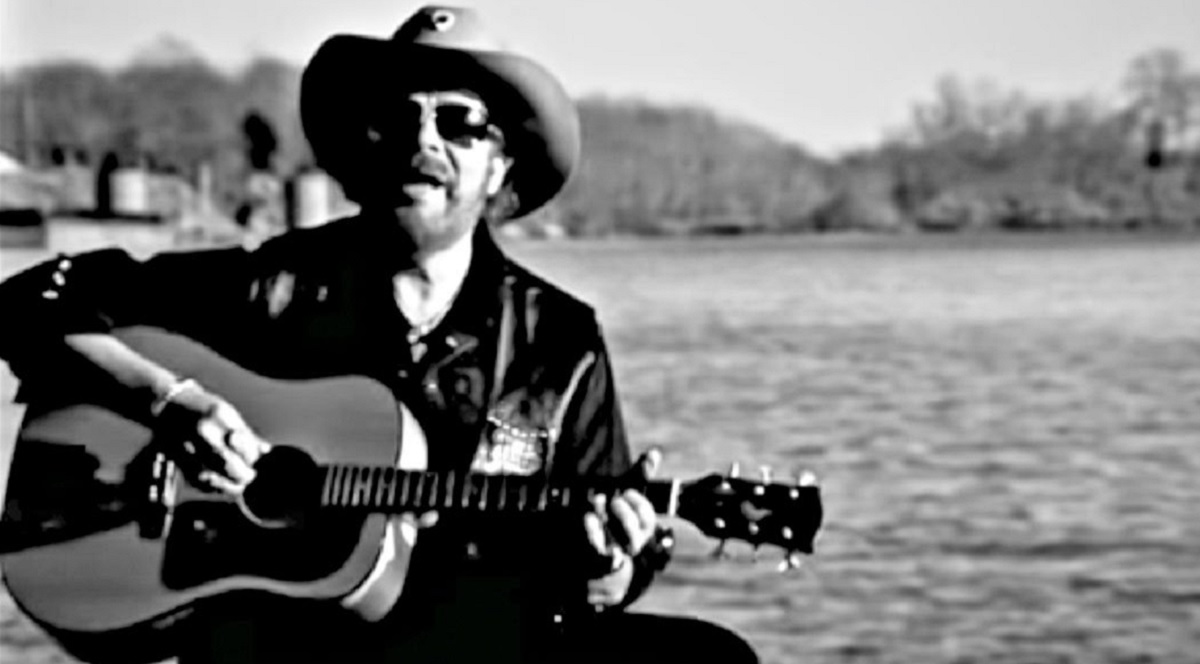
In 1975, while climbing Ajax Peak in Montana, the ground gave way. He fell 500 feet. His face was basically split open. Doctors didn't think he’d live, let alone sing. That moment changed the DNA of country music. When he finally emerged from the hospital—scarred, bearded, and hiding behind sunglasses and a cowboy hat—the "family tradition" mimicry was dead. What took its place was a loud, aggressive, rock-infused sound that eventually gave birth to the young country Hank Williams Jr persona that defined the 1980s.
Why Young Country Hank Williams Jr Scared Nashville
Nashville in the late 70s was polish. It was strings. It was the "Countrypolitan" sound. Hank Jr. came back with a Marshall stack and a chip on his shoulder. He started blending the blues he learned from Rufus "Tea Tot" Payne's legacy with the Southern Rock of the Marshall Tucker Band.
The term "Young Country" wasn't just a song title from his 1987 album Born to Boogie. It was a mission statement. He was claiming a new demographic. Before Bocephus—a nickname his dad gave him—country music was mostly for your parents. He made it for the kids who grew up on Lynyrd Skynyrd but still had a rebel flag or a hunting rifle in the back of their truck.
It was messy. It was loud.
You have to understand the sheer dominance he had. Between 1979 and 1992, he released 22 albums. Every single one of them went Gold or Platinum. He was the first person to ever win the CMA Entertainer of the Year and the ACM Entertainer of the Year in the same year. He wasn't just a singer; he was a cultural force that bridged the gap between the outlaw movement of Waylon and Willie and the stadium-filling spectacle of Garth Brooks.
The Breakdown of the Sound
If you listen to the track "Young Country," the lyrics lay it all out. He mentions being "raised on the blues" but also credits "the rock and roll." He was name-checking his influences in a way that felt like a roll call for a new generation.
- He brought the banjo back but played it like a lead guitar.
- He used heavy percussion, which was still a bit of a "no-no" in traditional circles.
- He leaned into lifestyle marketing before that was even a corporate term.
People weren't just buying his records. They were buying the hats. They were buying the attitude. He was the original "rowdy" superstar.
The Montana Accident: The Catalyst for the Change
We can't talk about this era without talking about the trauma. On August 8, 1975, Hank Jr. was hiking with a friend. The snow bridge collapsed. He hit rocks the whole way down. His forehead was pushed back, his nose was gone, and his jaw was shattered.
Recovery took years.
During that time, he realized he didn't want to be the "Living Proof" of his father anymore. He wanted to be the living proof of himself. This is where the young country Hank Williams Jr identity actually began—in a hospital bed. He stopped trying to sound like a man from 1952. He started sounding like a man who liked ZZ Top and Jim Beam. He became a multi-instrumentalist powerhouse, often playing every instrument on his demo tracks.
A Disconnect with the "New" Nashville
Ironically, the "Young Country" he pioneered eventually moved on without him. By the mid-90s, country music started getting "cleaner" again. The hats got bigger, but the music got softer. Hank Jr. stayed gritty. He stayed political. He stayed loud.
Critics often point to his 1987-1990 run as the peak of this movement. Songs like "Born to Boogie" and "All My Rowdy Friends Are Coming Over Tonight" weren't just hits; they were anthems. When ABC’s Monday Night Football picked up "All My Rowdy Friends" as their theme song in 1989, it solidified his status. He was no longer just a country star. He was an American icon. He was the bridge between sports, rock, and rural life.
Debunking the Myths of the "Rowdy" Era
There’s a common misconception that Hank Jr. was just a party animal who got lucky because of his last name. That’s lazy.
The reality? He is one of the most technically proficient musicians in the history of the genre. Watch a video of him playing "Wildwood Flower" on a guitar, then switching to a fiddle, then sitting down at a piano to play some Jerry Lee Lewis-style boogie-woogie. He was a savant. The "rowdy" persona was a shield and a brand, but the foundation was pure, unadulterated talent.
Another myth is that he hated his father’s legacy. He didn't. He just hated being a puppet for it. In his later "young country" years, he finally found a way to honor Hank Sr. on his own terms—most notably in the song "Family Tradition," where he basically asks the audience, "Why do you drink? Why do you roll? Why must you live out the songs that you wrote?"
It was a rhetorical middle finger to the critics.
How to Listen to This Era Properly
If you're trying to understand the young country Hank Williams Jr vibe, you can't just shuffle a "Greatest Hits" playlist. You need to hear the transition.
- Start with Hank Williams Jr. and Friends (1975). This is the pivot point. It features Toy Caldwell from the Marshall Tucker Band and Charlie Daniels. It’s the first time he sounds like himself.
- Move to Whiskey Bent and Hell Bound (1979). This is the definitive outlaw-meets-southern-rock sound.
- Finish with Born to Boogie (1987). This is the stadium-filling, high-gloss version of his "Young Country" vision.
You'll notice the production gets bigger. The drums get louder. The swagger becomes undeniable. It’s the sound of a man who finally stopped living in a shadow and started casting his own.
The Lasting Impact on Modern Artists
Look at Eric Church. Look at Riley Green. Look at Hardy.
Every artist today who mixes a heavy rock riff with a lyric about hunting or small-town life owes a debt to the 1980s era of Hank Jr. He gave them permission to be "country" without having to wear a rhinestone suit or sing about heartbreak in a weeping tenor. He made it okay to be aggressive. He made it okay to be loud.
He proved that you could respect the roots while completely changing the branches.
Actionable Insights for Fans and Collectors
- Vinyl Hunting: If you're looking for the best audio quality of the "Young Country" era, seek out original pressings of Habitual Psycho or The Pressure Is On. The 80s analog recordings have a warmth that the digital remasters often crush.
- Documentary Viewing: Watch the 1983 TV movie Living Proof: The Hank Williams Jr. Story. Richard Thomas (from The Waltons) plays Hank Jr., and while it's a bit dramatized, it captures the psychological weight of his transition perfectly.
- Musical Analysis: Pay attention to his piano playing. While his guitar work gets the glory, his barrelhouse piano style is actually what drove the rhythm of the "Young Country" movement. It’s the secret sauce in his uptempo hits.
Hank Williams Jr. didn't just survive a fall off a mountain; he survived the weight of the greatest name in country music history. He did it by reinventing what "country" meant for a new generation. That is the true legacy of the Young Country era. It wasn't about being young in age; it was about having a young, rebellious spirit in an old, tired industry.



