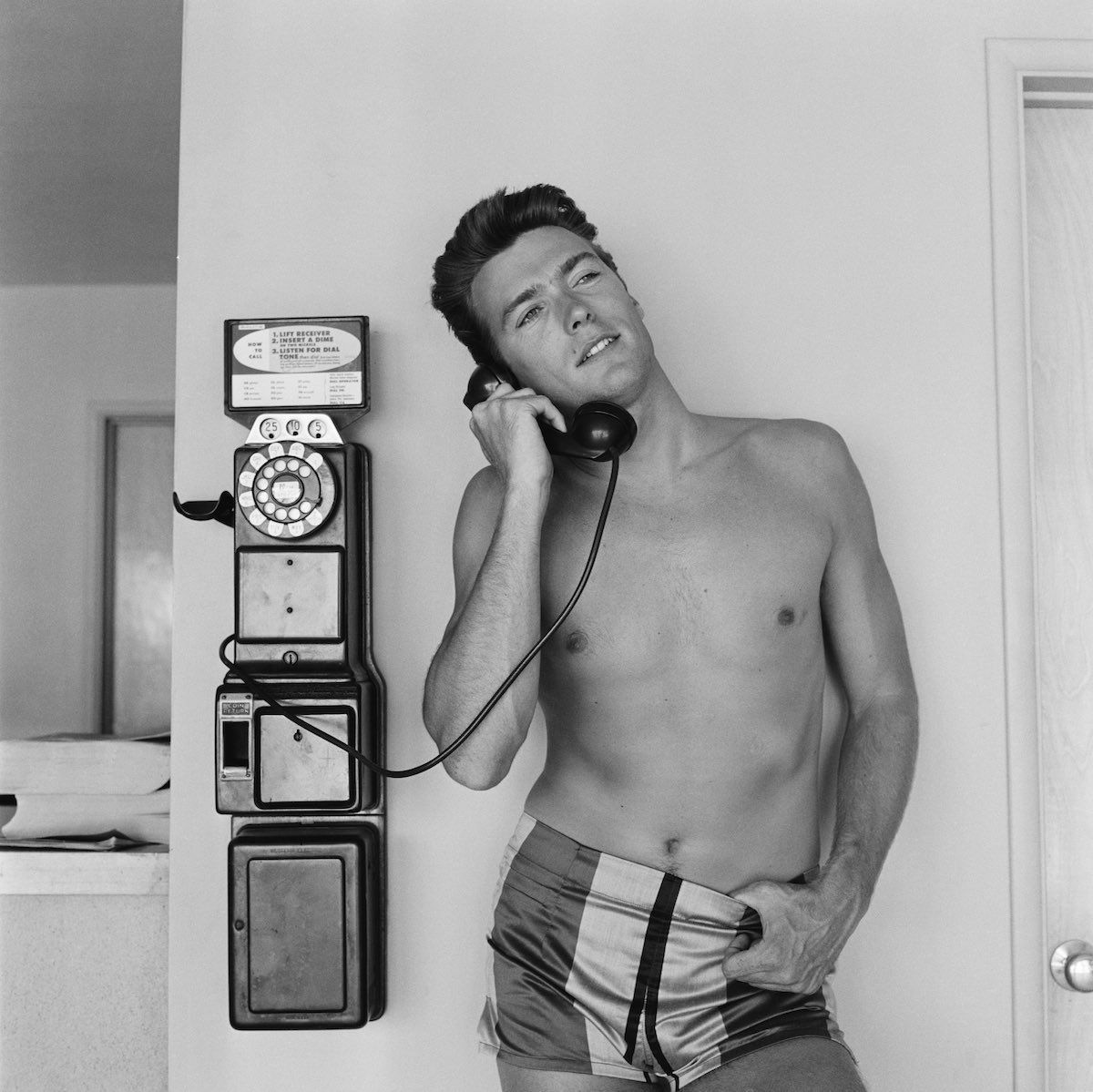
You’ve seen the face. Even if you aren't a fan of Westerns or 1970s grit, that squint is universal. But looking at pictures of a young Clint Eastwood is a weirdly different experience than watching the 95-year-old Hollywood titan of today. Before he was the Unforgiven legend or the Oscar-winning director, he was just a skinny kid from California named Clinton.
He didn't just walk into stardom. Far from it.
The Lumberjack in a Swimsuit
Most people think he was born with a revolver in his hand. Honestly, the early 1950s photos of him tell a much more "starving artist" story. There’s this famous shot of him in the Army at Fort Ord, California. He was a swimming instructor. He looks like a classic 1950s jock—lean, tan, and completely oblivious to the fact that he’d one day be the biggest box office draw in the world.
He worked as a lumberjack in Oregon. He baled hay. He was a forest firefighter.
When you look at those grainy, black-and-white candid shots from his pre-fame days, you see a guy who was just trying to pay the rent. He lived on $75 a week when he finally signed with Universal in 1954. If you find a photo of him from this era, he’s usually a background extra. Look closely at Revenge of the Creature (1955). He's there. Barely.
Why Rawhide Changed Everything
The breakthrough happened in 1959. Rowdy Yates. If you search for pictures of a young Clint Eastwood, the Rawhide era is usually where the "good stuff" starts.
He was nearly 30, but the studio wanted him to play younger. He hated it. He thought Rowdy was "cloddish." But the camera loved him. These photos show a softer Eastwood. The hair is perfectly coiffed. The cowboy hat is crisp. He hasn't yet developed the "Man with No Name" scowl that would define his 60s run.
Rawhide was a grind. He worked 12-hour days, six days a week. You can see the exhaustion in some of the behind-the-scenes set photos from the early 60s. He’s often pictured with his first wife, Maggie Johnson, whom he married in 1953. Those photos feel domestic and grounded, a sharp contrast to the lonely drifter he’d soon portray on the big screen.
The Leone Transformation: The Birth of an Icon
Everything changed when he went to Italy. Sergio Leone saw something in Eastwood that Hollywood executives missed. They thought he was too "stiff." Leone thought he had "two expressions: with hat and without hat."
Spotting the Real Deal: Authenticity in Vintage Photos
If you’re a collector looking for authentic pictures of a young Clint Eastwood, you have to be careful. The internet is flooded with "reprints" that people try to pass off as 1960s originals.
- The Size Rule: Most original publicity stills from the 50s and 60s are 8x10 inches. If you see something in a weird 24x36 size claiming to be an "original," it's likely a modern video release poster.
- The Back of the Photo: Real vintage press photos usually have "slugs" (typed descriptions) or date stamps on the back.
- The Signature Trap: This is the big one. Eastwood had secretaries sign thousands of photos during the Rawhide years. A "secretarial" signature often has a "D" at the end that looks like a "Y" or a "G." His real signature is famously messy, often looking like a series of jagged peaks.
The Fitness Obsession
One thing that jumps out in pictures of a young Clint Eastwood is his physique. He wasn't "bulky" like the 80s action stars. He was wiry.
He started lifting weights at 19, back when bodybuilding was considered a "fringe" activity. He’s actually one of the pioneers of the Hollywood fitness movement. He avoided red meat (mostly) and stayed away from sugar long before it was trendy.
His father died young from cardiovascular disease. That changed everything for Clint. He became obsessed with health. In photos from the set of The Good, the Bad and the Ugly, you can see he’s in peak physical condition. It wasn't for vanity; it was for survival.
The "Man with No Name" Aesthetic
The most famous images of him aren't the ones where he's smiling. They’re the ones where he’s wearing that iconic green poncho. Fun fact: he bought that poncho himself. He didn't want the studio to provide a clean, "Hollywood" costume. He wanted it to look like it had been through a war.
He also bought the cigars. He didn't even smoke. He hated the taste, but he knew the cigar gave the character a certain "look." That squint? It wasn't an acting choice. The sun in Spain and Italy was so bright that he literally couldn't keep his eyes open.
Actionable Insights for Fans and Collectors
If you're looking to dive deeper into the visual history of this legend, don't just stick to Google Images.
- Check the John Kobal Foundation: They hold some of the highest-quality early portraits.
- Look for 1960s "Lobby Cards": These are small, 11x14 posters used in theaters. They often feature unique shots not found in the films.
- Verify the "Paper": Real 1950s photos are printed on fiber-based paper, which feels thicker and more "organic" than the plastic-y resin-coated paper used today.
The fascination with pictures of a young Clint Eastwood isn't just about nostalgia. It’s about watching a man build a persona from scratch. He took the "pretty boy" looks of a 50s contract player and turned them into the rugged, uncompromising face of American cinema.
To truly appreciate the evolution, start with the 1955 Universal contract headshots. Then look at the Rawhide publicity stills. Finish with the 1966 The Good, the Bad and the Ugly posters. You aren't just looking at a changing face; you're looking at the birth of a legend who is still working today.
Identify the specific era of the photo by checking the "Malpaso" production logo. If the photo or poster features the Malpaso name, it dates from 1967 onwards, marking the period when Eastwood took full control of his career and image. For earlier photos, look for the CBS or Universal Studios watermarks in the bottom corners, which are key indicators of authentic studio-issued promotional material from his formative years.



