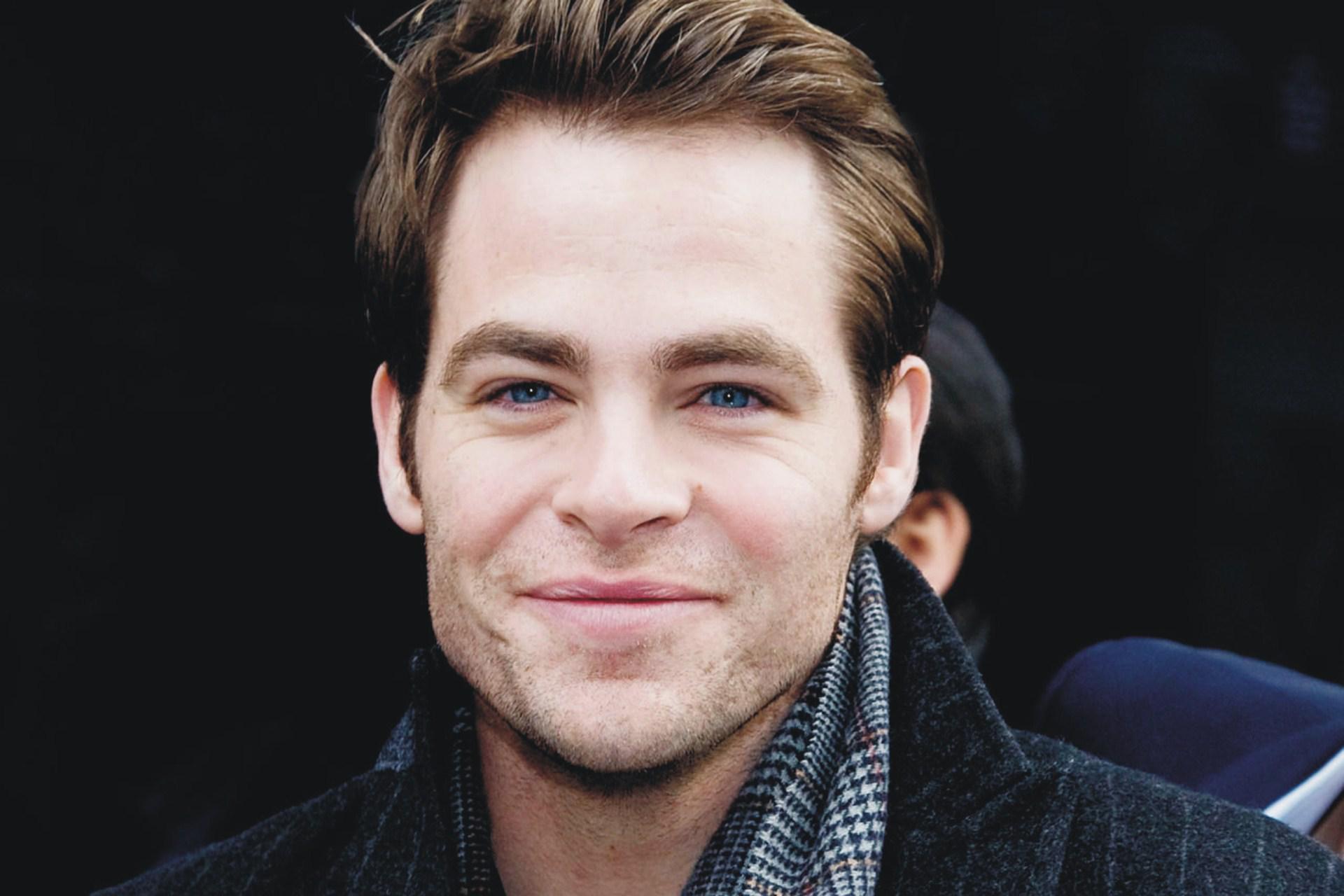
If you close your eyes and think of young Chris Pine, you probably see that guy from The Princess Diaries 2—the one with the impossibly blue eyes, the "hair helmet" locks, and that effortless Prince Charming energy. Or maybe you see the brash, early-days Captain Kirk jumping onto the bridge of the Enterprise.
But honestly? That version of him is kinda a myth.
The real story isn't about a guy who walked into a room and got handed a golden ticket because he looked like a movie star. It’s actually way more interesting—and a lot more desperate—than the polished Hollywood narrative suggests.
The "Overnight Success" That Took Years
Most people think he just appeared out of nowhere in 2004. In reality, Pine was a classic "late bloomer" who didn't even have a burning passion for acting growing up.
He grew up in Los Angeles, yeah, but it wasn't some glitzy lifestyle. His dad, Robert Pine, was a working actor (you might know him as Sgt. Getraer from CHiPs), and his mom, Gwynne Gilford, was also an actress before she pivoted to becoming a therapist. He saw the "fallow periods" of an acting career firsthand. He saw the struggle.
Basically, he knew that in Hollywood, hard work and success don't always hang out together.
Berkeley, Leeds, and the Subterranean Pizza Shop
Pine headed to UC Berkeley to study English, not theater. He wasn't the "social butterfly" type you’d expect. Instead of hitting up rowdy fraternities, he was looking for a place to actually belong. He found it in the Berkeley Theater Department.
His first real acting gig? It wasn't on a soundstage. It was in a Caryl Churchill play at La Val’s Subterranean Theater.
Literally underneath a pizza restaurant.
He spent a year at the University of Leeds in the UK, too. He was doing Shakespeare and Orestes, building this gritty theater foundation that most people ignore when they talk about his "pretty boy" early years. By the time he graduated in 2002, he was a theater nerd through and through, even doing an apprenticeship at the Williamstown Theatre Festival.
The $65,000 "Earth-Shattering" Moment
Fast forward to 2003. He’s back in LA, broke, and doing the "guest star" rounds. You can spot a very young Chris Pine in a 2003 episode of ER playing a drunk patient. He did CSI: Miami and The Guardian. Small stuff.
Then came the call that changed everything.
Pine was driving his car when his agents called his silver Verizon flip phone to tell him he booked the role of Nicholas Devereaux in The Princess Diaries 2: Royal Engagement.
The pay? $65,000.
To a 23-year-old with an overdrawn bank account who owed his parents rent money, that felt like $50 million. He pulled over on the side of the freeway, stunned. After taxes and commissions, he walked away with maybe $15,000, but the psychological shift was permanent. He wasn't just a kid from the Valley anymore; he was a leading man.
Breaking the "Pretty Boy" Mold
After the Disney success, Hollywood tried really hard to pigeonhole him. They wanted him to be the next big rom-com guy. He did Just My Luck with Lindsay Lohan in 2006, and while it's a nostalgic favorite for some now, critics absolutely thrashed it at the time.
But Pine was smarter than the roles he was being offered.
While he was being marketed as a heartthrob, he was secretly doing weird, dark stuff on the side. In 2006, he played Darwin Tremor in Smokin' Aces. If you haven't seen it, he's unrecognizable—dirty, neo-Nazi hitman vibes, totally unhinged.
He also did a one-man play called The Atheist in New York. One man. On a stage. No "hair helmet" to save him.
The Star Trek Gamble
By 2007, he was at a crossroads. He actually turned down a role in a big crime movie (an adaptation of James Ellroy's White Jazz) because he got the offer to play James T. Kirk.
Ironically, Pine thought his Star Trek audition was "awful." He didn't see himself as a leader.
But J.J. Abrams saw something else. He saw the theater-trained actor who could balance the "swagger" of William Shatner with a deeper, more vulnerable internal life. When the movie hit in 2009, it didn't just make him a star—it validated the years he spent reading Stanislavsky and working on scenes with his mom.
Why Young Chris Pine Matters Now
Looking back, the way Pine handled his early 20s is a blueprint for longevity. He didn't chase the fame; he chased the craft. He was self-aware enough to know that his looks were a "foot in the door," but talent was the only thing that would keep the door from slamming shut.
Actionable Insights from Pine's Early Career:
- Diversify your "portfolio" early: Even when he was the "Disney Prince," he was doing gritty indie roles and stage plays to prove his range.
- Don't fear the "bit" parts: Those one-off episodes of ER and CSI were the "minor leagues" that taught him how a professional set actually functions.
- Maintain a "workman" mentality: Pine famously views acting as a job, not a lifestyle. This helped him survive the lean years without losing his mind.
- Trust the pivot: Turning down a safe crime flick for a risky sci-fi reboot was the defining move of his life.
If you're looking to dive deeper into his evolution, go back and watch Bottle Shock (2008). He plays a long-haired hippie vintner in Napa Valley. It’s the perfect bridge between his "pretty" phase and the "serious actor" he eventually became. It shows a guy who was clearly ready for something bigger than just being a face on a poster.