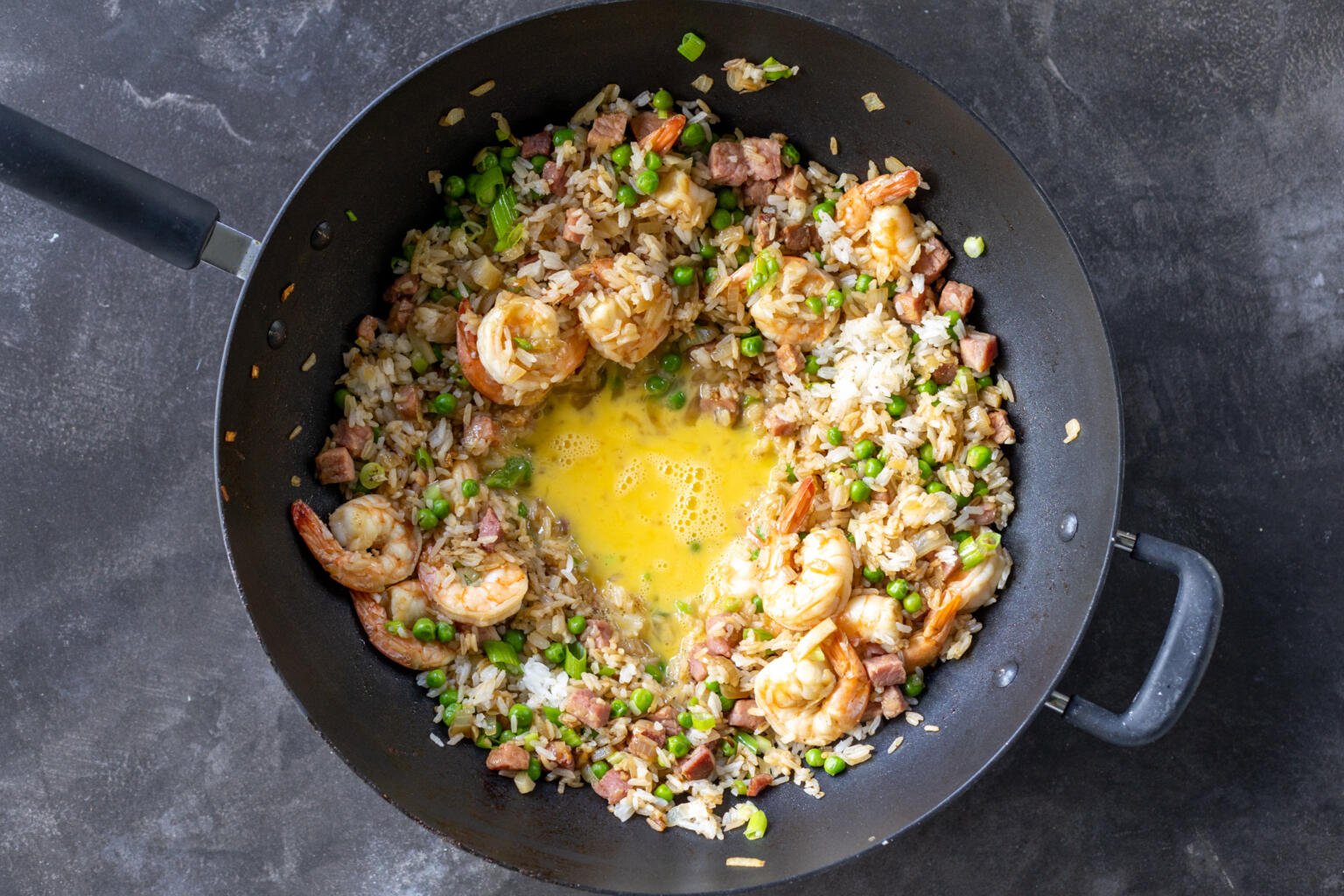
You’ve seen it on every single Chinese menu from New York to London. Usually, it's tucked between the lo mein and the Kung Pao chicken, listed as Young Chow Fried Rice or perhaps "Yangzhou Fried Rice" if the restaurant is feeling a bit more traditional. Most people order it because it’s the "everything" rice—the one with the shrimp, the pork, and those tiny bright green peas.
But here’s the thing.
The version you’re eating out of a cardboard box while watching Netflix is often a pale imitation of what is arguably the most prestigious rice dish in Chinese history. It’s a dish that technically has a legal definition. No, really. Back in 2002, the Yangzhou Cuisine Association in Jiangsu Province actually released "official" standards for what can and cannot be called authentic Yangzhou Fried Rice. If it doesn't have at least eight specific ingredients, the purists say it’s just fried rice.
The Huaiyang Connection: More Than Just Leftovers
Most Westerners think fried rice was invented as a way to use up old scraps. While that's true for the home cook, Young Chow Fried Rice comes from the Huaiyang school of cooking. This is one of the Four Great Traditions of Chinese cuisine. It’s known for being delicate, slightly sweet, and incredibly fussy about knife skills.
In Yangzhou, this dish isn't a side. It’s a centerpiece.
The legend goes back to the Sui Dynasty, specifically to a guy named Yang Su who loved "Golden Rice." Eventually, the recipe migrated to Yangzhou, a wealthy salt-trading hub, where chefs turned it into an art form. The goal isn't just to mix things together; it’s to achieve "silver wrapped in gold" ($jin xiang yin$). This happens when every single grain of rice is coated in a thin layer of liquid egg yolk before the whites are even added. It sounds simple. It is actually incredibly hard to do without making the rice mushy or clumpy.
What Actually Goes Into the Wok?
If you want to know if a chef knows their stuff, look at the ingredients in their Young Chow Fried Rice. Authentic versions avoid the "kitchen sink" approach. Instead, they focus on a balance of flavors: sea-fresh, land-savory, and garden-crisp.
You need high-quality sea cucumber or shrimp. Then comes the Jinhua ham—a dry-cured treasure that tastes like a more intense, salty Prosciutto. You add bamboo shoots for a woody crunch, dried scallops (conpoy) for that deep umami hit, and shiitake mushrooms. Some chefs insist on adding sea cucumber or even shredded chicken.
Then there are the peas and scallions. They aren't just there for flavor; they provide the "green" contrast to the yellow rice and pink shrimp. It’s a visual palette. Honestly, if you see a place using frozen corn or big chunks of tough beef, they’ve lost the plot.
The Rice Problem (and the Solution)
Most people tell you to use "day-old" rice. That’s the golden rule, right?
Well, sort of.
Professional chefs in China often don't use leftovers. They steam the rice specifically for the dish, using less water than usual to ensure the grains stay distinct and firm. The type of rice matters immensely. You want a medium-grain or long-grain variety like Jasmine. Short-grain sushi rice is too sticky; it turns into a gummy ball the moment it hits the heat.
The "wok hei" or breath of the wok is the secret sauce. You need a heat so intense it almost feels dangerous. The rice should dance in the pan. If the rice is just sitting there soaking up oil, it’s not frying; it’s just getting greasy. You’ve probably noticed that film of oil on the bottom of your takeout container before. That’s a sign of a cool wok and a rushed chef.
Why "Young Chow" and Not "Yangzhou"?
It’s just linguistics. "Young Chow" is the Cantonese romanization, while "Yangzhou" is Mandarin Pinyin. Because most early Chinese immigrants to the US and UK were Cantonese speakers from Guangdong and Hong Kong, the Cantonese name stuck.
Interestingly, while the dish originated in the north (Jiangsu), it was the Cantonese chefs who globalized it. They added their own flair, often swapping the traditional Jinhua ham for char siu (barbecue pork). This is the version most of us know. It’s sweeter, smokier, and uses that bright red pork that stains the rice pink in some places. Is it authentic to the 1,000-year-old recipe? No. Is it delicious? Absolutely.
How to Spot a "Fake" in the Wild
Next time you’re at a Chinese restaurant, do a quick audit of the Young Chow Fried Rice.
- The Egg: Is the egg in big, rubbery chunks? Or is it finely shredded and clinging to the rice? The latter is the mark of a pro.
- The Moisture: The rice should be dry. Not "dehydrated" dry, but distinct. If you press a spoon into it and it clumps like mashed potatoes, send it back.
- The Protein: If the shrimp still has the tail on or hasn't been deveined, it’s a sign of a lazy kitchen. In Yangzhou, the ingredients are often diced to be roughly the same size as a grain of rice or a pea. This ensures you get every flavor in a single bite.
Cultural Nuance and the "Rice Habit"
In China, fried rice is often served toward the end of a banquet. It’s a bit of a courtesy. The host provides it just in case you aren't full yet. However, in the West, we treat it like an entree. This shift in how we eat it has changed the recipe over time, making it heavier and meatier than its refined ancestors in the East.
There's also a common misconception about MSG. While some modern diners avoid it, the original "umami" in Young Chow rice came from dried seafood and cured ham. These ingredients are naturally packed with glutamates. When a chef uses high-quality ingredients, they don't actually need to add a spoonful of white powder to make the flavors pop. The ham does the heavy lifting.
Making It at Home Without Failing
If you’re going to try this yourself, stop using a non-stick pan. I’m serious. You can’t get the temperature high enough without ruining the coating or off-gassing chemicals. Use carbon steel or cast iron.
Get the pan screaming hot. Add the oil—something with a high smoke point like peanut or canola. Drop the eggs in first, and while they are still 70% liquid, throw the rice on top. This is the "Silver Wrapped in Gold" technique. Use a spatula to break up the rice quickly. You want the egg to dry on the rice.
Add your diced proteins next. The char siu, the shrimp, the mushrooms. Keep it moving. If you stop tossing for more than five seconds, it’ll burn. Finally, toss in the scallions and a tiny splash of light soy sauce at the very end. Don't drown it in soy sauce. The rice should stay yellow, not turn dark brown. If it’s brown, you’ve made "Soy Sauce Fried Rice," which is a different dish entirely.
The Actionable Path to Better Fried Rice
To truly appreciate this dish, you have to move beyond the generic "Special Fried Rice" mentality. Here is how to elevate your experience:
- Seek out Huaiyang restaurants: If a place specifically mentions Huaiyang cuisine, their rice will be lightyears ahead of a standard takeaway.
- Master the "Dry Toss": If making it at home, ensure your rice is cold. Cold rice has less surface moisture, which allows it to fry rather than steam.
- Ingredient Sourcing: Buy a small block of real Jinhua ham or a high-quality Cantonese char siu from an Asian grocer. The depth of flavor is incomparable to generic ham cubes.
- Watch the Salt: Remember that the ham and shrimp are salty. Taste the rice before you add any extra salt or soy.
Young Chow Fried Rice is a testament to the idea that the simplest ingredients—rice, eggs, and a few bits of meat—can become a culinary masterpiece through technique. It’s not just a side dish; it’s a historical record of a trade hub’s wealth and a chef’s skill with fire.
The next time you open that white box, look closely at the grains. If they're yellow, distinct, and dancing with tiny bits of ham and shrimp, you’re eating a legacy that spans dynasties.
Next Steps for the Home Cook:
- Rice Prep: Use a 1:1 ratio of water to rice in your cooker and let it chill uncovered in the fridge for at least 4 hours before cooking.
- Knife Work: Dice your ham and bamboo shoots into 5mm cubes to match the scale of the rice grains.
- The Heat: Wait until your oil is just starting to smoke before the first ingredient hits the pan.