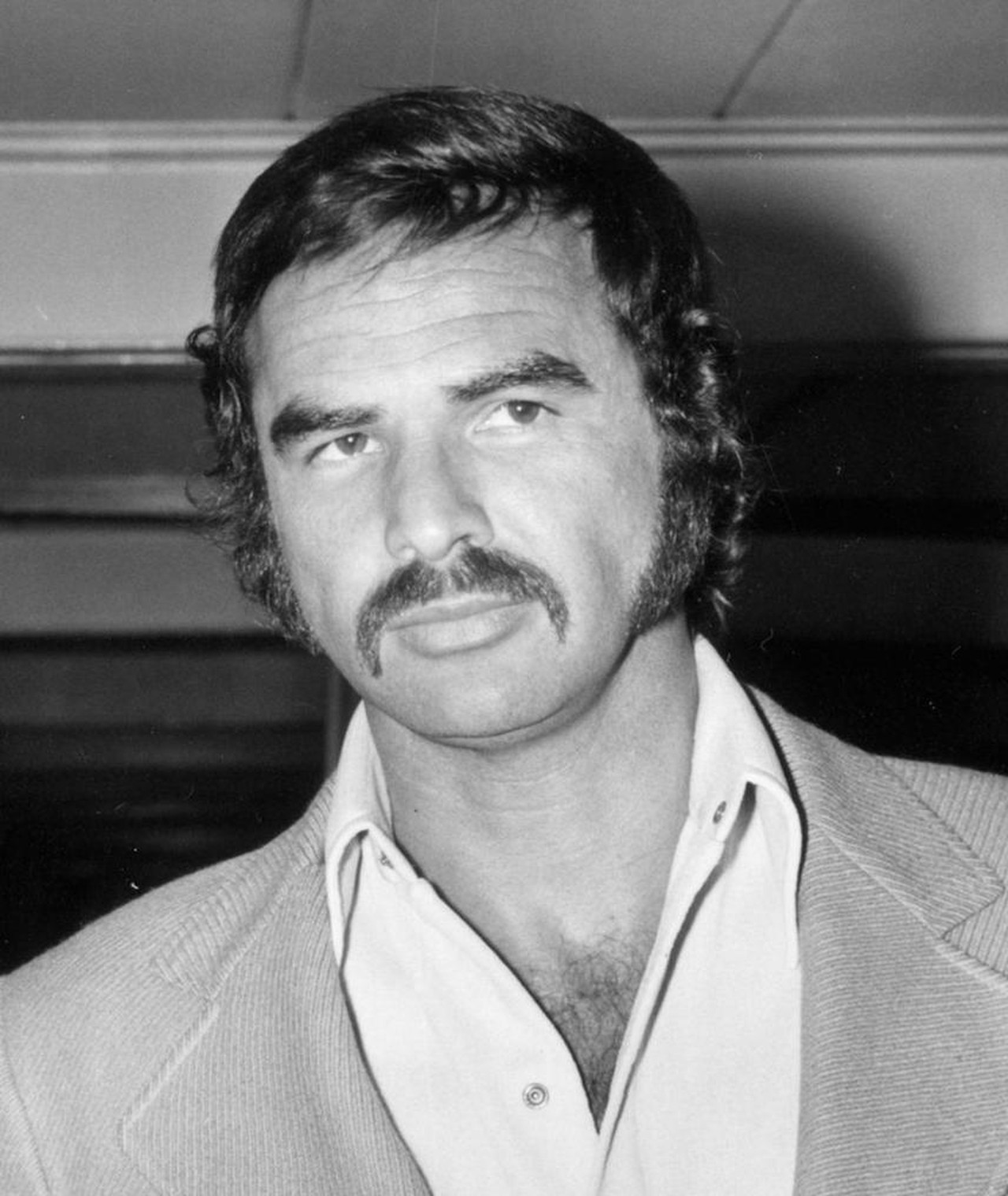
Before the mustache became a permanent resident of his upper lip and before he was the guy in the red Trans Am outrunning the law, Burt Reynolds was just a kid named Buddy. Honestly, if you look at photos of a young Burt Reynolds from the mid-1950s, you might not even recognize him. The swagger was there, sure. But the face was different—clean-shaven, lean, and carrying the focused intensity of a guy who thought his life was going to be defined by a 100-yard field, not a movie set.
Most people think Burt was always Hollywood royalty. They think he just waltzed into the 70s and took over. But the reality? It was way messier than that. His path was a weird mix of high-speed collisions, failed screen tests, and a very famous bearskin rug that he’d eventually regret more than almost anything else.
The Football Star Who Almost Was
Burt—then known as "Buddy" Reynolds—was a standout athlete at Palm Beach High. He was fast. He was tough. He played halfback with the kind of aggression that gets you noticed by big-time scouts. Eventually, he landed a scholarship to Florida State University (FSU).
His freshman year in 1954 was electric. He actually opened his career with a 33-yard reception against Georgia. People in Tallahassee were convinced he was the next big thing. But football is a brutal game. A nasty knee injury during his sophomore year sidelined him. Then, life decided to double down.
While he was recovering, he got into a massive car accident. It wasn't just a fender bender; he lost his spleen and messed up his other knee. When he tried to come back to the field in 1957, the speed was gone. He was, in his own words, playing on one leg. He realized the dream was dead.
"I was a ballplayer that was not the ballplayer I was as a freshman," he’d later say.
It’s crazy to think about, but if that car hadn't hit him, we might never have had Deliverance or Smokey and the Bandit. He’d just be another name in the FSU record books.
From the Gridiron to the Stage
So, what does a washed-up football player do? He goes to junior college. At Palm Beach Junior College, a professor named Watson B. Duncan III basically forced him to read for a play called Outward Bound. Burt played a sensitive alcoholic. He was good. Like, "win a state drama award" good.
That award got him a scholarship to a summer theater in New York called the Hyde Park Playhouse. This is where the young Burt Reynolds story gets interesting. While he was up there, he met Joanne Woodward. She saw something in him—maybe the raw charm or just the fact that he looked like a young Marlon Brando—and helped him find an agent.
But New York wasn't an immediate win. He spent years doing the "struggling actor" thing. He washed dishes. He worked as a bouncer at the Roseland Ballroom. He even worked as a dockworker. At one point, someone offered him 150 bucks to jump through a glass window on live TV. He took it. He was basically a stuntman who happened to have a leading man's face.
The Brando Problem
Interestingly, Burt actually lost out on roles early on because he looked too much like Marlon Brando. Director Joshua Logan once told him he couldn't be in the movie Sayonara because of the resemblance. It’s hard to imagine now, but the very look that made him a superstar later was a liability in the late 50s.
The TV Grind and the "Almost" James Bond
Before he was a movie star, Burt was a TV workhorse. You can find him in old episodes of Gunsmoke, where he played Quint Asper, the half-Comanche blacksmith, for about three years. He did Riverboat. He did Hawk. He did Dan August.
He was becoming a household face, but not yet a legend. He was also making some questionable career calls. In 1969, they actually approached him to play James Bond after George Lazenby quit.
Burt turned it down.
His reasoning? "An American can't play James Bond." He later admitted that he woke up in cold sweats thinking about that mistake. He also turned down Han Solo. And the lead in Pretty Woman. And Die Hard. The man had a talent for saying "no" to some of the biggest franchises in history.
1972: The Year Everything Changed (For Better and Worse)
If you want to pinpoint the exact moment young Burt Reynolds became a cultural icon, it’s 1972. It was a "perfect storm" year, but it’s also the year he made the move that he felt tanked his serious acting reputation.
First, there was Deliverance.
This wasn't a "good ol' boy" movie. It was dark, visceral, and terrifying. Burt played Lewis Medlock, and he was incredible. He did his own stunts, including the waterfall scene that ended with him hitting a rock so hard it cracked his tailbone. The movie was a massive critical success. It should have been his ticket to an Oscar.
But then, he did the centerfold.
At the request of Cosmopolitan editor Helen Gurley Brown, Burt posed nude on a bearskin rug. He thought it was a joke—a parody of the Playboy "Playmate of the Month" vibe. He was actually "plastered" on vodka when they took the photo.
The issue sold 1.6 million copies almost instantly. He became the ultimate sex symbol overnight. But Hollywood’s "serious" crowd hated it. Burt spent the rest of his life believing that the photo cost him and his co-stars (like Jon Voight and Ned Beatty) Academy Awards for Deliverance.
The paradox of Burt Reynolds is right there: the thing that made him the most famous man in the world was the same thing that made people stop taking him seriously as an actor.
Why Young Burt Still Matters
Looking back at that era, Burt Reynolds wasn't just an actor; he was a vibe. He was the bridge between the stoic leading men of the 50s and the more self-aware, winking action stars of the 80s. He knew he was handsome, he knew he was charming, and he was always in on the joke.
He didn't take the "movie star" thing too seriously, which is probably why audiences loved him so much. He felt like the guy you’d want to grab a beer with, even if he was also the guy your girlfriend was obsessed with.
If you’re looking to dive deeper into the Burt Reynolds era, here’s how to do it right:
- Watch Deliverance first. Forget the "Mustache Burt" for a second and see him as a raw, physical actor. It’s a masterclass in tension.
- Track down his early Gunsmoke episodes. It's wild to see him in a Western setting before he became the face of the 70s.
- Read his memoir, "But Enough About Me." It was published later in his life, and he is brutally honest about his mistakes, his regrets, and the women he loved (especially Sally Field).
- Ignore the Smokey sequels. Stick to the original 1977 Smokey and the Bandit. It’s pure, distilled Burt.
The legacy of the young Burt Reynolds is one of a guy who kept reinventing himself. From Buddy the football player to Burt the TV actor to The Bandit. He was never just one thing, and that’s why, even years after his passing, we’re still talking about him. He was the last of a certain kind of movie star—the kind that didn't need a superhero suit to be a hero. He just needed a fast car and a smirk.



