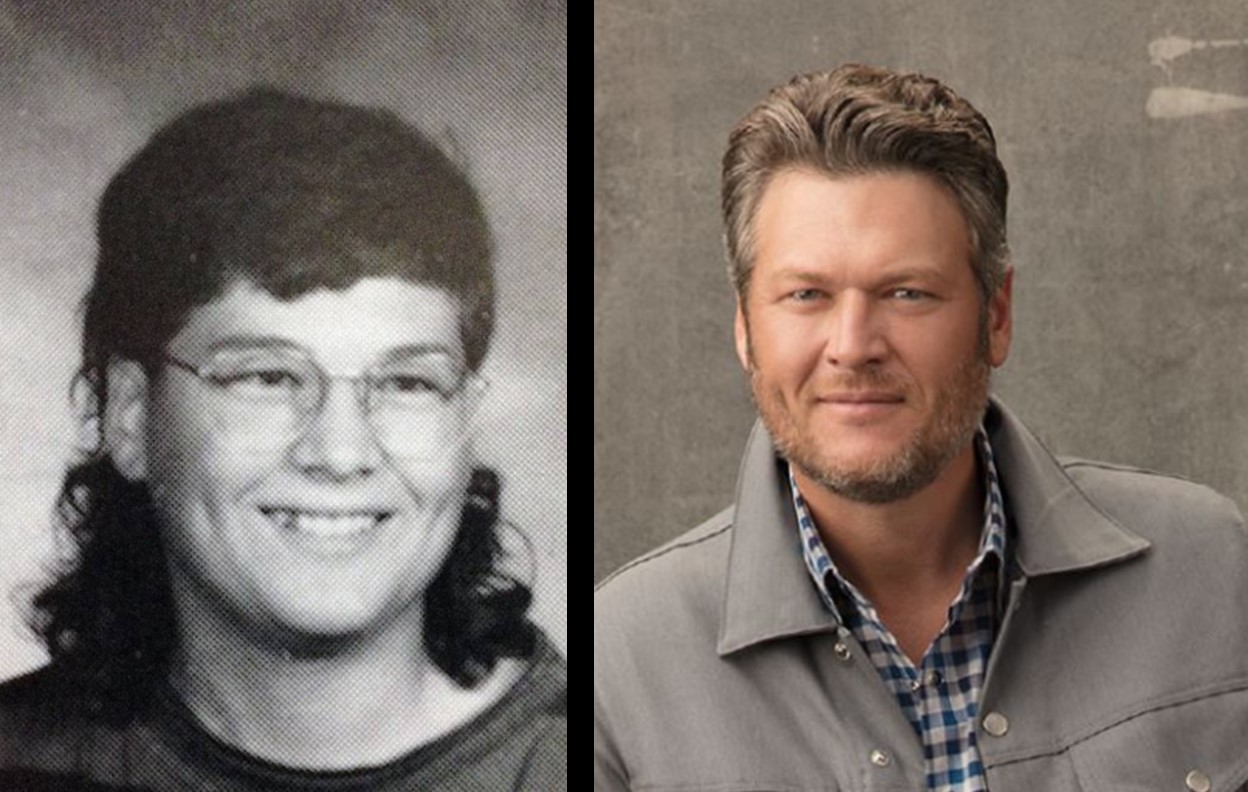
Before the world knew him as the wise-cracking coach on The Voice or the guy who somehow convinced Gwen Stefani to move to a ranch in Oklahoma, Blake Shelton was just a lanky kid in Ada.
He didn't start out as a polished superstar. Far from it. Meanwhile, you can read related developments here: The Reality Behind Spencer Pratt Move to Washington and Why Los Angeles Is Moving On.
If you look back at the early days of Blake Shelton, you’ll find a story that's kind of messy, deeply tragic in spots, and honestly, a little bit hilarious. We’re talking about a guy who spent his childhood being paraded around in beauty pageants by his mother. Yeah, you read that right.
The Pageant Kid Nobody Expected
Most country fans see the 6'5" frame and the rugged beard and think "natural-born cowboy." But Dorothy, Blake’s mom, had other plans for her son when he was seven. She ran a beauty salon in Ada, and she knew everyone in town. Naturally, she started entering young Blake into local beauty pageants. To see the complete picture, check out the recent report by Reuters.
Imagine a tiny Blake Shelton standing on a stage surrounded by 30 little girls in frilly dresses. He had to do the talent portion, of course, but he also had to do the "evening wear" walk.
He hated it.
He eventually told his mom he was so humiliated that he didn't even want to sing anymore if it meant he had to be a pageant boy. Thankfully for us, he didn't stay retired for long. By the time he hit his teens, he’d swapped the pageant stage for the local bar circuit, which is where the real work started.
Life in Ada and a Heartbreaking Loss
Growing up in Ada, Oklahoma, wasn't all just music and jokes. Blake’s dad, Dick, was a car salesman, and his life was pretty standard for a small-town kid until November 13, 1990.
Blake was only 14 when his older brother, Richie, was killed in a car accident.
Richie was 24. For a young kid who idolized his big brother, the loss was seismic. It’s the kind of thing that stays with you forever. Years later, Blake would co-write the song "Over You" with his then-wife Miranda Lambert as a tribute to Richie. It wasn't just a hit song; it was a rare moment where we saw the real person behind the TV personality.
Music became his escape. His uncle taught him how to play guitar at 12, and by 15, he was writing his own songs. He wasn't just a casual fan either. While his brother loved rock bands like Van Halen and AC/DC, Blake eventually gravitated toward the legends—Hank Williams Jr., Waylon Jennings, and George Jones.
The Nashville Hustle (and Getting Fired)
Two weeks.
That’s how long it took Blake to pack his bags for Nashville after graduating high school in 1994. He was 17. He didn't have a record deal. He didn't have a plan. What he did have was a connection to Mae Boren Axton, a legendary songwriter who helped write Elvis Presley’s "Heartbreak Hotel."
She gave him a job. It wasn't in a recording studio, though.
He spent his first days in Music City painting her house.
Later, he got a job at a music publishing company making tape copies. You’d think a guy who wanted to be a singer would be great at that, right? Wrong. He was actually fired from that job because he spent all his time talking to the professional songwriters instead of actually dubbing the tapes.
In hindsight, that was probably the smartest career move he ever made. Those conversations led him to Bobby Braddock, the man who produced his first album and helped him navigate a Nashville scene that was still figuring out what to do with a guy who wore a curly mullet and sang like a throwback to the 80s.
The "Austin" Incident and the Mullet Era
When people think of "young Blake Shelton," they usually picture one thing: the hair.
The mullet was legendary. It was curly, it was long, and it was unapologetic. Blake once joked that he knew it looked like "crap," but he kept it because he liked how much it irritated people. That’s the Blake we know today, just with better grooming.
But his big break almost didn't happen the way we remember it.
In 2001, he was actually supposed to release a song called "I Wanna Talk About Me" as his first single. His label, Giant Records, eventually decided it wasn't the right fit for him. That song went to Toby Keith and became a massive #1 hit.
Instead, Blake released "Austin."
It was a risky move. The song is a slow ballad about an answering machine message. But it worked. "Austin" spent five weeks at #1.
Then, disaster struck.
Right as "Austin" was peaking, Giant Records shut its doors. Blake was a guy with the #1 song in the country and no record label. He was eventually picked up by Warner Bros., but for a few weeks there, it looked like he might be a one-hit wonder before his debut album even hit the shelves.
Why Young Blake Still Matters
If you're looking for lessons from Blake's early years, there are a few big ones.
First, the guy has a ridiculous work ethic. He spent seven years in Nashville before he ever saw a penny of real success. He roofed houses in the Oklahoma heat and painted fences in Tennessee.
Second, he never really changed who he was to fit a mold. Even when the industry wanted slicker, more "pop" country, he was recording songs like "Ol' Red"—a story about a prison dog that wasn't exactly a radio-friendly pop tune but became his signature song anyway.
Takeaways from the Early Years:
- Persistence pays off: Seven years of "no" before a "yes" is common in Nashville.
- Authenticity wins: The mullet was a choice, but the voice was real.
- Tragedy can be fuel: Using personal pain (like the loss of his brother) to create art is what makes country music relatable.
If you’re a fan of modern country, take a minute to go back and listen to that self-titled 2001 album. It’s got more heart than half the stuff on the radio today. You can hear a kid who was just happy to be there, probably still smelling a little like house paint and Oklahoman dirt.
To really understand where Blake is now, you have to appreciate the guy who was willing to look "humiliated" in a beauty pageant just for a chance to hold a microphone. That kid from Ada is still in there; he just has a much better haircut now.
Next time you’re digging through country history, check out Blake's 2002 performance of "Ol' Red" at the Grand Ole Opry. It’s the exact moment you can see the star power finally catch up with the small-town kid.