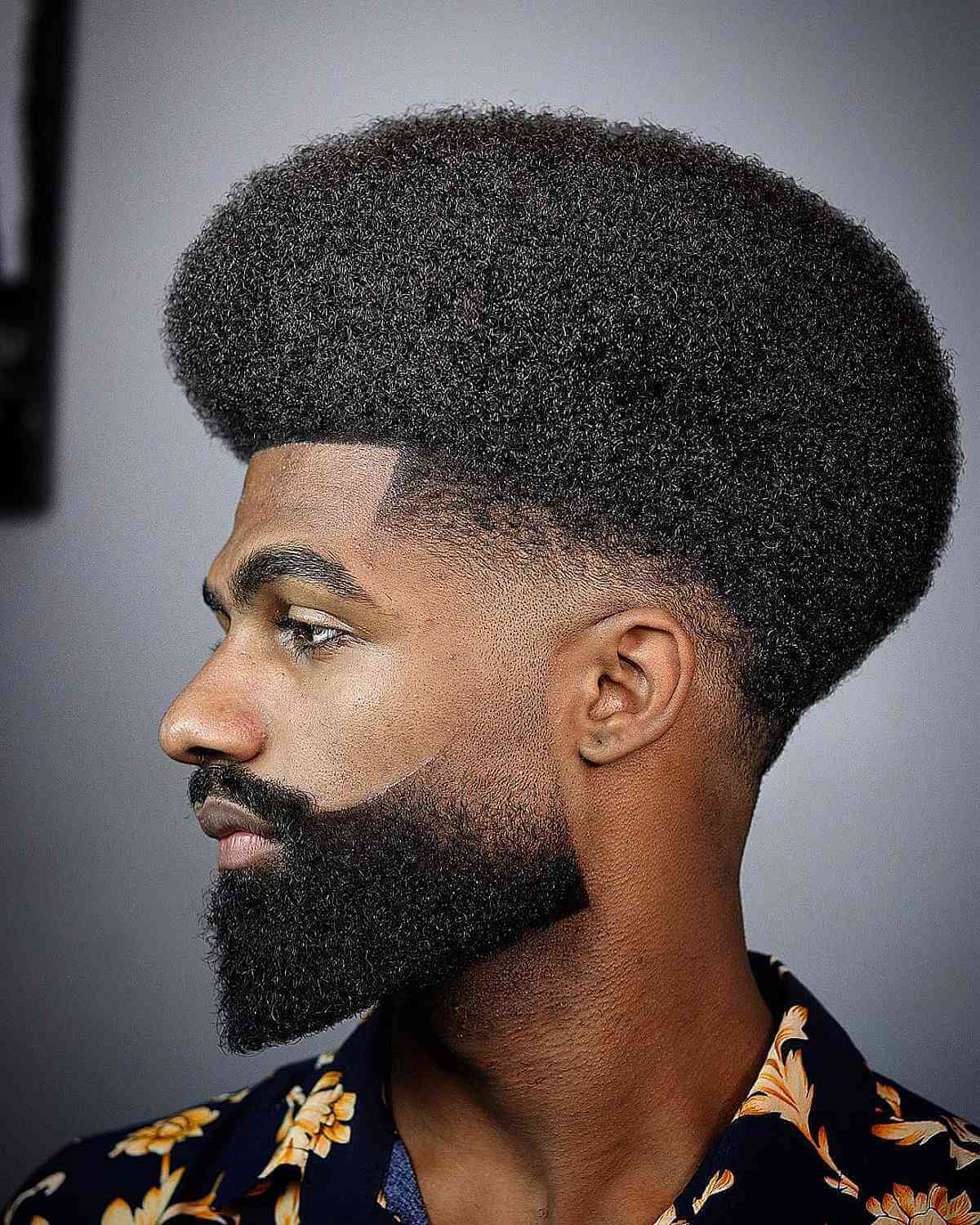
Your hair isn't just hair. For young Black men, it’s a living architecture that communicates status, health, and a specific connection to lineage. If you’ve spent any time in a chair recently, you know the stakes. One bad line-up can ruin your month. But the conversation around young black mens hairstyles has shifted from just "looking clean" to maintaining the actual integrity of the follicle. We’re seeing a massive move away from the heavy chemicals of the early 2000s toward texture appreciation. Honestly, it’s about time.
The complexity of Type 4 hair—the 4C, 4B, and 4A patterns—requires more than just a sharp clipper. It requires an understanding of moisture retention and scalp health. Most guys think a fade is just a fade. It’s not. The geometry of your head dictates whether a drop fade or a high-taper actually works for you. You've probably seen dudes walking around with a "boxy" look that just doesn't suit their jawline. That’s a failure of design, not hair.
The Evolution of the Modern Fade
Let’s talk about the skin fade. It’s the baseline for almost every modern look. But lately, we’ve seen the "Burst Fade" take over, largely thanks to its popularity in athletes and musicians. It curves around the ear, leaving the back long. It’s a hybrid. It bridges the gap between a traditional mohawk and a clean-cut office look.
The math behind a good fade is subtle. If the transition between the skin and the hair isn't seamless, it’s called "weight." You don't want weight. You want a gradient that looks like it was airbrushed onto your scalp.
- The Low Taper: This is for the guy who wants to keep his length. It’s professional. It’s understated.
- The Mid Drop Fade: It follows the natural curve of the skull. This is crucial if you have a flatter occipital bone.
- The Temp Fade: Just the temples and the nape. It’s the "I’m growing my hair out but I’m not a bum" look.
Most barbers use a combination of guards, but the real ones know how to use the "clipper over comb" technique to remove bulk without creating harsh lines. If your barber isn't looking at your hair from the side and the front repeatedly, find a new one.
Why Locs Are Reclaiming the Spotlight
Locs aren't a trend; they’re a lifestyle. But the way young Black men are wearing them in 2026 is vastly different from the waist-length traditional styles of the past. We’re seeing "Freeform" locs becoming the dominant aesthetic. Look at artists like J. Cole or Jay-Z in his current era. It’s about the "undone" look that actually takes a lot of work to keep healthy.
You can't just stop washing your hair and call it freeform. That’s a myth that leads to scalp dermatitis. You need a clean base. Many guys are starting with "Twist Outs" or "Finger Coils" and letting them naturally fuse over months.
Micro-locs are also surging. They offer the versatility of loose hair—you can braid them, bun them, or let them hang—but with the structure of locs. The maintenance is the killer, though. Retwisting every four to six weeks is a commitment. If you over-twist, you’re looking at traction alopecia. That’s when your hairline starts retreating because the tension is literally pulling the hair out of the root. It’s permanent. Don't let your loctician pull too tight just for a "neat" look. Health over crispness. Always.
The Science of the 360 Wave
Waves are arguably the most high-maintenance of all young black mens hairstyles. It is literally a process of laying down your natural curl pattern until it creates a ripple effect. It’s physics. You’re stretching the hair.
To get elite waves, you need three things: a consistent brushing routine, the right pomade (not the petroleum-heavy stuff that clogs pores), and a high-quality durag.
- Brushing: You have to brush from the crown outward. If you change your angle by even an inch, you get "forks." Forks are the enemy of a perfect pattern.
- Moisture: Using a "L.O.C." (Liquid, Oil, Cream) method before ragging up ensures the hair stays soft enough to be manipulated.
- The Wash and Style: This is the secret. You lather up, brush while the soap is in, and then put your durag on before rinsing the soap out. It locks the pattern in place while the hair dries.
Texture Control and the Afro-Taper
For a long time, the "Fro" was seen as unstructured. Not anymore. The modern Afro-Taper is a masterclass in shape. It’s usually picked out into a rounded or squared-off silhouette, but the sides are faded down to the skin. This creates a contrast that makes the hair on top look even more voluminous.
Maintaining this requires a "Leave-In" conditioner. If your hair feels like wool, it’s thirsty. Type 4 hair has a zig-zag or tight coil pattern that makes it hard for the scalp's natural oils (sebum) to travel down the hair shaft. You have to manually add that moisture.
Avoid "Blue Magic" or heavy greases if you’re prone to forehead acne. Those products are basically just sealants. They don't add moisture; they just trap what’s already there—or keep moisture out. Look for products where water is the first ingredient. Then seal it with a light oil like jojoba or almond oil. Jojoba is great because it’s the closest thing to human sebum.
The Braids and Twists Movement
Braids are the ultimate protective style. Cornrows, box braids, or the increasingly popular "Pop Smoke" braids (thick, feed-in braids) allow the hair to rest. When your hair is tucked away, it isn't rubbing against your pillowcase or being stripped by the wind.
However, there’s a massive misconception that you can just leave braids in for two months. Bad idea. After about four weeks, the new growth starts to mat. If you leave them in too long, the weight of the braid starts to hang on just a few strands of hair. This leads to thinning.
Two-strand twists are the "lazy" man’s best friend. They’re easier to do yourself than cornrows. They look great when they’re fresh, and they look even better when you take them out after a week—giving you a "Twist Out" with maximum definition.
Scalp Health: The Foundation
We need to talk about the "white flakes." It’s often not dandruff. Usually, it’s just product buildup or a dry scalp. True dandruff is oily. If you’re using a lot of "holding gels" for your edges or your waves, you’re creating a film on your scalp. You need a clarifying shampoo once a month to strip that junk off.
Also, the "line-up." Many young men suffer from "Barber’s Itch" or folliculitis barbae. This happens when the clippers aren't sanitized or when the shave is too close, causing ingrown hairs. If you get red bumps after a haircut, ask your barber to use a "zero-gap" clipper instead of a straight razor. Or, at the very least, make sure they’re using a cooling antiseptic spray immediately after.
Actionable Steps for Your Next Style
Choosing a hairstyle is about balancing your daily routine with your aesthetic goals. If you go to the gym five times a week, a high-maintenance wave pattern might be a nightmare because of the sweat and constant need for a durag.
- Identify your face shape. Round faces benefit from height on top (like a high-top fade). Angular faces can pull off shorter, tighter fades.
- Invest in a silk or satin pillowcase. Cotton sucks the moisture right out of your hair. If you forget your durag one night, a silk pillowcase is your insurance policy.
- Don't over-wash. Twice a week is usually plenty for Black hair. Any more and you’re stripping away the essential oils that keep your hair from snapping.
- Check your barber's tools. If they aren't pulling a fresh blade out of a wrapper or using a disinfectant spray (like Andis Cool Care) between clients, leave. Your scalp health is more important than a $30 fade.
- Eat for your hair. Hair is made of a protein called keratin. If you aren't getting enough protein or biotin in your diet, your hair will look dull and grow slowly. Spinach, eggs, and nuts are literal fuel for your follicles.
The landscape of young black mens hairstyles is constantly evolving, but the core remains the same: it's an expression of self. Whether you're rocking 4C curls in their natural state or a precision-engineered skin fade, the goal is longevity. Treat your hair like an investment. It’s the only crown you never take off.



