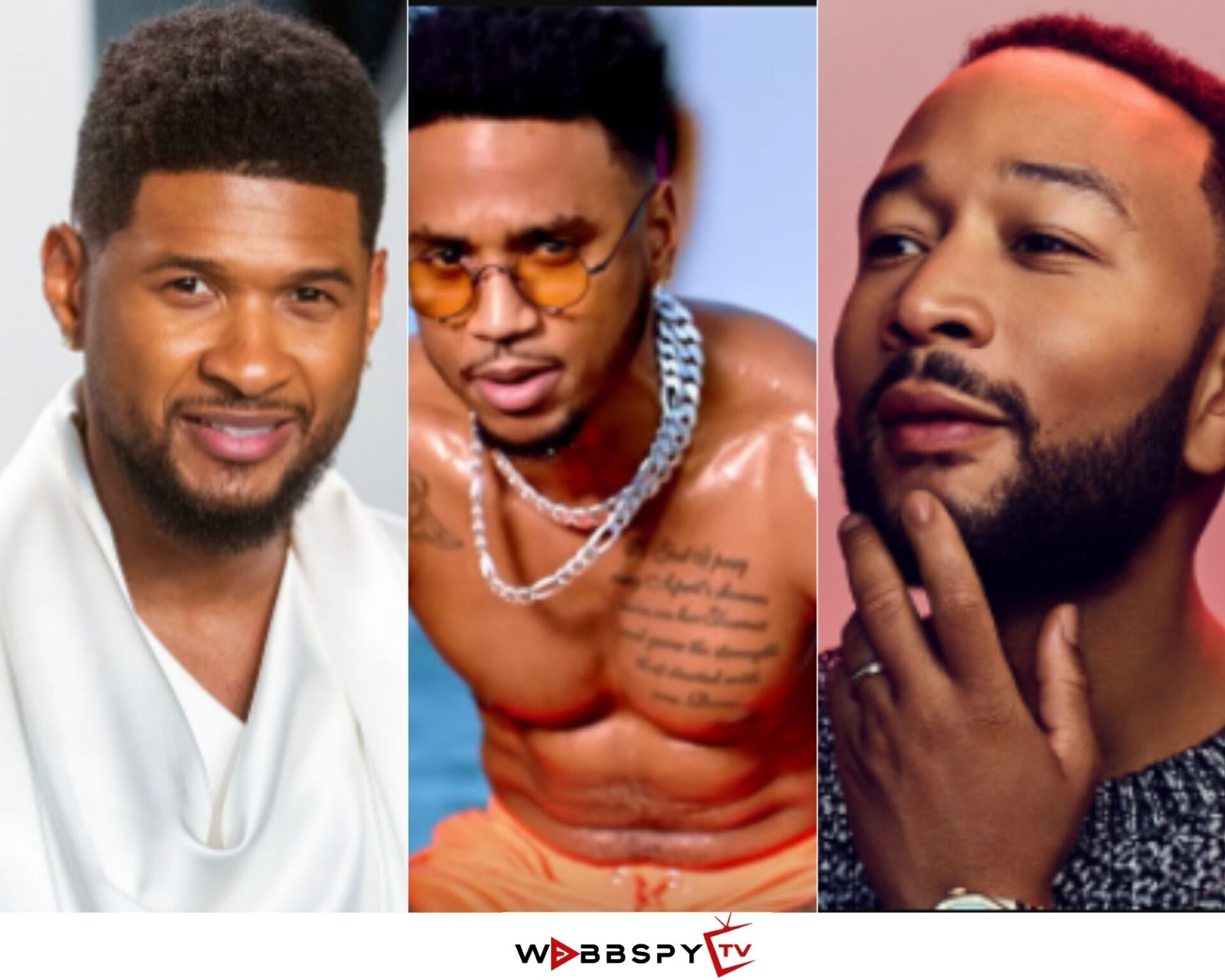
Honestly, the music industry usually moves in waves, but right now it feels like a total tsunami. If you’ve been paying any attention to the charts lately—or even just scrolling through your feed—you’ve probably noticed something. The sound of modern music is being completely reshaped. We aren't just talking about the same three pop stars on a loop anymore. Specifically, a new generation of young black male singers is ripping up the old playbook and writing something much more interesting.
They’re blending genres like it’s nothing.
One minute you’re listening to a country-inflected ballad, and the next, it’s a glitchy R&B track that sounds like it was sent back from the year 2050. It’s wild. But more than just the "vibe," these artists are actually bringing back real vocal chops and vulnerable songwriting that feels almost uncomfortably honest.
The Breakthrough: JayDon and the Return of the Powerhouse
Remember when everyone said the "superstar" era was dead?
JayDon just proved them wrong. You might recognize the name if you’re a fan of The Lion King (the 2019 version) or if you’ve followed his acting career since he was basically a kid on K.C. Undercover. But 2026 is officially the year he stopped being "the kid from TV" and became the voice of a generation.
Signing with Usher and L.A. Reid’s Gamma label was the spark. Then he dropped Me My Songs & I. If you haven't heard "Lullaby" yet, you’re missing out on some of the most technical, soulful runs we've heard in years. It’s not just mindless pop. It’s calculated. It’s precise. He’s taking that classic R&B foundation and making it feel brand new for people who grew up on TikTok sounds.
What’s kinda crazy is how he handles the pressure. Most artists would crumble under that kind of mentorship, but he seems to lean into it. He’s not trying to be the next Usher; he’s trying to be the first JayDon. That distinction matters.
Why Genre-Blending Isn't Just a Trend
Let’s talk about Shaboozey for a second.
You can’t talk about the current landscape without mentioning how he basically kicked the door down for Black artists in the country-Americana space. It’s not just a "phase." By January 2026, he’s already racking up RIAA certifications like they’re trading cards.
But it’s more than just one guy.
Look at Kashus Culpepper. This guy was in the Navy! He went from singing around campfires while stationed abroad to gigging in dive bars along the Mississippi Gulf Coast. Now? He’s on the Big Loud Records roster alongside some of the biggest names in Nashville. His voice has this gruff, weathered quality that makes you feel like you’ve known him for twenty years.
Then you have someone like Yung Lord Fine$$ in Miami. He’s pulling from Afrobeat, pop, and rap simultaneously. It shouldn't work. On paper, it sounds like a mess. In your headphones, though? It’s seamless.
The R&B Renaissance: Isaia Huron and Yugoszn
R&B has been in a weird spot for a while. People kept saying it was "dead" (it wasn't) or that it had become too "toxic."
Enter Isaia Huron.
Spotify just flagged him as one of their "Artists to Watch" for 2026, and for good reason. His track "I CHOSE YOU" is a masterclass in atmosphere. It’s moody, it’s stripped back, and it puts the vocal front and center. No over-production. No hiding behind autotune. Just raw talent.
Similarly, Yugoszn has been quietly dominating the global scene. He’s an emotive R&B artist who actually produces his own stuff. He blew up on TikTok with "Tombstone"—which has over 4 million streams—but he’s not just a "TikTok artist." He’s topped iTunes charts in Switzerland and Brazil. He’s proof that you don't need a massive Los Angeles studio to make a global impact. You just need a bedroom, a laptop, and something real to say.
The American Idol Effect: Jamal Roberts
Competition shows usually produce one-hit wonders who vanish after six months.
Jamal Roberts is the exception to that rule. After winning the 23rd season of American Idol in 2025, he didn't just rush out a generic pop album. He took his time. He opened for legends like Brandy and Monica on "The Boy Is Mine" tour. He even snagged a Grammy nomination for Best Gospel Performance.
That’s the thing about these young black male singers in 2026—they aren't afraid of their roots. Whether it’s gospel, jazz, or classic soul, they’re bringing those influences into the mainstream rather than trying to hide them to fit a "radio-friendly" mold.
Navigating the 2026 Music Landscape
If you’re trying to keep up with all this, it can feel like a full-time job. The speed at which a "nobody" becomes a "somebody" is lightning fast now.
But there are a few things you can do to stay ahead of the curve.
- Follow the Producers: Often, the next big singer is found through the producers they work with. Look at who’s behind the boards for JayDon or Shaboozey.
- Check the Tour Openers: Artists like Jamal Roberts and Sienna Spiro got their biggest boosts by opening for established acts. If you see a name you don't recognize on a concert poster, look them up. They’re usually there for a reason.
- Look Beyond the US: The "London-to-Lagos" pipeline is real. Artists like Nectar Woode and Sean Dampte are proof that the most interesting R&B and Afro-fusion isn't always happening in North America.
The reality is that "young black singers male" is a category that's currently redefining what "male" and "singer" even mean in the digital age. It’s less about being a crooner in a suit and more about being an architect of sound.
Next Steps for Music Discovery:
- Audit Your Playlists: Swap out one "Mainstream Top 40" playlist for a "Fresh Finds" or "R&B Rising" set to catch artists like Karri or 3ee before they hit the Billboard Top 10.
- Track the Gamma Roster: Keep a close eye on JayDon’s upcoming releases; the backing of L.A. Reid and Usher usually signals a long-term career trajectory rather than a fleeting moment.
- Explore Cross-Genre Charts: Check the Americana and Country charts specifically for artists like Kashus Culpepper and Angel White to see how they are diversifying traditionally monolithic genres.



