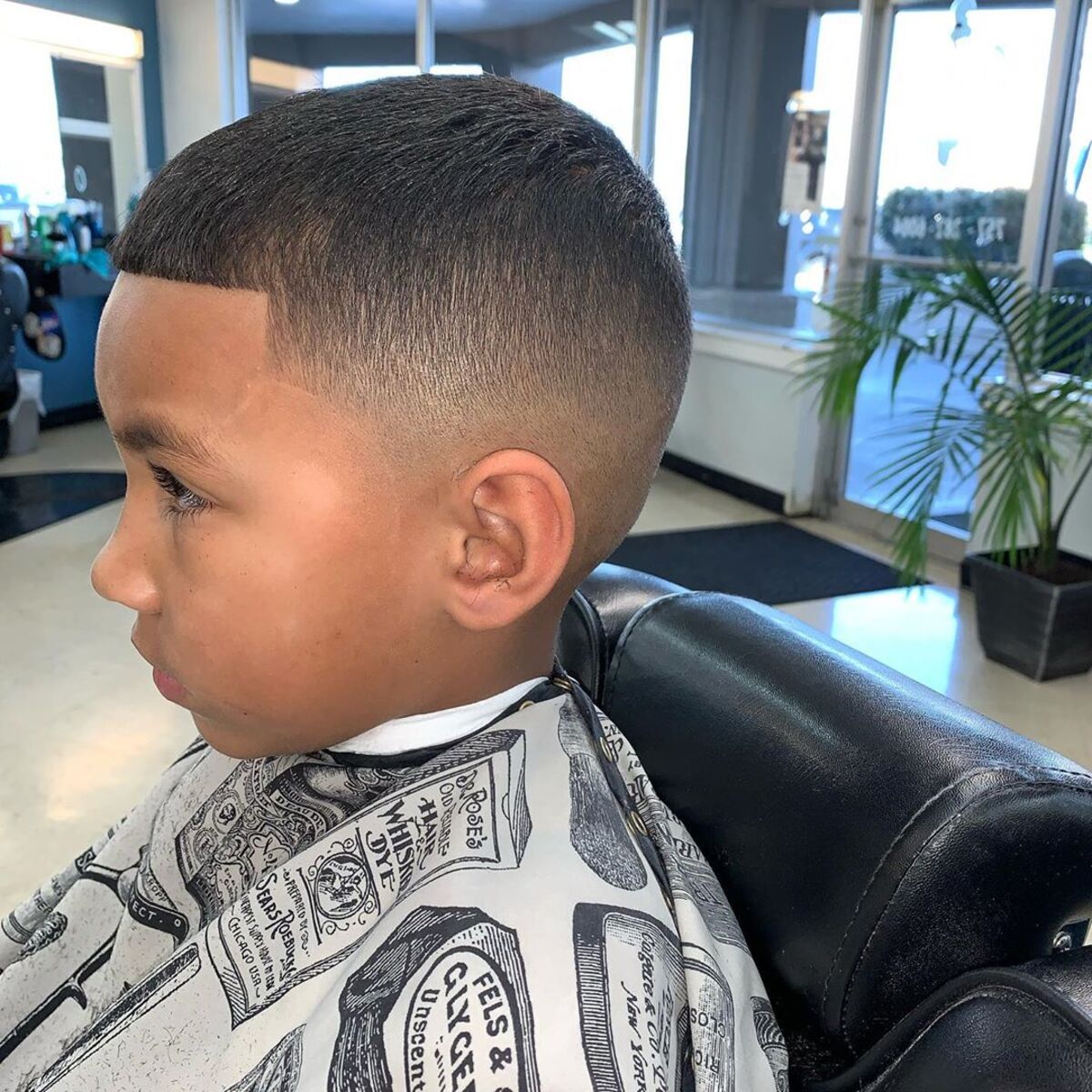
You’ve seen the photos on Instagram. Perfectly crisp lines, blurry fades, and curls that look like they were sculpted by an artist. But honestly? Getting those young black male haircuts to look that way 24 hours after leaving the barber chair is a completely different story. Most people think it’s just about the cut. It isn't. It’s about the marriage between scalp health, hair porosity, and the actual technical skill of the person holding the clippers.
Choosing a style isn't just about picking a picture off a wall anymore. It’s deeper.
The industry has shifted. We aren't just looking at "low, medium, or high" fades anymore. We’re talking about the geometry of the face. We’re talking about how a drop fade can actually elongate a jawline or how a burst fade makes a mohawk look intentional rather than accidental. If you’re a young Black man looking to switch things up, or a parent trying to figure out why your son’s hair looks "ashy" two days after a cut, you have to understand the mechanics of the hair itself.
The Fade Hierarchy and Why Your Barber Might Be Struggling
Let’s be real for a second. Not every barber can pull off a skin fade on 4C hair without leaving visible lines. It’s a specialized skill. The transition from a 0-guard to a 1-guard on tight coils requires a specific flick-of-the-wrist technique that some shops just haven't mastered.
The Low Taper Fade is basically the king right now. Why? Because it’s subtle. It keeps the bulk of the hair while cleaning up the edges around the ears and the nape of the neck. It’s the "I’m professional but I still have a personality" cut. Then you have the Mid Drop Fade. This one is tricky. It curves behind the ear, following the natural bone structure of the skull. If your barber ignores that curve and just goes straight across, the proportions will look off. You’ll look like you’re wearing a hat that’s too small.
Variation matters. Some guys want that sharp, almost aggressive lineup—the "Boxed" look—while others are leaning into the "Natural Lineup" where the edges are clean but not pushed back two inches into the forehead. Don't let a barber push your hairline back to make it look "sharper." That’s a trap. Once they start "pushing," you’re stuck with that higher forehead until it grows back in, which, let's be honest, is a painful process.
The Rise of the Textured Top
We are seeing a massive move away from the "buzz cut everything" era. Young Black men are embracing length. Whether it’s sponge twists, small locs, or just a picked-out afro, the "Textured Top" combined with a high fade is the blueprint for 2026.
But here’s the thing: you can't just grow it out and hope for the best.
You need a routine. If you’re rocking a textured top, you’re dealing with dryness. It’s the enemy. Sebum, the natural oil your scalp produces, has a hard time traveling up a curly or coily hair shaft. That’s why your ends feel like straw while your scalp feels greasy. You’ve gotta hydrate. Use a leave-in conditioner that actually lists water as the first ingredient. If the first ingredient is petroleum or mineral oil, put it back on the shelf. You’re just clogging your pores and weighing down the curls.
Why 360 Waves Are Making a Serious Comeback
Everything old is new again. Waves have never really "left," but the level of dedication we’re seeing lately is borderline obsessive. It’s a craft. It’s not just about wearing a durag; it’s about the brush sessions.
To get those deep, "sea-sick" waves, you’re looking at a minimum of 30 to 60 minutes of brushing a day. Consistent angles. If you change your brushing angle by even ten degrees, you mess up the pattern and end up with "forks." Most young guys getting into waves think they need a heavy grease. Honestly? You don't. A light cantu or even a natural shea butter blend is better. The goal is to lay the hair down, not to glue it to your skull.
- The Wash and Style Method: This is the secret sauce. You lather up with a sulfate-free shampoo, brush your hair while the suds are in, and then put your durag on before you rinse. This locks the pattern in while the hair is softest.
- The Brush Quality: Don't use a cheap plastic-bristle brush. You need boar bristles. Soft for the top layer, medium for the "work," and hard for when your hair is at a higher "wolfing" stage (that's when you let it grow long to deepen the waves).
Wolfing is where the men are separated from the boys. You go 6 to 8 weeks without a haircut, just brushing and compression. It looks messy for a while. You’ll want to cut it. Don't. If you can push through that awkward phase, the results when you finally get that #1.5 guard cut are insane.
The Maintenance Tax: It’s More Than Just a Cut
Let's talk about the health aspect that nobody mentions in the barber shop. Pseudofolliculitis barbae. That’s the fancy medical term for those annoying razor bumps.
Young Black men are disproportionately affected by this because our hair curls back into the skin. If your barber is using a straight razor on your neck and you’re breaking out the next day, stop them. Ask for a foil shaver or just a close clipper trim. It’s not worth the scarring.
Also, scalp health is non-negotiable. If you have "flakes," it might not be dandruff. It might be seborrheic dermatitis, which is an inflammatory response to yeast on the skin. Using a heavy oil will actually make it worse because the yeast feeds on the oil. Instead, look for shampoos with zinc pyrithione or ketoconazole. A healthy scalp grows healthy hair. Period.
Traditional vs. Modern: The Mohawk and South of France
The "South of France" cut, popularized years ago by Usher and perfected by modern stylists, is still a heavyweight in the world of young black male haircuts. It’s essentially a wide burst fade. It gives you the "cool" factor of a mohawk without the "punk rock" extremity. It’s stylish, it’s masculine, and it works for almost every face shape.
If you have a rounder face, keep the sides tight and the top high. This adds verticality. If your face is more oblong, keep the top a bit shorter to avoid looking like a pencil. It’s all about balance.
Essential Tools for Home Maintenance
You can't rely 100% on your barber if you want to look good every day. You need a kit.
- A high-quality metal pick (don't use plastic, it causes static and breakage).
- A curl sponge or a twist king tool.
- A silk or satin-lined cap for sleeping. Cotton pillowcases are "moisture thieves." They suck the oils out of your hair while you sleep.
- Edge control (use it sparingly, or you'll get white buildup that looks like lint).
Breaking the "Standard" Box
We’re seeing a lot more experimentation with color too. Bleached tips, honey-blonde highlights on locs, even "platinum" buzz cuts. If you’re going to dye your hair, you have to triple your conditioning routine. Bleach strips the protein from the hair. Without a protein treatment (like something with keratin), your curls will go limp and lose their "snap."
Actionable Steps for Your Next Visit
Don't just walk in and say "the usual." If you want a top-tier look, you have to be specific.
- Bring a photo, but be realistic. If the guy in the photo has a different hair density than you, it won't look the same. Ask your barber, "Does my hair texture support this look?"
- Check the neck. Decide between a "blocked" (straight line) or "tapered" (faded out) neckline. Tapered looks more natural as it grows in. Blocked looks sharper for exactly three days and then looks messy.
- Ask about the "Vertical Bar." This is the line in front of your ear. A sharp vertical bar makes the whole haircut pop.
- Invest in a scalp massager. Use it when you shampoo. It increases blood flow to the follicles and actually helps with growth.
The "perfect" haircut doesn't exist in a vacuum. It’s a combination of a barber who understands the "fade geometry" and a client who actually puts in the work at home. Whether you're going for 360 waves, a high-top fade, or a subtle taper, the health of your hair is the foundation. Stop over-oiling your scalp, start drinking more water, and find a barber who treats your hairline like a work of art rather than a chore. Keep your edges clean, your curls hydrated, and don't be afraid to grow it out—length is the ultimate flex right now.



