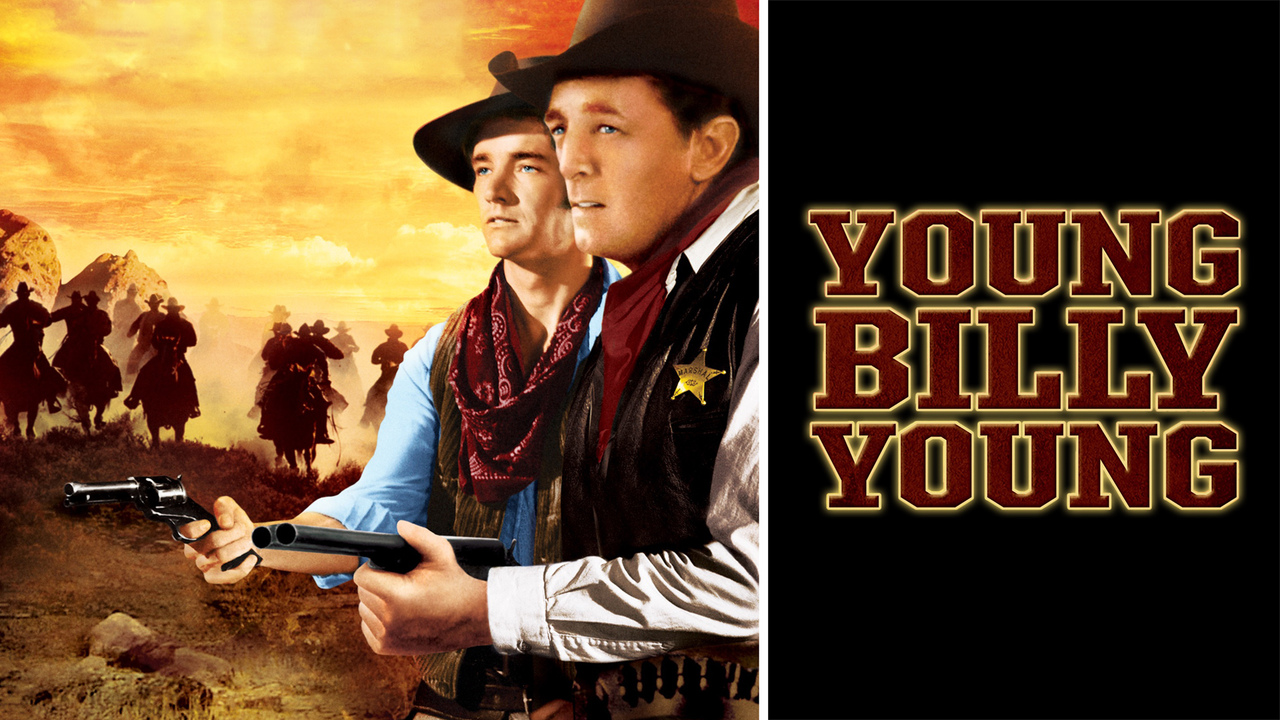
The late sixties were a weird time for the American Western. You had the traditionalist, white-hat heroes clashing with the gritty, mud-caked realism of the "revisionist" era. Right in the middle of that identity crisis sat Young Billy Young. Released in 1969, it wasn’t exactly The Searchers, but it wasn’t a spaghetti western either. It was something else. To understand why people still hunt down this movie on TCM or streaming services, you have to look at the Young Billy Young cast. It was a bridge between two eras of Hollywood.
Robert Mitchum was already a legend. By 1969, he could play a weary lawman in his sleep, and honestly, sometimes it looked like he was. But that's the Mitchum charm. He had this heavy-lidded, "I’ve seen it all" energy that fit the role of Ben Kane perfectly. Then you had Robert Walker Jr. playing the titular Billy. He wasn't his father, and the industry knew it, but he brought a twitchy, nervous energy that made the mentor-protege relationship feel surprisingly authentic.
The Powerhouse Leads of Young Billy Young
The movie lives or dies on Robert Mitchum. He plays Ben Kane, a former lawman turned hired gun who’s actually just looking for the man who killed his son. Mitchum doesn’t do "big" acting. He does presence. When you watch the Young Billy Young cast interact, everyone seems to be reacting to Mitchum's gravity. He’s the anchor.
Robert Walker Jr. had a tough job. Playing "Young" Billy Young meant being the impulsive, slightly naive foil to Mitchum’s stoic veteran. Walker Jr. had previously appeared in the Star Trek original series episode "Charlie X," and he brought some of that same "dangerous boy" vibe to this role. He’s not a hero in the classical sense; he’s a kid who’s in over his head, and his chemistry with Mitchum is the only reason the plot's thinner moments actually hold up.
Angie Dickinson and the Emotional Core
Then there’s Angie Dickinson. She plays Lily Beloit. In a lot of Westerns from this period, the female lead is either a damsel or a background character. Dickinson, coming off successes like Rio Bravo and Point Blank, wasn't about to play a wallflower. She brings a world-weariness that matches Mitchum’s.
They don't have a flashy, Hollywood romance. It’s more of a "we’re both tired and the world is mean" kind of connection. Her presence in the Young Billy Young cast adds a layer of maturity that the script, penned by Burt Kennedy (who also directed), desperately needed. Kennedy was known for his work with Budd Boetticher, so he knew how to write tough men, but Dickinson made sure the women weren't forgotten.
A Supporting Cast of Character Actors
You can’t talk about a Burt Kennedy film without looking at the faces in the background. These are the guys who made the Old West feel lived-in.
- David Carradine as Jesse Boone: Long before Kung Fu or Kill Bill, Carradine was honing his craft as a villain. He’s lean, mean, and perfectly cast as the antagonist’s son. His physicality is a stark contrast to Mitchum’s stillness.
- Jack Kelly as John Behan: Kelly was a household name because of Maverick. Seeing him play a character who is essentially a cowardly, corrupt official was a fun subversion for 1969 audiences.
- John Anderson as Boone: Anderson was one of those "I know that guy" actors. He appeared in everything from Psycho to The Twilight Zone. Here, he provides the looming threat that drives the entire revenge plot.
This ensemble worked because they weren't trying to out-act each other. They were professional "types" who understood the assignment. The movie feels like a family affair, which makes sense given how often these actors crossed paths in the desert locations of Tucson and Old Tucson Studios.
Why the Casting Choices Mattered for 1969
Cinema was changing. Easy Rider came out the same year as Young Billy Young. The "Old Guard" was being pushed out. By putting Robert Mitchum—the ultimate 1940s tough guy—next to Robert Walker Jr. and David Carradine—the new breed—the movie accidentally became a meta-commentary on Hollywood itself.
The Young Billy Young cast represented a handoff. Mitchum was the past. Carradine was the future. The movie is essentially about an old man trying to keep a young man from making the same mistakes he did. It’s hard not to see the parallels between the plot and the state of the film industry at the time.
Behind the Scenes: Burt Kennedy’s Direction
Burt Kennedy had a specific style. He liked things lean. He didn't want three minutes of dialogue when a squint and a spit would do. This benefited the Young Billy Young cast immensely. It allowed the actors to use their faces rather than just reciting lines.
Kennedy also wrote the screenplay, basing it on the novel Who Rides with Wyatt by Will Henry. It’s worth noting that the story is a very loose, fictionalized version of the Wyatt Earp/Billy Claiborne story. If you’re looking for historical accuracy regarding the O.K. Corral, you’re in the wrong place. But if you’re looking for a character study supported by a top-tier cast, you’re exactly where you need to be.
The Legacy of the Performances
Most people today find this movie because they are Robert Mitchum completists. That’s fair. He’s the draw. But watch closely and you'll see why the film remains a "cult" favorite. It’s the small moments. It’s the way Paul Fix (another legendary character actor) plays the stagecoach driver. It’s the way the tension simmers between Mitchum and the Boone family.
The film didn't set the box office on fire. Critics were lukewarm, often calling it a "standard" Western. But "standard" in 1969 was still pretty high quality compared to the over-produced blockbusters we see today. The Young Billy Young cast gave the film a dignity that elevated it above its B-movie roots.
Actionable Takeaways for Classic Film Fans
If you're planning to revisit this movie or watch it for the first time, keep these things in mind to get the most out of the experience:
- Watch the dynamic between Mitchum and Walker Jr. Contrast it with Mitchum's performance in El Dorado (1966) where he plays the "drunk" mentor to John Wayne. It shows his range in the "older statesman" phase of his career.
- Look for the locations. Much of the film was shot at Old Tucson Studios. If you’ve seen Rio Bravo or Gunfight at the O.K. Corral, the streets will look incredibly familiar. It’s like a playground for Western stars.
- Pay attention to David Carradine. This is a proto-version of the intense, quiet villains he would play for the next forty years. You can see the seeds of Bill (from Kill Bill) right here.
- Check out the score. Shelley Manne, a jazz drummer, did the music. It’s an unconventional choice for a Western and gives the film a slightly different "swing" than the usual orchestral sweeps of Elmer Bernstein or Ennio Morricone.
The Young Billy Young cast isn't just a list of names on a poster. It’s a snapshot of a turning point in American movies. You have the noir-heavy influence of Mitchum, the TV-western polish of Jack Kelly, and the counter-culture edge of Carradine all clashing in the Arizona heat. It might not be the greatest Western ever made, but it is one of the most interesting "handover" films of its decade.
Next time it pops up on your feed, don't skip it. Watch it for the faces. Watch it for the way these pros could tell a whole story just by how they wore their hats. That’s the real magic of 1960s casting.
How to Watch and Research Further
If you want to dig deeper into the world of Burt Kennedy and this specific era of the Young Billy Young cast, start by comparing this film to The War Wagon. Kennedy directed both, and seeing how he handles the star power of John Wayne versus Robert Mitchum is a masterclass in directorial adaptation.
Also, look for the DVD or Blu-ray releases from companies like Kino Lorber. They often include commentary tracks that go into the nitty-gritty of the production struggles in Tucson during the late 60s. Understanding the heat, the budget constraints, and the shifting studio politics makes the final performances even more impressive.
The best way to appreciate the Young Billy Young cast is to view the film as the end of an era. It was one of the last times you’d see this specific brand of "tough guy" cinema before the 1970s changed everything with movies like The Wild Bunch. It’s a piece of history, wrapped in a revenge plot, delivered by some of the best to ever do it.



