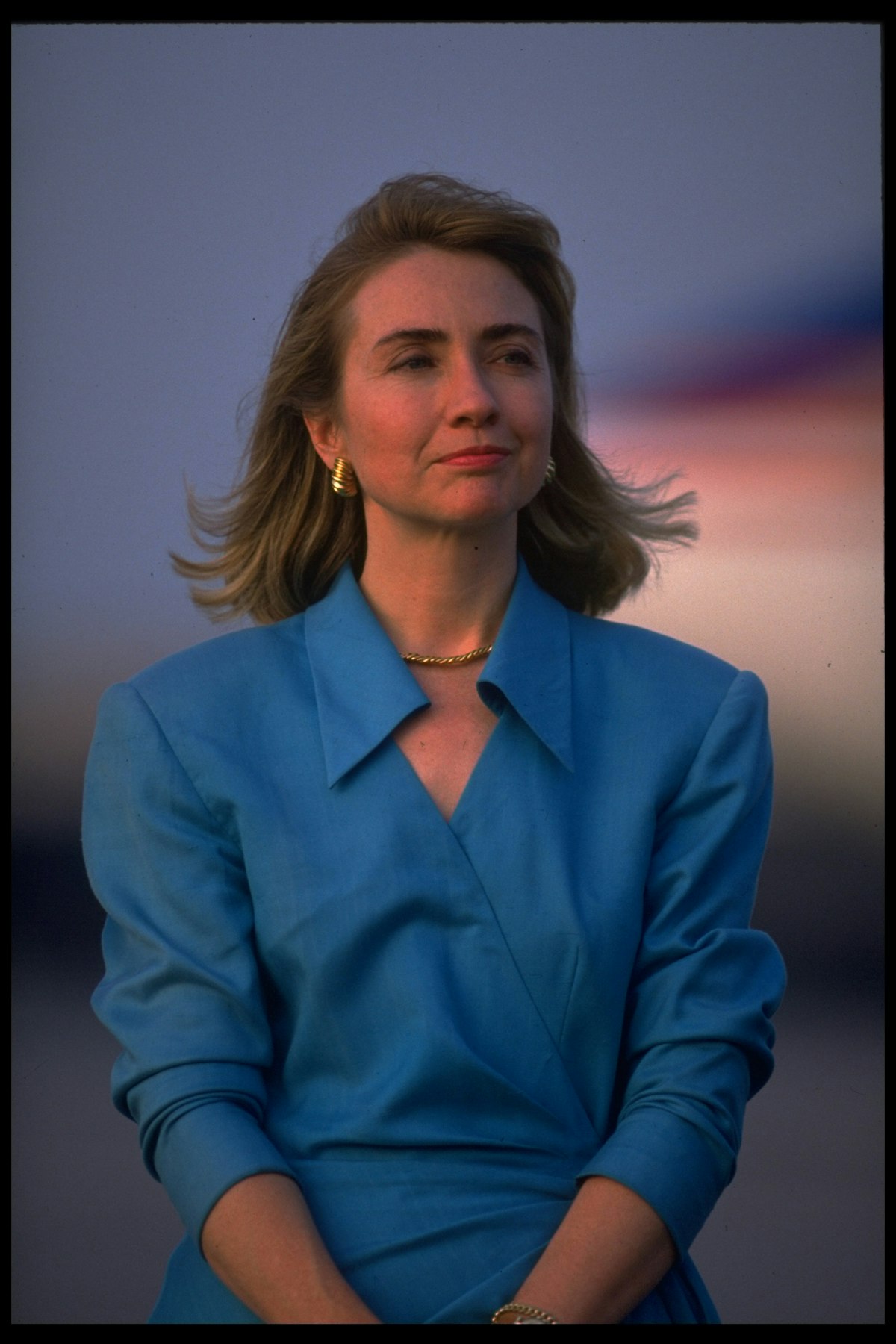
They didn't start as a "power couple." Not even close. When you look at old photos of young Bill and Hillary, you don't see the polish of the White House or the stiffness of a Senate floor. You see two messy-haired law students with oversized glasses who looked more like they were heading to a Woodstock reunion than the Oval Office.
Their story is weirdly grounded. Most people think their rise was this calculated, inevitable march to power. Honestly, it was a lot of trial, a ton of error, and a surprising amount of literal trash-picking.
The Library Stare-Down and a Picket Line Date
It started in the Yale Law Library in 1971. Bill was basically lurking. He kept staring at Hillary Rodham from across the room—standard law school behavior, maybe, but he wouldn't actually say anything. Hillary, never one for patience, eventually got fed up. She stood up, walked across the library, and told him: "If you're going to keep looking at me, and I'm going to keep looking back, we might as well be introduced. I'm Hillary Rodham."
Bill forgot his own name for a second. That's the part people love, but their first date was even more telling. They wanted to see a Mark Rothko exhibit at the Yale Art Gallery, but the museum was closed because of a labor strike. Most people would just go grab a coffee. Not these two. Bill convinced the security guards to let them in if they agreed to pick up litter in the courtyard.
They spent their first date as "scab labor," picking up trash just to look at art and talk. It’s a bit of a metaphor for their whole career, isn't it? Persuading people to let them in where they aren't supposed to be.
Why She Actually Moved to Arkansas
This is the part that boggles the mind of modern career climbers. In 1974, Hillary Rodham was a rising star in Washington. She had just finished working on the impeachment inquiry staff for the House Judiciary Committee during the Watergate scandal. She was working for John Doar, a legendary civil rights lawyer. She could have stayed in D.C. or gone to a massive firm in New York.
Instead, she moved to Fayetteville.
Friends thought she was insane. Her mentors told her she was throwing her life away for a "Viking from Arkansas." But Bill was already there, teaching at the University of Arkansas and running a long-shot campaign for Congress.
Life in the "Brick Cottage"
Bill bought a small brick house on California Boulevard in Fayetteville because Hillary had once mentioned she liked it. He basically used the house as a trap. He told her, "I bought that house you liked, so you have to marry me now."
She still said no. Twice.
She eventually caved, but even the wedding was aggressively low-key. October 11, 1975. They got married in their living room. Hillary didn't even have a dress until the night before. Her mother, Dorothy Rodham, was horrified and dragged her to Dillard’s at the local mall to buy a $53 Victorian lace gown off the rack.
The 1974 Campaign: Driving the Gremlin
People forget that Bill Clinton’s first big political move was a loss. He ran for Congress in 1974 against John Paul Hammerschmidt. He didn't have a motorcade. He had a multi-colored American Motors Gremlin.
Hillary wasn't just "the wife" on the sidelines. She was the strategist. While Bill was out shaking every hand in the Ozarks, she was organizing the office and bringing some Ivy League discipline to a very "good ol' boy" political scene. He lost that race, but he got 48.2% of the vote in a Republican stronghold. It put the world on notice.
The Maiden Name Controversy
You think politics is mean now? In 1970s Arkansas, Hillary keeping her maiden name was a massive scandal. People in the South didn't get it. They saw her as this "Yankee" feminist who didn't respect her husband.
- She was the first female partner at the Rose Law Firm.
- She co-founded Arkansas Advocates for Children and Families.
- She was making more money than Bill for a long time.
That tension—the brilliant, independent woman in a traditional society—defined their early years more than any policy debate. It wasn't until Bill lost his re-election for Governor in 1980 that she finally started using "Mrs. Bill Clinton" to help his image. It was a cold, hard political calculation.
Lessons from the Early Years
Looking back at young Bill and Hillary, the "actionable insight" isn't about how to become President. It's about the reality of building a partnership.
- Iterative failure is part of the process. Bill lost his first Congressional race and his first re-election as Governor. They didn't quit; they adjusted.
- Complementary skill sets win. Bill had the "touch," but Hillary had the "plan." One without the other probably would have stayed in a law office in Little Rock.
- Risk is non-negotiable. Hillary moved to a state where she knew no one, for a guy with no money, because she bet on his potential—and her own ability to shape it.
If you're ever in Fayetteville, go visit the Clinton House Museum. It’s that same small brick cottage. It’s a reminder that every massive legacy starts in a living room with a $53 dress and a lot of ambition.
To understand their later policy shifts, look into Hillary's early work with the Children's Defense Fund or Bill's 1970s tax reforms in Arkansas. These weren't just jobs; they were the testing grounds for everything that happened in the nineties.
Next Steps: Research the 1980 Arkansas gubernatorial election to see exactly how the "maiden name" issue contributed to Bill's only major loss before the presidency. This provides the best context for why the couple changed their public image so drastically heading into the 1982 comeback.