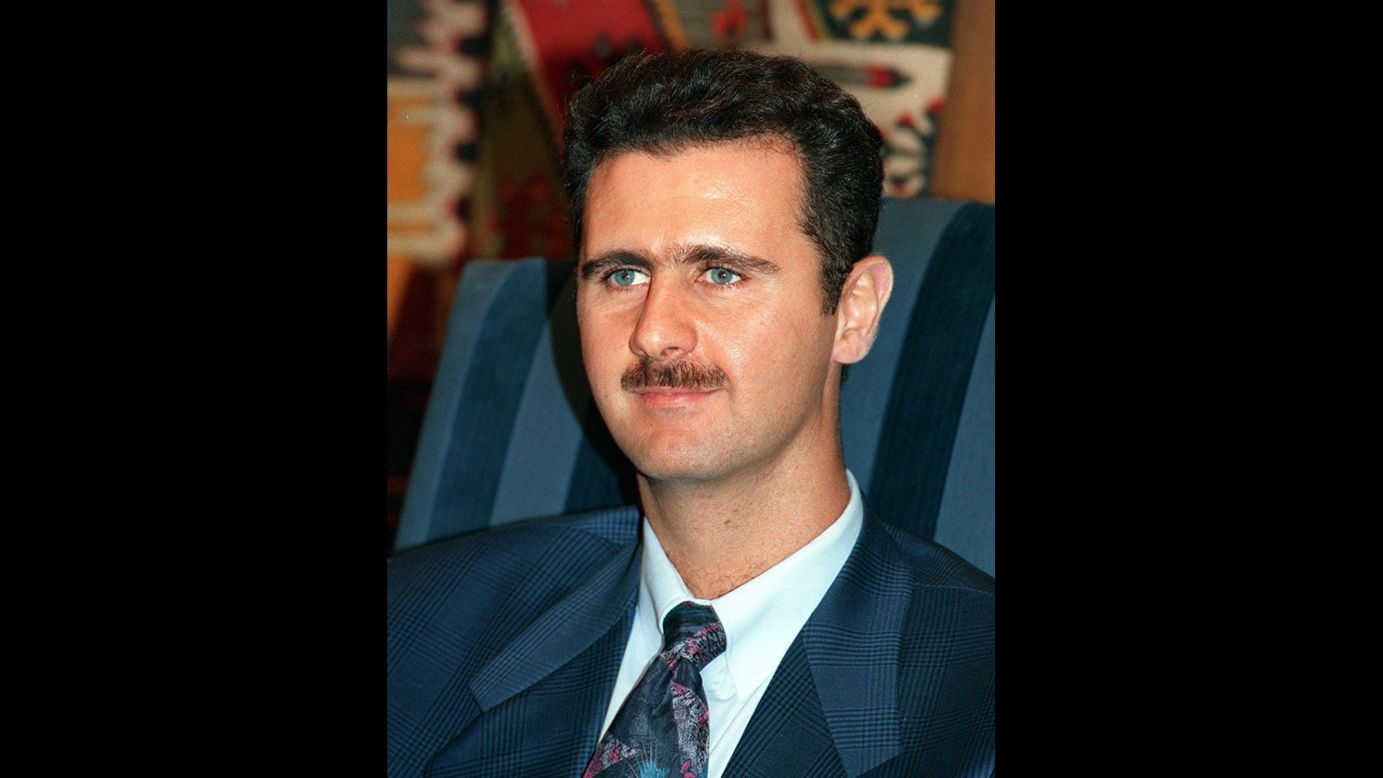
In the early 1990s, if you’d walked into the Western Eye Hospital in London, you might have bumped into a tall, gangly guy who looked more like an IT consultant than a future world leader. He was quiet. He kept to himself. Most of his colleagues just knew him as "Bashar," a soft-spoken resident specializing in ophthalmology.
There was no trail of bodyguards. No flashing blue lights. Honestly, back then, the idea of a young Bashar al-Assad running a country—let alone becoming one of the most controversial figures of the 21st century—seemed kind of absurd. He wasn't the "chosen one." That title belonged to his older brother, Bassel, the "Golden Knight" who was everything Bashar wasn't: charismatic, athletic, and military-obsessed. You might also find this similar coverage useful: Why the Trump Modi G7 Meeting is Headed for a Reality Check.
But history has a weird way of pivoting on a dime. One rainy morning in 1994, a car crash changed everything.
The Geeky Student in London
While the rest of the Assad family was busy projecting power in Damascus, Bashar was basically living the life of a typical postgraduate student. He arrived in London in 1992. His English wasn't great at first—he was actually much more comfortable in French and Arabic—but he was obsessed with technology. As discussed in recent coverage by USA Today, the implications are worth noting.
He didn't hang out at posh diplomatic parties. Instead, he spent his nights with a small circle of Syrian friends and focused on eye surgery. Why ophthalmology? A former school friend once joked it was because he couldn't stand the sight of blood. Whether that's true or not, the field suited his personality: it was precise, scientific, and required very little of the "common touch" his father, Hafez al-Assad, was famous for.
A Man of Two Worlds
- Education: He attended the Arab-French al-Hurriya School in Damascus. This gave him a Western-facing perspective from a young age.
- Interests: He loved computers. He eventually became the head of the Syrian Computer Society, which was basically his way of trying to drag Syria into the digital age.
- Personality: People from his London days describe him as "unassuming." He lived a solitary life, mostly moving between his flat and the hospital.
You've got to wonder if he ever looks back at those London years. It was the only time in his life he was just a regular person. No one was looking at him as a savior or a tyrant; he was just the guy who knew a lot about retinas and liked the internet.
Why Young Bashar al-Assad Never Wanted the Throne
Most people assume that every son of a dictator is born with a silver saber in their hand, itching for power. That wasn't the case here. Bashar was the third child. He was the "backup to the backup."
His brother Bassel was the one groomed for the presidency. Bassel was the guy on the posters. He was the one commanding the Republican Guard. Bashar, meanwhile, was allowed to pursue a career in medicine because he was considered "politically irrelevant." Even his father, the iron-fisted Hafez, didn't seem to think much of Bashar’s leadership potential early on.
When Bassel died in that 1994 car accident on the way to the Damascus airport, the family was thrown into a total panic. They needed an heir, and they needed one fast. Bashar was summoned home from London immediately. He didn't even get to finish his exams.
The "Crash Course" in Dictatorship
Imagine going from performing delicate eye surgeries one week to being enrolled in a military academy the next. That was Bashar's life in the mid-90s.
The regime had to manufacture a leader out of a doctor. It was a massive PR job. They pushed him through the military ranks at light speed. He went from being a medical student to a lieutenant colonel in about five years. It was basically a "fake it till you make it" situation on a national scale.
The Transformation Process
- Military School: He was sent to the military academy in Homs.
- The "Modernizer" Image: Because he had lived in the West, the regime marketed him as a reformer. He was the "tech guy" who was going to bring the internet and cell phones to Syria.
- Corruption Crackdown: To build his street cred, he was put in charge of an anti-corruption campaign. It was a clever way to sideline his father’s old rivals while making Bashar look like a man of the people.
But here’s the thing: he wasn't a natural. Experts like Patrick Seale, who wrote the definitive biography of Hafez al-Assad, noted that Bashar was an awkward public speaker. He lacked the "lion" energy that his father (whose name literally means "lion") possessed. He looked uncomfortable in a military uniform.
The Marriage to Asma: The Final Piece of the Puzzle
In late 2000, shortly after he took power, Bashar married Asma al-Akhras. This was a huge deal. Asma was British-born, a former investment banker at J.P. Morgan, and a Sunni Muslim (whereas the Assads are Alawites).
To the outside world, this looked like the ultimate sign that Syria was changing. Here was a young, Western-educated couple who liked rock music and tech. Vogue even famously called her "A Rose in the Desert." This image of the young Bashar al-Assad as a "closet liberal" is what fooled a lot of Western diplomats for nearly a decade. They thought he was a doctor trapped in a dictator’s body.
In reality, he was a man caught between two worlds, and the "old guard" of his father's regime—the generals and the intelligence chiefs—weren't about to let him change the system that kept them in power.
What We Get Wrong About His Early Years
The biggest misconception is that Bashar was a "reluctant" leader who was eventually corrupted by power. While it's true he didn't seek the role, he didn't exactly fight it either.
Once he was back in Damascus, he leaned into the role with a surprising amount of cold calculation. He didn't just inherit his father's seat; he systematically cleared out the "old guard" who didn't support him. He might have been a doctor, but he learned the family business of survival very quickly.
Key Facts to Remember:
- He never served a full military term before his brother's death.
- His move to London was a genuine attempt to leave politics behind.
- He was actually the one who pushed to allow the internet into Syria, despite the security risks it posed to his own regime.
Actionable Insights: Understanding the "Assad Paradox"
If you're trying to understand how Syria ended up where it is today, you have to look at these early years. The "Doctor Bashar" persona wasn't just a mask; it was a real part of his identity that eventually clashed with the brutal realities of Middle Eastern geopolitics.
- Look past the labels: Don't assume "Western-educated" equals "pro-democracy." Bashar used his knowledge of the West to better manage his image, not necessarily to change his governance.
- Study the succession: The way Bashar was "manufactured" into a leader shows how fragile dynastic regimes are. They rely on bloodlines over competence, which often leads to disaster when a crisis hits.
- Analyze the "Modernizer" trap: It’s easy to get distracted by a leader who likes tech and speaks English. Always look at the institutions (the police, the courts, the army) rather than the person’s personal hobbies.
The story of the young ophthalmologist who became a president is a cautionary tale. It reminds us that people aren't just one thing. Bashar al-Assad was a doctor. He was a geek. He was a son. And eventually, he became the man who would oversee one of the bloodiest chapters in modern history. Understanding those early years in London and Damascus is the only way to make sense of the man he eventually became.