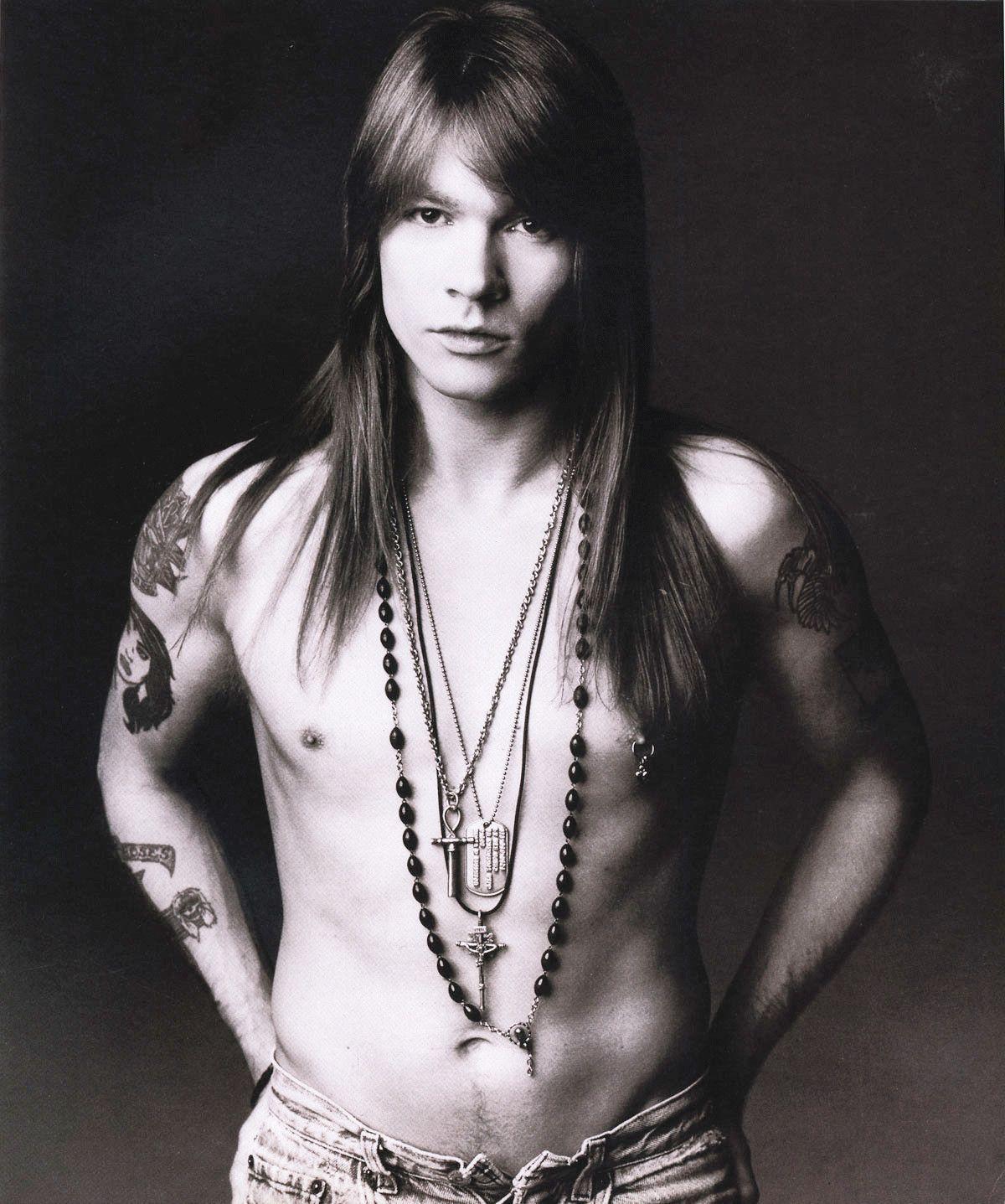
Before the world knew him as the fire-breathing frontman of Guns N’ Roses, he was just a kid named Bill Bailey. He was growing up in Lafayette, Indiana, which is basically as far from the Sunset Strip as you can get without leaving the planet. Most people think Axl Rose just materialized in 1987 with a bandana and a bad attitude. Honestly? The real story of young Axl Rose is way more complicated—and a lot darker—than the rock star myth suggests.
The Indiana Pressure Cooker
Lafayette wasn't exactly a playground. Axl grew up in a Pentecostal household that was beyond strict. We’re talking three to eight church services a week. No rock music. No TV. Everything was "Satanic."
He sang in the choir starting at age five. He was actually part of a group called the Bailey Trio with his siblings. It’s kinda ironic, right? The guy who would eventually scream "Welcome to the Jungle" got his start teaching Sunday School. But the piety was a mask for a pretty brutal home life.
He didn't even know Bill Bailey wasn't his real father until he was 17. He found some insurance papers in his mom’s drawer and saw the name "William Rose." Imagine finding out your whole identity is a lie right when you're becoming an adult. He dropped the name Bailey immediately. He started going by W. Rose. He didn't want to be William because his biological father (who he never met) was a local delinquent.
By the time he was a teenager, he was basically the town’s public enemy number one. He got arrested over 20 times. Public intoxication, battery, criminal trespass—you name it. The local cops hated him. He felt like they were trying to run him out of town. Eventually, they gave him an ultimatum: go to jail as a habitual criminal or get out.
He chose the bus.
The Search for Izzy and the $8 Study
In December 1982, he hopped a Greyhound to Los Angeles. He had almost no money. He was looking for his childhood friend Jeff Isbell, who you probably know as Izzy Stradlin.
L.A. was a shock. He arrived at the downtown bus station and immediately got a taste of the "Jungle." A guy tried to rape him at a hotel on his first night. He had to pin the dude against a wall just to escape. It wasn't "Paradise City" yet; it was survival.
He spent two days riding buses around Orange County just looking for Izzy’s skateboard. Seriously. He heard Izzy was in the area and just looked for the board leaning against a wall. He finally found it at an apartment in Huntington Beach.
While they were trying to get a band going, Axl worked weird jobs. He was the night manager at the Tower Records on Sunset. He also participated in a medical study at UCLA. They paid him $8 an hour to smoke cigarettes. It’s crazy to think about now, but that’s how he paid for his first demos.
The Bands Before the Fame
Most fans know about Hollywood Rose, but the timeline is a mess.
- Rapidfire: This was his first real L.A. band in 1983. He sounded totally different—more of a traditional metal singer.
- AXL: This was the name of a band he was in with Izzy. His friends kept calling him Axl because he was so obsessed with the band. Eventually, he just took the name.
- Hollywood Rose: This is where the GNR DNA started. It was Axl, Izzy, and a 16-year-old kid named Chris Weber.
How He Found That Voice
If you listen to the early Rapidfire tapes, you won't hear the "banshee wail." He was a natural baritone. He had this deep, rich speaking voice.
When he started writing with Chris Weber and Izzy, they pushed him. They’d record riffs on cassette tapes and give them to him. Axl would take them home and write lyrics. During rehearsals, he started experimenting with that high-pitched rasp. His bandmates loved it. They told him, "Do that all the time."
He basically forced his voice to stay in that upper register to cut through the loud guitars. It was a conscious choice. He wanted to sound like a cross between Robert Plant and a power saw.
The Birth of the Most Dangerous Band
The transition into Guns N’ Roses was a total fluke of L.A. geography. Axl was in Hollywood Rose. Tracii Guns was in L.A. Guns. They decided to merge the two groups to fulfill some show dates.
The original lineup wasn't the "Appetite" crew. It was Axl, Izzy, Tracii Guns, Ole Beich, and Rob Gardner. But Tracii was flakey. He missed rehearsals. Axl didn't have time for that. He brought in this guy he’d played with briefly in Hollywood Rose—Saul Hudson, aka Slash.
They all moved into a tiny, disgusting room they called the "Hell House." It was one room on Gardner Street. No shower. No kitchen. Just five guys, their gear, and a lot of cheap wine. That’s where they wrote the songs that would change rock history.
People think young Axl Rose was just a jerk, but in those days, he was the one keeping it together. While Slash and Steven Adler were diving into heroin, Axl was often the sober one. He was obsessed with the business. He was the one pushing for the record deal.
What Most People Get Wrong
The biggest misconception is that he was just a "rebel" for the sake of it. If you look at the Indiana years, he was a kid who was literally beaten for listening to music. The anger in his early performances wasn't an act. It was decades of repressed Indiana church-life exploding on stage.
He was also surprisingly articulate. Early journalists like Mick Wall noted that while the rest of the band was getting wasted, Axl would stay up all night talking about philosophy or the music industry. He was always three steps ahead, even when he was homeless.
Actionable Insights for Fans and Musicians
If you're looking to understand the "Axl Method" or just want to dive deeper into this era:
- Listen to "The Roots of Guns N' Roses": This is the Hollywood Rose demo. You can hear "Anything Goes" and "Reckless Life" in their rawest forms. It’s the blueprint.
- Read "Last of the Giants" by Mick Wall: It’s probably the most honest account of the early days. Wall was there before they were famous, and he doesn't sugarcoat the "Hell House" era.
- Vocalists take note: Axl’s range is legendary (nearly six octaves), but he did it by distorting his natural baritone. If you're trying to emulate that "rasp," be careful—it’s what eventually led to the vocal struggles he had in the late 90s.
- The "Indiana Arrests" context: When you hear him talk about "One in a Million" or "Welcome to the Jungle," remember the 20+ arrests in Lafayette. He wasn't just a rock star playing a part; he was a guy who felt hunted by the law since he was 15.
The story of the boy from Indiana who became the king of L.A. isn't just a rags-to-riches tale. It’s a story about trauma, identity, and the sheer force of will it takes to rewrite your own name. He didn't just find fame; he escaped a life that was designed to break him.



