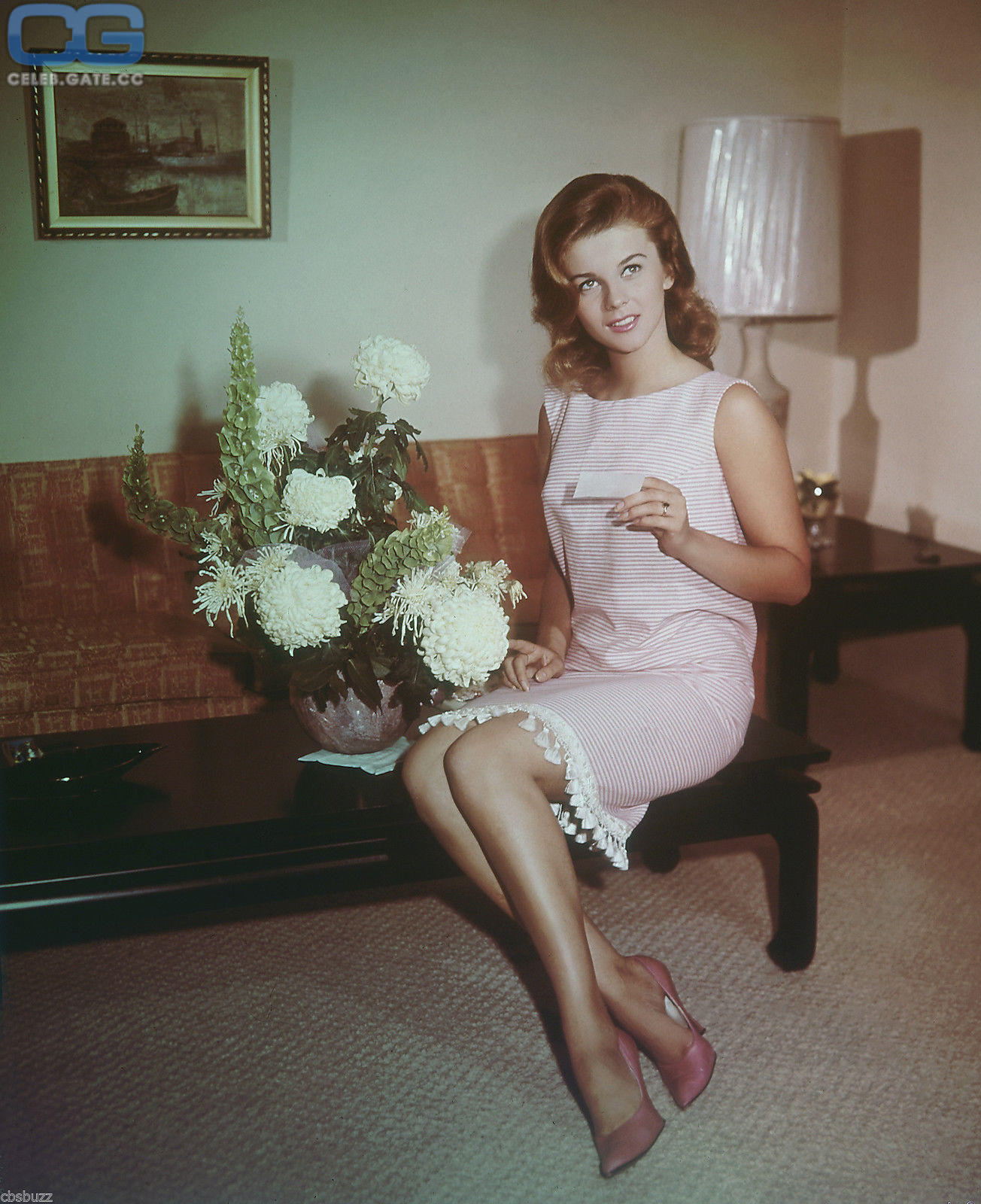
Honestly, if you watch the opening of Bye Bye Birdie today, it still feels like a lightning strike. There she is, Ann-Margret, just 22 years old, sprinting toward the camera against a bright blue backdrop, belting out the title track with enough energy to power a small city. It was 1963. Hollywood didn't really know what hit it. They tried to call her the "female Elvis," which was a massive compliment but also kinda missed the point. She wasn't just a female version of anyone. She was a singular, red-headed force of nature who basically redefined what a screen siren could look like in the sixties.
Before she was a global icon, she was Ann-Margret Olsson, a shy immigrant kid from Valsjöbyn, Sweden. Her family moved to the U.S. after World War II, eventually settling in Wilmette, Illinois. It’s funny because, in interviews, she always talks about how quiet she was. Real-life Ann-Margret was reserved, even a bit timid. But the second she stepped onto a stage? Total transformation. She called it her "Sexpot-Banshee" mode. You see it in those early screen tests from 1961—this weird, hypnotic mix of "girl next door" innocence and raw, jazzy aggression.
The Breakthrough That Almost Didn't Happen
Most people think she just appeared out of thin air in Bye Bye Birdie, but she’d been grinding for a while. George Burns—yeah, that George Burns—actually discovered her singing in a Las Vegas lounge. He hired her for his holiday show at the Sahara Hotel, paying her $100 a night. Not bad for a teenager in 1960. That led to a contract with RCA, where they literally marketed her as "the female Elvis." They even had her record a cover of "Heartbreak Hotel."
It didn't really work. The records were fine, but you had to see her to get it.
Her film debut came in Frank Capra’s Pocketful of Miracles (1961). She played Louise, the daughter of Bette Davis’s character. She won a Golden Globe for "New Star of the Year," but the real shift happened when director George Sidney saw her dancing on a date at the Sands Casino. He was so obsessed with her screen presence that he basically hijacked Bye Bye Birdie to make her the star. Janet Leigh, who was supposed to be the lead, was reportedly pretty annoyed that all the close-ups were going to the newcomer. But looking back? Sidney was right. Young Ann-Margret was the only thing people talked about when they left the theater.
The Elvis Connection: More Than Just PR
Then came 1964. Viva Las Vegas.
If Bye Bye Birdie made her a star, Viva Las Vegas made her a legend. The chemistry between her and Elvis Presley wasn't just "acting." It was a full-blown internal combustion engine. They were 22 and 28, both at the absolute peak of their physical powers. Elvis had worked with plenty of leading ladies, but most of them were just there to look pretty while he sang. Not Ann-Margret. She matched him beat for beat.
"We both possessed the devil, no one knew," she later wrote in her autobiography.
They were soul mates in a way. Both were shy off-camera, both were animals on stage, and both were under massive pressure from their handlers. Colonel Tom Parker, Elvis’s infamous manager, actually tried to cut her scenes because he was terrified she was overshadowing his boy. He succeeded in getting some of their duets—like "You're the Boss"—cut from the final film, but he couldn't kill the vibe. Their affair lasted about a year, and even after it ended, they stayed incredibly close. Until the day he died, Elvis sent a guitar-shaped floral arrangement to her dressing room every time she opened a new show in Vegas.
Why the "Sex Kitten" Label Was a Trap
By the mid-60s, she was everywhere. Kitten with a Whip, The Cincinnati Kid, Murderers' Row. But Hollywood was starting to pigeonhole her. They wanted her to be the "va-va-voom" girl forever. It’s a classic trap. If you’re too good at being the bombshell, people forget you can actually act.
She did a lot of "frothy" movies that didn't really challenge her. Bus Riley's Back in Town (1965) is a weird one—part gritty drama, part Ann-Margret fashion show. The critics were starting to get cynical. They saw the "Ann-Margrock" persona (her literal character name on The Flintstones) and figured that was all there was.
It took a huge risk to break that cycle. In 1971, she took a role in Mike Nichols’ Carnal Knowledge. She played Bobbie, a tragic, vulnerable woman falling apart in a toxic relationship with Jack Nicholson’s character. No big musical numbers. No treadmill dancing. Just raw, painful acting. It earned her an Oscar nomination and finally shut the skeptics up.
The Accident That Changed Everything
In 1972, things almost ended.
She was performing in Lake Tahoe and fell 22 feet off a raised platform. It was gruesome. She shattered her jaw, broke her arm, and had several facial fractures. People thought she was done. But ten weeks later—ten weeks!—she was back on stage. That grit is what people usually miss when they talk about her. She wasn't just a pretty face; she was a pro who grew up in a funeral parlor (her mom worked there as a receptionist when they first moved to Illinois) and knew how to work.
How to Channel That 60s Energy Today
You don't have to be a Swedish-American movie star to appreciate what made her great. If you’re looking to dive into the young Ann-Margret era, don't just stick to the highlights.
- Watch the "Blue Screen" Opening: Check out the beginning of Bye Bye Birdie on a big screen. Notice how she uses her entire body, not just her voice. It’s a masterclass in stage presence.
- Listen to the Duets: Find the "lost" Elvis duets like "The Lady Loves Me." You can hear them pushing each other. It’s a different energy than Elvis’s solo stuff.
- The Dramatic Pivot: If you only know her as the "Redhead," watch Carnal Knowledge or Tommy. It’ll change how you see her entire career.
- Style Notes: Her 60s style wasn't just about being "sexy." It was about bold colors—pinks, oranges, and that signature red hair (which was actually dyed from her natural brunette on the advice of Sydney).
The thing about her is that she survived. Most "sex symbols" of that era had tragic endings or faded away. Ann-Margret just kept evolving. She went from the "Female Elvis" to a serious actor, to a Vegas queen, and eventually to the "Ariel" we all loved in Grumpy Old Men. She proved that you can start as a "kitten" and end up as a lioness.
Actionable Insight for Film Buffs: To truly understand her impact, watch Viva Las Vegas back-to-back with Carnal Knowledge. The contrast is the best evidence of her range. You'll see the exact moment she stopped being a studio product and started being an artist. If you want to explore her musical side, seek out the 1961 album And Here She Is, which captures that "Female Elvis" sound before the movies took over.



