Alfred Hitchcock didn’t just wake up one day as the "Master of Suspense." He had to build that throne piece by piece. Most people point to Psycho or Rear Window when they talk about his genius, but if you really want to see the gears turning, you have to look at Young and Innocent. Released in 1937, this film is basically the DNA of everything he’d do later in Hollywood. It’s got the "wrong man" trope, the charming fugitive, and a climax that honestly makes modern CGI look lazy.
He was young. He was working in Britain. And honestly, he was just having a blast.
The Wrong Man and the Shilling Shockers
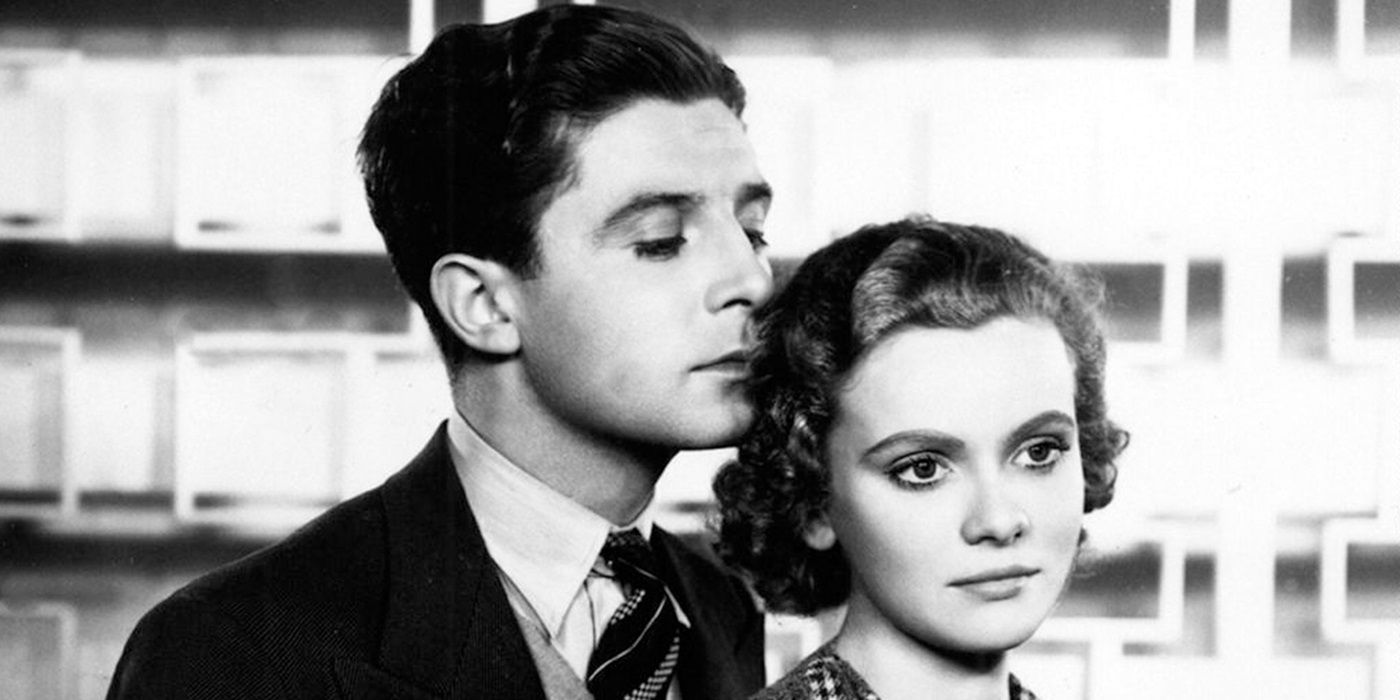
The plot of Young and Innocent is pure Hitchcock. A guy named Robert Tisdall (played by Derrick De Marney) finds the body of a famous actress on a beach. He runs to get help, but because he’s wearing a raincoat that matches the killer's description—and because he’s generally in the wrong place at the wrong time—the police decide he’s the guy. It’s a classic setup. We’ve seen it a million times since, but back then, Hitchcock was still perfecting the rhythm of the chase.
What makes this one different from his earlier The 39 Steps is the tone. It’s lighter. Kinda breezy.
Tisdall escapes custody and teams up with Erica Burgoyne (Nova Pilbeam), who just happens to be the daughter of the local police constable. Talk about awkward. The chemistry between them isn't that heavy, brooding romantic drama you get in Vertigo. It’s more like two kids on a dangerous road trip. Nova Pilbeam was actually only 17 or 18 when they filmed this, so the title Young and Innocent isn't just a clever name—it’s a literal description of the lead actress.
Why the British Era Hits Different
Hitchcock’s British films feel more tactile. You can almost smell the damp wool and the cigarette smoke. In Young and Innocent, he’s obsessed with the English countryside, but he uses it as a trap. There’s this great scene where the duo hides out in a children's birthday party. It’s uncomfortable. It’s weirdly funny. Hitchcock loved taking something wholesome, like a kid's cake or a game of blind man's bluff, and making it feel sinister because there’s a fugitive hiding in the corner.
Most critics at the time, like those writing for The New York Times in 1938, noted that Hitchcock was playing with the audience’s expectations of "fair play." He wasn't interested in a whodunit. He tells us Robert is innocent pretty much immediately. The tension doesn't come from "who did it," but from "how is he going to prove he didn't?"
That Impossible Camera Shot at the Grand Hotel
Okay, we have to talk about the eyes. If you ask any film student about Young and Innocent, they won’t talk about the plot. They’ll talk about the crane shot.
Picture this: It’s the end of the movie. Our heroes are at the Grand Hotel, looking for the real killer. They know one thing—the murderer has a nervous twitch in his eyes. But the hotel ballroom is packed. There are hundreds of people dancing.
Hitchcock starts the camera at the very back of the room, high up in the rafters. It’s a massive wide shot. Then, in one continuous, unbroken movement, the camera flies across the entire ballroom. It swoops down, gets closer to the band, zooms past the dancers, and stops—literally inches away—from the face of the drummer in the blackface band. Then, his eyes twitch.
Boom. Found him.
That shot took two days to set up. There were no drones. No digital zooms. It was a massive, clunky camera on a custom-built crane that had to be perfectly balanced. It’s arguably the most famous shot of his British career. It proves that Hitchcock was already thinking about how to use the camera as a storyteller, not just a recording device. He wanted the audience to feel like they were hunting the killer themselves.
The Mystery of the Missing Raincoat
The whole movie hinges on a raincoat. Robert’s coat was stolen, and the killer used it. This MacGuffin—a term Hitchcock loved—is what drives the plot through various locations like a grimy "flophouse" and an old mine.
Interestingly, the film was released in the U.S. under the title The Girl Was Young. Why? Because American distributors thought Young and Innocent sounded too much like a Victorian melodrama. They wanted something that sounded more like a romance. It didn't really matter what they called it; the movie was a hit because it moved fast.
Hitchcock’s pacing here is incredible. He cuts out the boring parts. If a character needs to get from Point A to Point B, he doesn't show them walking down the street for five minutes. He just puts them there. It sounds simple, but in the 1930s, movies were often very stage-y. Hitchcock broke those rules.
A Masterclass in Visual Humor
There’s a scene where Robert and Erica are trying to eat at a roadside cafe. They have no money. They’re trying to look inconspicuous, but everything goes wrong. The way Hitchcock shoots the social awkwardness is just as tense as the murder mystery.
- He uses close-ups of hands and feet.
- He focuses on small objects—a dropped fork, a nervous twitch.
- He mixes slapstick with genuine dread.
This is the "Hitchcock Touch." It’s the ability to make you laugh and hold your breath at the same time. In Young and Innocent, he uses a character named Old Will, a homeless man who saw the killer. Old Will is the only one who can identify the murderer, but he’s basically just looking for his next meal. He’s a comedic foil, but he’s also the key to the whole mystery.
The Legacy of a "Minor" Masterpiece
Is it as good as North by Northwest? Honestly, maybe not. It lacks the massive budget and the star power of Cary Grant. But Young and Innocent is more intimate. It feels like a prototype. You can see the roots of The Birds in the way he treats the settings, and you can see the roots of Saboteur in the cross-country flight.
The film also deals with the failure of the legal system. The police are portrayed as bumbling and overconfident. They aren't the heroes. The "innocent" people are the ones who have to break the law to find the truth. It’s a cynical worldview wrapped in a charming adventure story.
Critics today, like those at BFI or Criterion, often point out that this movie is where Hitchcock really mastered the "POV" shot. He makes us see what the characters see. When Erica is looking through a crowd, we are looking through her eyes. When the killer is panicking behind his drum kit, we feel his claustrophobia.
How to Watch Young and Innocent Today
If you’re going to dive into this, don't expect a gritty 2026-style thriller. It’s a 1937 film. The acting can be a bit theatrical. But if you pay attention to the camera work—especially that ballroom scene—you’ll realize you’re watching a genius find his voice.
- Focus on the eyes. Hitchcock uses them as a motif throughout the film.
- Watch the background. There are small visual jokes hidden in almost every scene.
- Compare it to The 39 Steps. It’s a great way to see how his style evolved in just two years.
Final Insights for Film Lovers
Hitchcock’s Young and Innocent isn't just a museum piece. It’s a reminder that great storytelling doesn't need millions of dollars in visual effects. It needs a good hook, a relatable hero, and a director who knows exactly where to put the camera.
If you want to understand the history of cinema, you can’t skip the British years. This film represents the moment Hitchcock stopped being a "promising director" and became a master. The themes of mistaken identity and the thin line between safety and danger are universal. They worked in 1937, and they still work now.
To get the most out of your viewing, look for the high-definition restorations available on specialized streaming platforms. Seeing that final crane shot in crisp detail is a completely different experience than watching a grainy YouTube rip. Pay attention to the sound design, too—specifically how the drum beat in the finale creates a physical sense of anxiety. That's not an accident. That’s Hitchcock.
Actionable Next Steps:
- Stream a restored version: Look for the Criterion Channel or BFI collections to see the film without the 1930s grain.
- Watch the "Drummer Scene" first: If you aren't sure about committing to a full black-and-white movie, find the ballroom sequence online. It’s a four-minute masterclass in cinematography.
- Read 'Hitchcock/Truffaut': To see what the director himself thought of this film, check out his famous interviews with François Truffaut. He breaks down exactly why he chose certain shots in this specific movie.



