François Ozon has always been a bit of a troublemaker. If you’ve followed French cinema for any length of time, you know he doesn't do "comfortable." His 2013 film, Jeune & Jolie—widely searched for as the young and beautiful movie full experience—remains one of those polarizing pieces of art that people either herald as a masterpiece of clinical observation or dismiss as a problematic male fantasy.
It’s about Isabelle. She's seventeen. She’s played by Marine Vacth, whose performance is so still it’s almost haunting. The film tracks her over four seasons, following her choice to enter the world of high-end escorting. But here’s the kicker: she doesn't do it for the money. Her family is wealthy. She doesn't have a traumatic "backstory" that fits into a neat Hollywood box. She just... does it.
The Young and Beautiful Movie Reality vs. The Tropes
Most movies about sex work follow a very specific, almost tired trajectory. There is usually a "descent." A fall from grace. A gritty realization. Ozon throws all that out the window. By focusing on the young and beautiful movie full narrative through a seasonal structure, he treats Isabelle’s transition into "Léa" (her working alias) with a weirdly calm, almost documentary-like detachment.
You’re waiting for the emotional breakdown. It doesn't come.
Instead, we see a teenager navigating the boredom of a summer vacation and the sterility of hotel rooms. The film used Françoise Hardy songs to punctuate the chapters, which is a stroke of genius. Hardy’s voice is the sound of melancholic French youth, and it creates this massive contrast between the lyrics of innocent love and the transactional nature of Isabelle's afternoons.
Honestly, the lack of a "why" is what makes people so angry about this movie. We want motives. We want to be able to fix the protagonist or at least understand her pain. Ozon denies us that. He’s more interested in the blank space of adolescence—that period where you’re testing your power over others without really understanding the weight of your own identity yet.
A Breakdown of the Seasonal Shift
The film is divided into four songs/seasons. It starts in the summer with a loss of virginity that is depicted as remarkably underwhelming. It’s clunky. It’s awkward. It’s not "cinema" sex. This is a crucial detail because it establishes Isabelle’s detachment from her own physical self.
By autumn, she’s Léa. She’s meeting older men in hotels. The cinematography shifts here; the colors get cooler, the lighting more artificial. Critics like Robbie Collin from The Telegraph pointed out at the time of release that Vacth’s face is the film's greatest asset—it's a mask that reflects whatever the viewer wants to see. If you think she’s a victim, you’ll see sadness. If you think she’s a predator, you’ll see coldness.
Then comes the winter. The "event" happens. One of her clients, an elderly man named Georges, dies of a heart attack during their session. This is where the young and beautiful movie full plot finally collides with the "real" world. The police get involved. Her mother, played with a frantic, brittle energy by Géraldine Pailhas, finds out. The secret is dead.
Why the Ending Still Sparks Debate
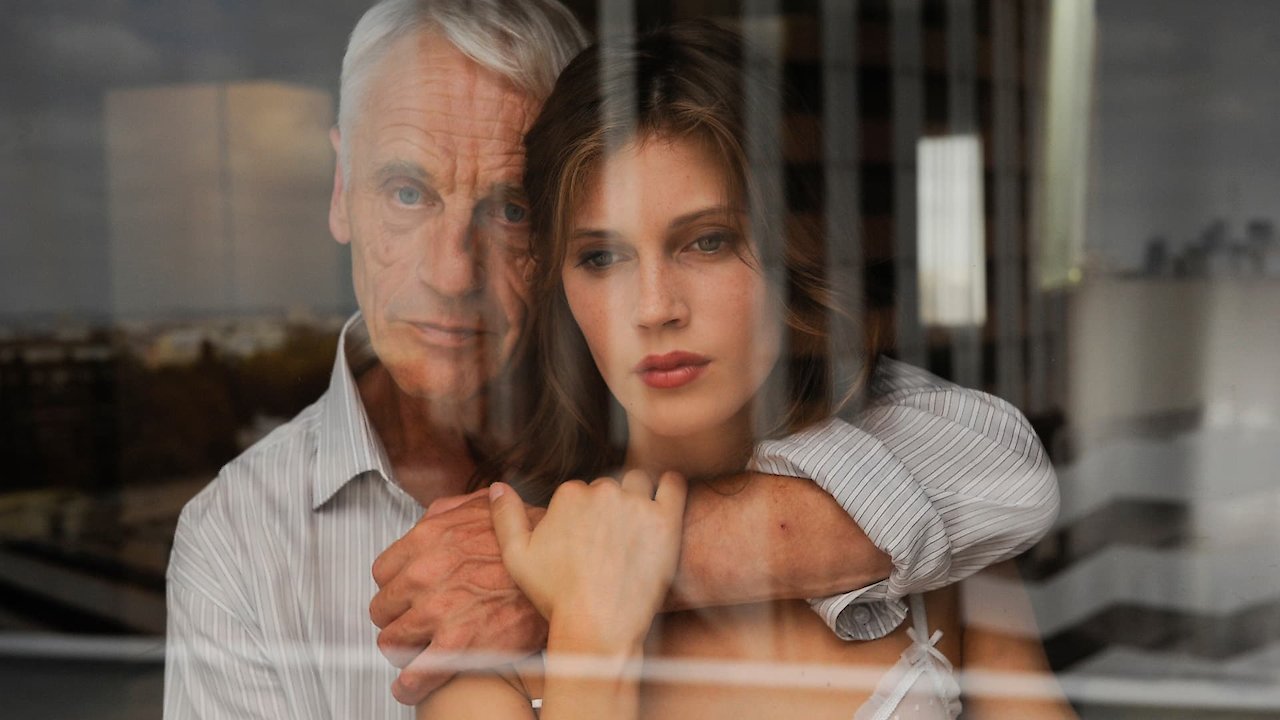
The final act isn't a redemption arc. It’s a confrontation. Isabelle meets Georges' widow, played by the legendary Charlotte Rampling. This scene is probably the most "human" moment in the entire film.
There’s no screaming. No accusations.
Rampling’s character just wants to see the girl her husband was obsessed with. It’s a moment of shared grief and confusing empathy. It suggests that Isabelle wasn't just a commodity, and the men weren't just "johns." There was a weird, silent communication happening in those hotel rooms that the rest of the world—the police, the parents, the school—simply can't grasp.
The Problem With the "Male Gaze" Critique
Let’s be real. A lot of people hate this movie.
They argue that Ozon, a middle-aged man, is just filming a beautiful girl for the sake of it. And yeah, the camera loves Marine Vacth. It lingers. It’s voyeuristic. But that’s kind of the point of the movie? Isabelle is using her beauty as a tool of observation. She’s watching the men watch her.
If you look at Ozon’s filmography—stuff like Swimming Pool or Under the Sand—he’s obsessed with the idea of the "unreliable" woman. He doesn't think women are transparent. He thinks they are mysteries even to themselves. Is that a male fantasy? Maybe. But it’s also a rejection of the idea that every female character needs to be "empowered" or "broken" in a way that makes sense to a male audience. Isabelle is just... Isabelle.
Essential Facts for the Cinephile
If you're looking for the young and beautiful movie full context, here are a few things that often get missed in the casual "Netflix-style" reviews:
- Marine Vacth was a model first. Ozon spotted her and realized her ability to remain completely expressionless was exactly what the character needed. She barely speaks in the film.
- The Cannes Reception. When it premiered at the Cannes Film Festival in 2013, it was nominated for the Palme d'Or. It didn't win, but it became the "talk of the Croisette" because of its controversial subject matter.
- The Françoise Hardy Connection. The four songs used are "L'amour d'un garçon," "À quoi ça sert," "Première rencontre," and "Je suis moi." They act as the internal monologue Isabelle refuses to give us.
- The Budget. It was a relatively low-budget production for French standards, shot with a small crew to keep the intimacy of the hotel scenes authentic.
What to Watch After Jeune & Jolie
If you finished the young and beautiful movie full and found yourself staring at the wall wondering what just happened, you’re not alone. The film is designed to leave you in a state of mild agitation. It’s a "coming of age" story where the character doesn't necessarily "grow up"—she just changes states.
To get a better handle on this style of filmmaking, you should check out:
- Belle de Jour (1967): The obvious ancestor. Luis Buñuel’s masterpiece about a bored housewife who spends her afternoons working in a brothel. It’s much more surreal than Ozon’s film, but the DNA is the same.
- The Piano Teacher (2001): If you want something way darker and more psychological. Michael Haneke doesn't do "beautiful," he does "brutal."
- Fish Tank (2009): For a more British, gritty take on the volatility of teenage girlhood.
How to Approach the Film Today
Watching this in 2026 feels different than it did in 2013. We are much more sensitive to power dynamics now. We are more prone to labeling things. But Young and Beautiful resists labels. Isabelle isn't a "girlboss" taking control of her sexuality, and she isn't a "victim" of the patriarchy in the traditional sense. She is a person who is profoundly bored and curious about the limits of her own body.
Don't look for a moral. There isn't one.
The film is a portrait. You don't ask a portrait of a bowl of fruit "why" the apples are there. You just look at the light hitting them. Ozon treats Isabelle like that fruit—beautiful, ripening, and eventually, subject to the decay of reality.
Actionable Steps for Viewers
- Watch for the mirrors. Ozon uses reflections throughout the movie to show the split between Isabelle and Léa. Pay attention to whenever she looks at herself.
- Listen to the lyrics. If you don't speak French, look up the translations of the Hardy songs. They provide the emotional context that the dialogue intentionally leaves out.
- Check out the "Director’s Cut" interviews. Ozon is very candid about his intention to make a film that was "purely visual" and devoid of psychological hand-holding.
- Compare it to Ozon's other work. Watch Frantz or Summer of 85 to see how he handles youth and grief in different settings. You'll see he has a recurring fascination with people who keep secrets for no apparent reason.
The young and beautiful movie full experience is ultimately about the discomfort of the unknown. It forces you to sit with a character who doesn't want your help, doesn't want your sympathy, and definitely doesn't want your judgment. It’s a cold, hard look at the mystery of being seventeen.



