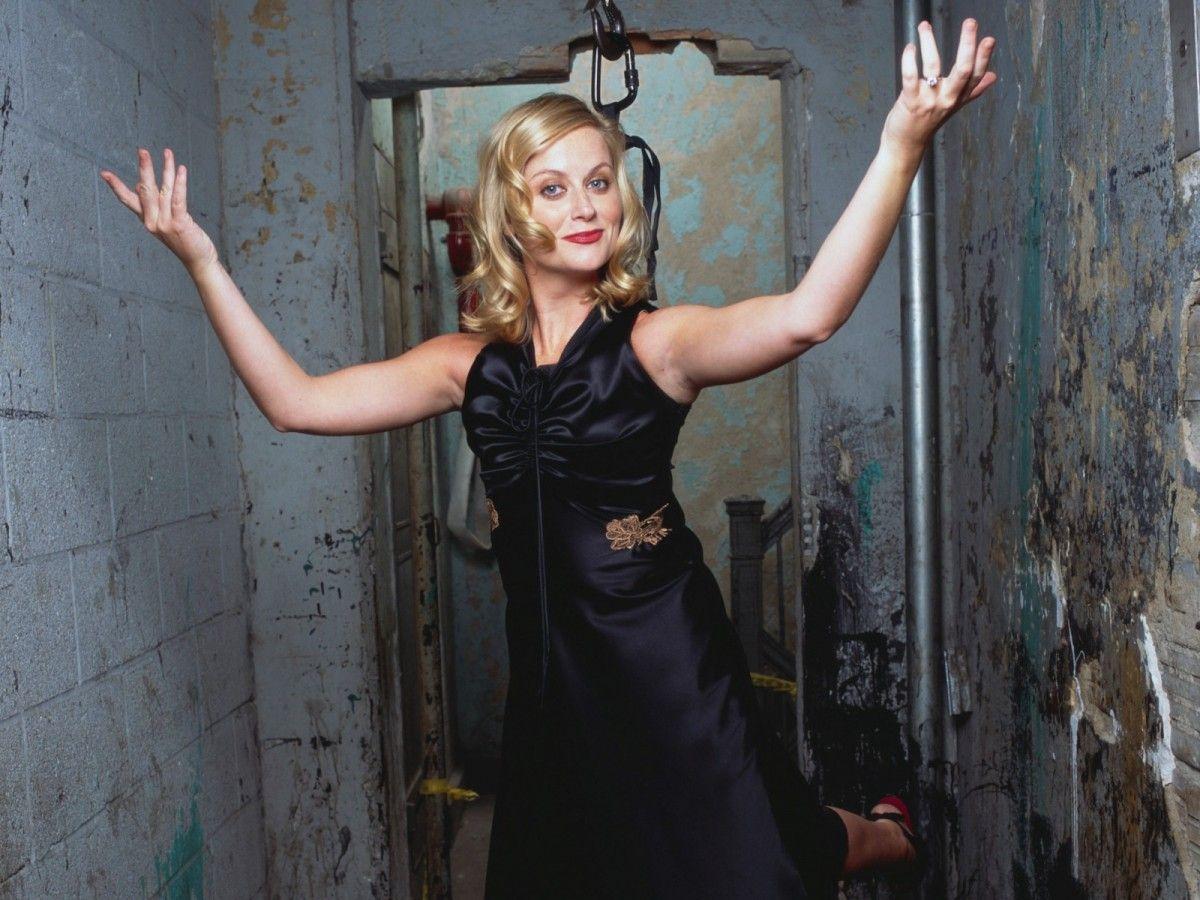
Before she was Leslie Knope, and long before she was "Cool Mom" Regina George, young Amy Poehler was a broke, scrappy kid from Burlington, Massachusetts, who was honestly just trying to figure out how to be funny without starving. Most people think she just popped onto the Saturday Night Live stage fully formed in 2001. That is not what happened.
The real story of her rise involves a lot of waitressing, a very small theater in Chicago, and a weird obsession with a 10-year-old hyperactive character named Kaitlin.
The Burlington Roots and the Dorothy Moment
Amy was born in Newton in '71 but grew up in Burlington. Her parents, Bill and Eileen, were school teachers. You can see that "teacher energy" in her—the organized, bossy-in-a-good-way vibe. She wasn't some tortured artist kid. Honestly, she says she had a pretty happy childhood. She played soccer and softball. She was on the student council.
But then came the fourth grade.
She played Dorothy in The Wizard of Oz. While most kids were just trying not to forget their lines, Amy realized something clicked when the audience laughed. It wasn't about the ruby slippers; it was about the power of the stage. By the time she got to Boston College, she wasn't just acting; she was doing improv with a group called My Mother’s Fleabag.
Moving to Chicago: The Gritty Era
In 1993, with a degree in media and communications and parents who were rightfully a little worried, Amy headed to Chicago. This is where the young Amy Poehler legend actually begins. Chicago in the 90s was the mecca. She started taking classes at iO (then called ImprovOlympic) under the legendary Del Close.
She met Tina Fey there. They were in a group called Inside Vladimir.
People like to romanticize this era, but Amy has talked about how much it sucked to be broke. She was a waitress for years. She worked as a nanny in LA for a bit too. She’s mentioned that being a waitress is basically just "pleasing people for tips," which can be soul-crushing. But it also taught her how to read a room—a skill that’s basically a superpower for a comedian.
The Upright Citizens Brigade: The "UCB Four"
The big turning point happened in 1996. Amy, along with Matt Besser, Ian Roberts, and Matt Walsh, decided they’d had enough of the Chicago scene and moved to New York. They were the "UCB Four."
They didn't have a theater. They were basically nomads, performing in small, sweaty venues like the KGB Bar. Eventually, they founded the Upright Citizens Brigade Theatre. They taught classes to pay the rent. It was raw. It was weird. And it was exactly what the New York comedy scene needed.
The SNL Breakthrough That Almost Didn't Happen
Tina Fey actually tried to get Amy on Saturday Night Live for years. Amy kept saying no. She was busy building the UCB empire. She had a sketch show on Comedy Central (also called Upright Citizens Brigade) that ran for three seasons.
She finally joined SNL in the 2001-2002 season. Her first episode? It was the first one after the 9/11 attacks. Talk about a high-pressure debut.
She was a "featured player" for about five minutes before they promoted her to a full cast member. She was the first woman to ever get that promotion in her first season. She brought characters like Amber (the one-legged reality show contestant) and Betty Caruso from Bronx Beat.
But what really cemented her legacy was the 2004 move to the Weekend Update desk. For the first time ever, it was two women—Amy and Tina. They broke the glass ceiling with a joke and a smile.
Why It Still Matters in 2026
Fast forward to today, January 2026. Amy is still everywhere. She just won a Golden Globe for her podcast Good Hang with Amy Poehler, and she’s currently filming a new series called Dig with her old partner-in-crime Mike Schur.
The reason young Amy Poehler is still a relevant topic for aspiring creatives is her "fake it 'til you make it" philosophy. She wasn't waiting for permission to be funny. She built her own theater when no one would give her a stage.
Actionable Insights from the Poehler Playbook
If you're looking to channel that early Amy energy into your own career, here is what actually works:
- Prioritize the "Game": In UCB improv, it’s all about finding the "game" of the scene—the one funny thing and heightening it. Apply that to your work. Find the one thing you're great at and lean in hard.
- Ambivalence is Key: Amy famously said in her book Yes Please that you have to care about the work but not the result. If you're too desperate for the "win," people can smell it.
- Find Your "Fleabag": You can't do it alone. Amy had Tina, the UCB Four, and Maya Rudolph. Build a circle of people who are as hungry as you are.
- The Waitress Mentality: Use the "boring" jobs to study people. The best characters are usually based on the weirdos you met while working retail or food service.
The evolution of young Amy Poehler from a suburban Dorothy to a comedy mogul wasn't a straight line. It was a messy, loud, and often broke journey through the basement theaters of Chicago and New York. That’s why she’s still the captain of the ship today.



