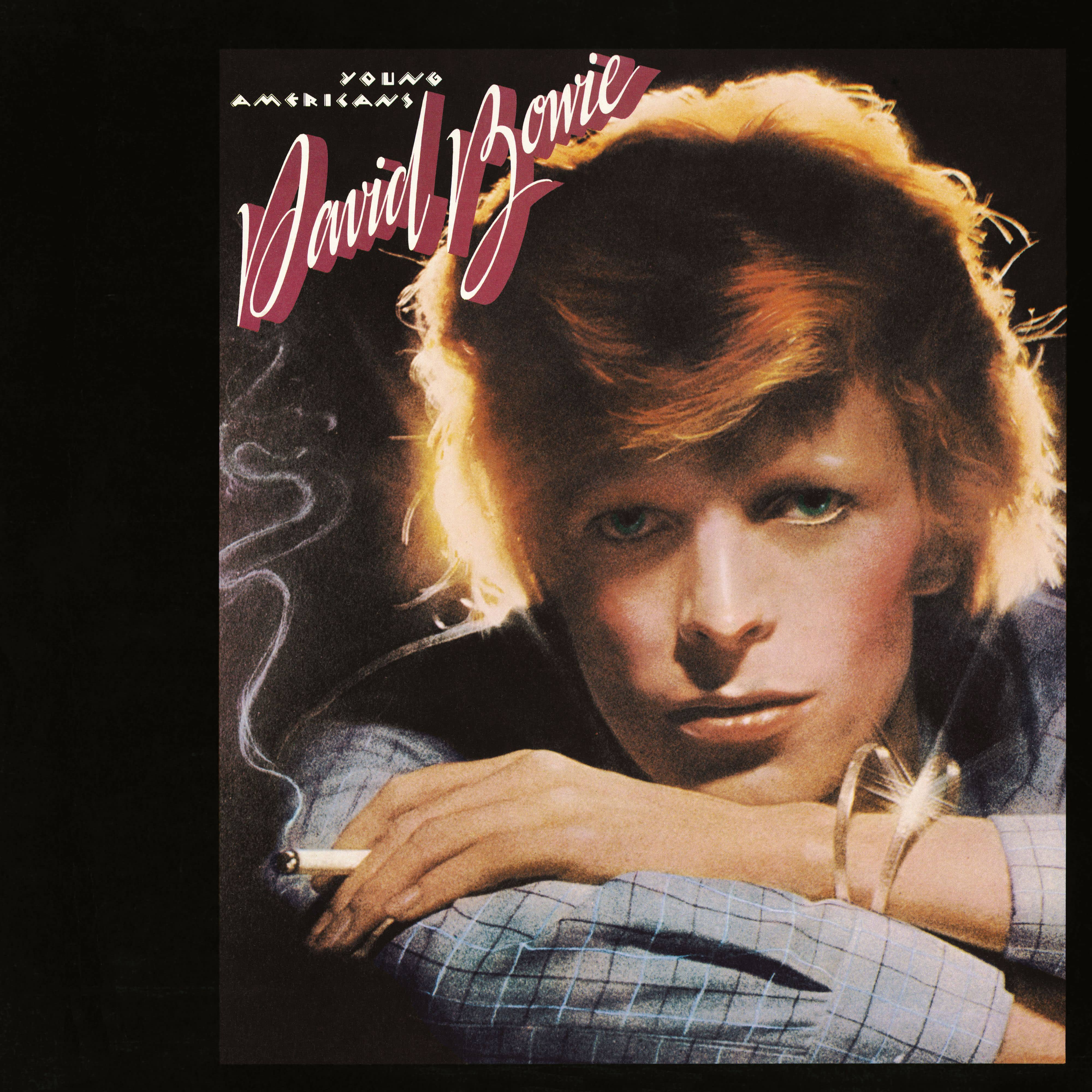
It’s August 1974. David Bowie is sitting in the back of a limousine, rolling through the streets of Philadelphia. He’s thin—dangerously thin—fueled by milk, red peppers, and a cocaine habit that would have killed a lesser mortal. Most rock stars at his level would be coasting on the fumes of their last big hit. Instead, the man who gave the world Ziggy Stardust is about to set his entire career on fire. He’s heading to Sigma Sound Studios to record Young Americans, and honestly, the music world wasn't ready.
People love to talk about Bowie’s "chameleon" nature, but that’s a bit of a cliché, isn't it? It implies he was just changing colors to blend in. With Young Americans, he wasn't blending. He was invading. He was a white British kid from Brixton trying to hijack the "Sound of Philadelphia," and the results were weird, beautiful, and deeply controversial.
The Sigma Sound Sessions: No Gimmicks, Just Soul
Bowie didn't just want to listen to R&B; he wanted to live it. He booked Sigma Sound because it was the temple of Philly Soul—the place where Gamble and Huff were churning out hits with lush strings and infectious grooves. But here’s a bit of trivia most people miss: the actual house band at Sigma, MFSB, originally didn't want anything to do with him. There’s a persistent story that some of the local musicians felt he was just another "foreigner" trying to steal their magic.
So, Bowie had to pivot. He brought in Carlos Alomar, a Puerto Rican guitarist who would become his right-hand man for decades. Alomar brought his wife, Robin Clark, and a then-unknown singer named Luther Vandross. Think about that for a second. One of the greatest soul voices in history got his big break as a backing singer and vocal arranger for a skinny British guy who was currently obsessed with George Clinton and The Main Ingredient.
The sessions were grueling. Bowie worked from 7 p.m. until daybreak, night after night. Outside, a group of dedicated fans—later known as the "Sigma Kids"—waited on the sidewalk through the humidity and the dawn. On the final night, Bowie actually invited them into the studio to hear the finished tracks. He played them the album, fed them pizza, and asked for their opinions. He cared what the kids on the street thought more than the critics in London.
What Exactly Is "Plastic Soul"?
Bowie famously described Young Americans as "the definitive plastic soul record." Some people took that as a slight, like he was saying the music was fake. But that’s not really it. He was acknowledging the inherent tension of a European artist interpreting Black American music. It was "plastic" because it was synthetic, a molded imitation that became its own unique thing.
You can hear it in the title track. That saxophone from David Sanborn isn't just playing a melody; it's screaming. The lyrics are a frantic, stream-of-consciousness look at Nixon’s America, crumbling under the weight of its own mythology. "We live for just these twenty years / Do we have to die for the fifty more?" It’s a bleak line hidden inside a danceable groove.
Then you have "Fame." This track didn't even happen in Philly; it was recorded later at Electric Lady Studios in New York. John Lennon happened to be in town, and he and Bowie started jamming on a riff Alomar had written. Lennon sang "Fame!" in that high-pitched, mocking tone, and a #1 hit was born. It was Bowie's first time hitting the top spot in the U.S., and ironically, it was a song about how much he hated the trappings of being a star.
Why the Critics Were Split
At the time, the rock press was confused. They wanted more "Rebel Rebel." They wanted the orange hair and the space suits. When Bowie showed up on The Dick Cavett Show looking like a soul-searching crooner in a baggy suit, people thought he’d lost the plot.
- The Pro-Soul Camp: Praised the technical skill of the band and Bowie's vocal evolution. His voice had dropped an octave, becoming a rich, scorched baritone.
- The Purists: Felt he was "touristing" in a genre he didn't belong to.
- The Reality: The album sold like crazy in America, finally breaking him into the mainstream market he’d been chasing for years.
The Lasting Impact of the Young Americans Era
If you look at the 1980s, you can see the fingerprints of Young Americans everywhere. The New Romantic movement, Spandau Ballet, ABC—all those "synthetic soul" bands were basically trying to recreate the vibe Bowie captured in 1975. He gave British artists permission to be funky without having to pretend they were from Memphis.
But for Bowie, it was just a pit stop. By the time the album was a certified hit, he was already moving on to the occult-obsessed, minimalist "Station to Station" and eventually his Berlin Trilogy. He used the soul influence as a bridge to get somewhere even darker and more experimental.
Actionable Ways to Experience Young Americans Today
If you want to understand this record beyond the hits, you’ve got to dig a little deeper than just "Fame."
- Listen to "Win": It’s arguably one of the most beautiful, atmospheric tracks he ever recorded. It’s slow, hypnotic, and shows off his newfound vocal range perfectly.
- Watch the "Cracked Actor" Documentary: Filmed during the tour for this album, it shows the stark reality of Bowie’s state of mind during the "plastic soul" period. It’s haunting.
- Check out the Sigma Sound Outtakes: Songs like "Who Can I Be Now?" and "It’s Gonna Be Me" were left off the original album but are essential listening. They lean even harder into the gospel and soul influence.
- Trace the Luther Vandross Connection: Listen to Vandross’s vocal arrangements on "Fascination." You can hear the beginnings of the style that would make him a superstar a few years later.
Bowie’s time as a young American wasn't just a phase; it was a radical act of cultural translation. He took the sounds of a city he didn't grow up in and turned them into a mirror for a country that was losing its way. It might have been "plastic," but forty-plus years later, it still feels incredibly real.



