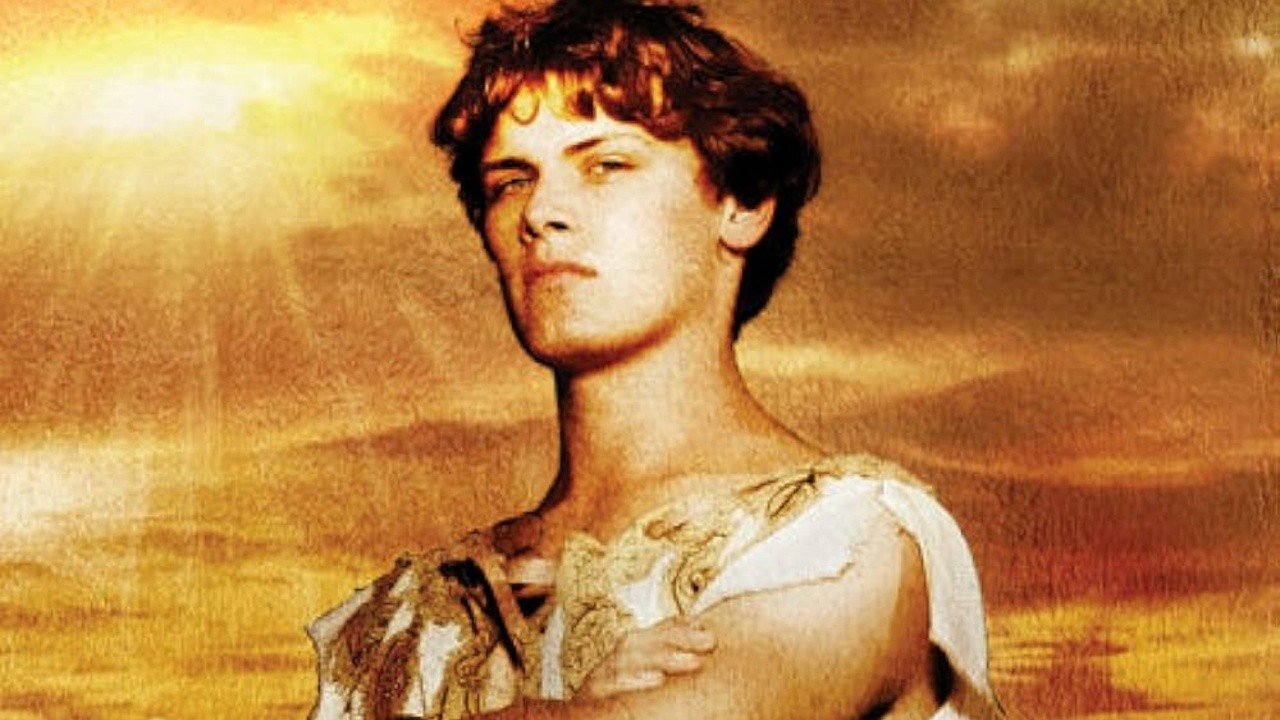
Everyone knows the version of Alexander who conquered the known world before he could legally rent a car in the modern sense. We see the mosaic in Pompeii, the stone-faced conqueror with the wild hair, looking like he’s about to dismantle the Persian Empire before lunch. But honestly, the version of young Alexander the Great that existed before the crown is way more interesting than the god-king he became.
He wasn't born a legend. He was born into a mess.
Macedonia wasn't the powerhouse we think of today; it was basically the "backwater" of the Greek world, a place of heavy drinkers and constant assassinations. His father, Philip II, was a brilliant, one-eyed warmonger who spent most of Alexander's childhood away at war. His mother, Olympias, was a formidable woman who supposedly slept with snakes and told Alexander he was actually the son of Zeus. Imagine growing up with those expectations. You're told you're a god by your mom and told you're a disappointment by your dad.
That tension created a kid who was obsessed with glory. He didn't just want to lead; he felt he had to outshine everyone who came before him. It’s kinda wild to think about.
The Bucephalus Moment: More Than Just a Horse Story
You've probably heard the story of the horse. It's the classic "boy meets beast" trope, but it’s the most telling moment of young Alexander the Great and his psychological makeup.
A horse trader named Philoneicus brought a massive, black stallion named Bucephalus to King Philip. The horse was a nightmare. It was biting, kicking, and absolutely refusing to be mounted. Philip, who didn't have time for a horse that wouldn't cooperate, told them to take the beast away.
Alexander, who was only about 12 or 13 at the time, basically called out the adults. He muttered about how they were losing a magnificent animal because they didn't have the "skill or spirit" to manage him. Philip, probably annoyed by his kid's arrogance, made a bet: if Alexander could ride the horse, he'd pay for it. If not, Alexander had to pay up.
Alexander had noticed something the grown men hadn't. The horse was terrified of its own shadow.
He didn't use a whip. He didn't yell. He just turned the horse toward the sun so its shadow fell behind it. He spoke softly, patted the animal, and eventually leaped onto its back. He didn't just stay on; he rode it until the horse was exhausted and submissive. When he rode back to his father, Philip supposedly wept and told him, "My son, seek out a kingdom worthy of thyself, for Macedonia is too little for thee."
That wasn't just a trick. It was the first real display of Alexander’s core trait: he didn't solve problems with brute force alone. He used observation. He looked for the "shadow" that everyone else was missing.
Aristotle and the Education of a Prince
While most kids his age were learning to hunt, Alexander was being tutored by the greatest mind in the Western world. Philip hired Aristotle to teach the boy.
They didn't meet in a boring classroom. Philip set up a school in the Temple of the Nymphs at Mieza. It was a secluded, beautiful spot where Alexander and his "Pages"—the noble boys who would later become his generals—studied everything from medicine to philosophy.
Aristotle didn't just teach him how to be a king. He gave Alexander a copy of the Iliad that he had personally annotated. Alexander slept with that book under his pillow. He literally modeled his life on Achilles. For young Alexander the Great, the stories of the Trojan War weren't just myths; they were a blueprint.
Think about the influence here. Aristotle taught him about the "Golden Mean"—the idea of balance. While Alexander eventually lost that balance in his later years, his early education gave him a scientific curiosity that was rare for a conqueror. During his later campaigns, he actually took botanists and geographers with him to document the world. He wasn't just a killer; he was a student who wanted to categorize the planet.
The Regent at Sixteen
Most sixteen-year-olds are worried about exams or who likes whom. When Alexander was sixteen, Philip went off to besiege Byzantium and left his son in charge of Macedonia. He wasn't just a figurehead.
While Philip was away, a Thracian tribe called the Maedi revolted. Alexander didn't wait for his dad to come back. He raised an army, crushed the rebellion, drove the tribe out of their territory, and founded a city there. He named it Alexandropolis.
Talk about an ego.
He was essentially telling the world—and his father—that he had arrived. But this period was also fraught with family drama. Philip married a woman named Cleopatra Eurydice (not the Cleopatra, obviously). At the wedding feast, the bride's uncle, Attalus, made a toast wishing for a "legitimate" heir to the throne.
Alexander, who was sitting right there, lost it. He threw a cup at Attalus and shouted, "Am I a bastard then?"
Philip stood up, drew his sword, and tried to charge Alexander, but he was so drunk he tripped and fell. Alexander’s response was legendary and incredibly cold: "Look at the man who is preparing to pass from Europe to Asia, and may not pass from one table to another without falling."
He and his mother fled Macedonia shortly after. It was a messy, public fallout that almost cost him the throne.
The Battle of Chaeronea: The Final Test
By the time the Battle of Chaeronea rolled around in 338 BCE, Alexander was eighteen. This was the decisive fight between Macedonia and the combined forces of Athens and Thebes.
Alexander was given command of the left wing. This wasn't a "safe" spot. He was facing the Sacred Band of Thebes—an elite unit of 300 soldiers who were considered invincible. They were the best of the best.
Young Alexander the Great led the cavalry charge that broke the Sacred Band. He didn't just win; he obliterated them. This victory effectively gave Philip control over all of Greece. It was the moment the student surpassed the master. Philip was the architect of the Macedonian army, but Alexander was its most lethal weapon.
Then came the murder.
In 336 BCE, Philip was assassinated by one of his own bodyguards during a wedding celebration. The world shifted instantly. At twenty, Alexander was suddenly King of Macedonia. He didn't hesitate. He immediately executed anyone who might have a claim to the throne and then marched south to remind the Greek city-states that he was in charge.
When Thebes tried to revolt, thinking the "boy king" wouldn't do anything, Alexander didn't just beat them. He leveled the city. He spared only the house of the poet Pindar. It was a clear message: I am not my father. I am something much more dangerous.
What Most People Get Wrong About His Youth
The common misconception is that Alexander was just a "natural" who walked into power. In reality, his youth was a calculated training montage.
- He was a tech nerd: He was obsessed with siege engines. His father had pioneered the use of the torsion catapult, and Alexander spent his youth learning how to use technology to overcome walls that had stood for centuries.
- He was deeply insecure: Much of his drive came from the fear that Philip would leave nothing for him to conquer. He reportedly used to cry when he heard of his father’s victories.
- He was a master of PR: Even as a teen, he knew how to manage his image. He used court sculptors like Lysippos to ensure his likeness was always "heroic"—the slightly tilted head, the "melting" eyes. He was the first leader to truly understand the power of branding.
Historian Peter Green often points out that Alexander's relationship with his father was the engine that drove him. It was a toxic mix of admiration and resentment. You can see this in how he handled the army after Philip’s death. He kept his father’s veteran generals, like Parmenion, but he always made sure they knew who was in charge.
Actionable Takeaways from Alexander’s Early Years
We don't live in a world of spears and phalanxes anymore, but the way young Alexander the Great handled his rise to power offers some weirdly practical lessons for anyone trying to build something today.
- Watch the Shadow: Like the Bucephalus incident, most problems have a simple, overlooked root cause. Instead of fighting the symptoms (the horse’s kicking), look for the source (the shadow).
- Find Your Aristotle: Alexander sought the best possible mentors. He didn't just want to be "good"; he wanted the highest level of intellectual rigor to back up his ambition. Surround yourself with people who challenge your perspective.
- The Iliad Strategy: Alexander had a personal North Star. For him, it was Achilles. Having a clear, even mythic, vision of who you want to be helps when things get messy.
- Embrace the "Alexandropolis" Energy: Don't wait for permission to lead. When he was left as regent, he acted as if he were already king. Confidence often creates its own authority.
Alexander's youth wasn't just a preamble. It was the forge. By the time he crossed the Hellespont into Asia, he had already been a student, a regent, a general, and a king. He had survived assassination plots and family exile. He wasn't just "great" because he conquered Persia; he was great because he had spent twenty years preparing for the moment the world finally turned its eyes toward him.
To understand the man who took over the world, you have to understand the boy who sat in the shade at Mieza, reading Homer and wondering if he would ever be enough.